
"One of these women is not who she seems."
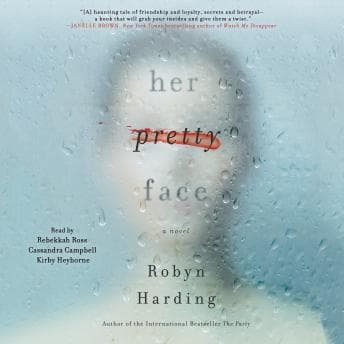
That line hit me around hour two, while I was stirring a pot of dal makhani at 9 PM on a Tuesday - the kind of elaborate solo dinner my mother would call "too much trouble for one person" and my therapist would call "self-care." But here's the thing about Robyn Harding's Her Pretty Face: I already knew the setup. The book tells you from the jump that one of these suburban moms is actually Amber Kunik, a murderer. And yet I found myself asking: why does that knowledge make things more tense rather than less?
The research actually shows that dramatic irony - knowing something the characters don't - increases rather than decreases anxiety in the audience. Harding is weaponizing that principle. You're not reading to find out what happened. You're reading to find out who and why, and the distance between those two questions is where all the psychological juice lives.
The Psychology of Desperately Wanting to Belong
Frances Metcalfe is a fascinating case study in social exclusion and its downstream effects. She's overweight, insecure, a stay-at-home mom whose son has behavioral issues significant enough to get them socially exiled from an elite private school community. And when Kate Randolph - gorgeous, wealthy, radiating the kind of confidence that Frances has never once felt - singles her out for friendship? Frances doesn't just accept it. She clings.
Psychologically, this tracks perfectly. The protagonist exhibits classic attachment anxiety patterns: the hypervigilance around social cues, the willingness to overlook red flags because the alternative is loneliness, the way she calibrates her entire self-worth around whether this one beautiful woman still wants to be her friend. Harding gets something right that a lot of thriller writers miss - the scariest thing about manipulation isn't the manipulator's skill. It's the target's hunger. Frances isn't stupid. She's starving.
Kate, meanwhile, is doing something equally recognizable. She rejects the Forrester mom clique not because she's above social games but because she's playing a different one entirely. Her disdain for the other mothers reads as principled at first, then strategic, then something darker. What makes this character compelling is how long Harding lets you sit with the ambiguity of her motivations before the floor drops.
Three Narrators, Three Lenses, One Slow-Building Dread
The audiobook splits perspective across three narrators - Cassandra Campbell, Kirby Heyborne, and Rebekkah Ross - each handling a different character's chapters. Campbell takes Frances, and she nails the anxious interiority of it, that constant low hum of "am I doing this right, does she really like me, is my son okay." Heyborne handles DJ's sections, and his voice brings a different texture entirely - younger, rawer, the kind of narration that reminds you teenagers experience everything at about twice the emotional volume adults do. Ross, who along with Heyborne has an Earphones Award to her name, takes the Daisy chapters - the past timeline that slowly converges with the present like two cars heading toward the same intersection.
Now. I'll be honest about one thing. Cassandra Campbell is on approximately forty percent of all audiobooks in the domestic thriller genre at this point. If you're a heavy audiobook listener, her voice might trigger a "wait, am I listening to the right book?" moment. She's good - genuinely good - but there's a familiarity that can briefly pull you out of Frances's specific world and into "oh right, this is also the voice from [five other books I listened to this year]." It's a weird problem. Like being so talented you become ambient.
The three-narrator structure works well for the alternating timelines, though. You always know exactly whose head you're in, and the transitions between past and present don't require you to mentally recalibrate the way single-narrator timeline jumps sometimes do.
Where the Seams Show (Because They Do)
Here's where my annoyed-researcher brain kicks in. The final revelations - and I won't spoil them - are genuinely surprising. Harding earns that twist. But the mechanics of getting there require a few characters to behave in ways that feel more plot-convenient than psychologically motivated. There's a moment in the last quarter where a character makes a choice that I kept turning over in my head, trying to map it onto any recognizable decision-making framework, and I just... couldn't. Psychologically, it doesn't quite track. The emotional logic bends to serve the narrative rather than the other way around.
At 8 hours and 32 minutes, it's a tight listen - no bloat, no filler chapters where someone goes grocery shopping for three pages. The pacing is genuinely propulsive. But that compression means some character development gets shortchanged, particularly around the Forrester Academy parents who function more as a Greek chorus of judgment than as real people.
My therapist would have thoughts about this character - about Frances, specifically. About how the book frames her insecurity as the thing that makes her vulnerable to danger, when really it's the thing that makes her human. That distinction matters.
Who Gets the Most Out of This
If you're into domestic suspense that hinges on female friendship as a site of both genuine connection and potential destruction - yes. If you want perfectly airtight character psychology - temper expectations slightly. If Cassandra Campbell's voice is comfort food for you, you'll be happy. If you're tired of hearing her everywhere, it might be a mild distraction but not a dealbreaker.
Listen with focus. The timeline shifts and the "which woman is the murderer" question reward attention. This isn't a background-while-folding-laundry book.
I finished it right as the dal was done. Ate dinner in silence, thinking about how easily we hand ourselves over to the people who see us when no one else does. That's not a flaw. But Harding makes a pretty convincing case that it's a vulnerability. The emotional wreckage of female friendship that curdles into something dangerous also runs through Happy Ever After, though that one leans into the fantasy of repair rather than the mechanics of collapse.