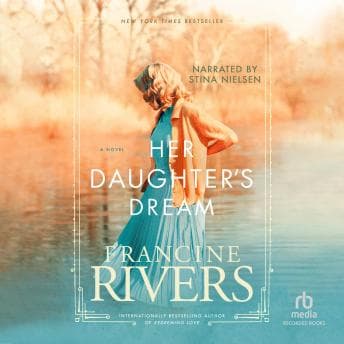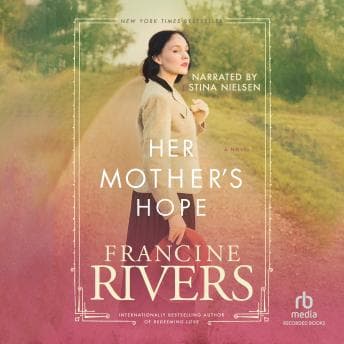

I finished this one grading sophomore essays at midnight, and honestly? The parallels between Marta Schneider's fierce, misunderstood love and my own mother's "tough love" hit a little too close to home. Had to put the red pen down for a minute.
Francine Rivers does something here that I try to teach my students about in literature—she takes a familiar theme (mother-daughter conflict) and stretches it across fifty years and two continents until you're not just reading a story, you're excavating a family. She does something similar in Redeeming Love, though there the excavation is more about personal redemption than family legacy. This is the kind of multigenerational saga that Steinbeck would've appreciated. The Central Valley setting isn't accidental. Rivers knows her California history, and she threads it through Marta's story like a secondary character.
When Tough Love Becomes the Whole Story
Here's the thing about Marta Schneider: she's not likeable. Not in the way we usually want our protagonists to be. She's flint-hard, shaped by Swiss poverty and European immigration and the kind of survival instincts that don't soften just because you've finally got a roof over your head. And Rivers doesn't apologize for her. She lets Marta be difficult, lets her damage her relationship with Hildemara Rose through decades of emotional distance disguised as strength.
My students would probably hate Marta. They'd want her to just say she loves her daughter. But that's not how generational trauma works, is it? Rivers understands that the things our parents couldn't give us often weren't things they ever received themselves. Marta's mother had hope for her—hence the title—but hope isn't the same as warmth. And Marta passes down what she knows.
The World War II section is where the narrative really finds its footing. Hildie's coming-of-age against the backdrop of wartime America gives the story stakes beyond the domestic. Rivers handles the historical details with the kind of research that doesn't show off—it just feels right.
Stina Nielsen Gets the Assignment
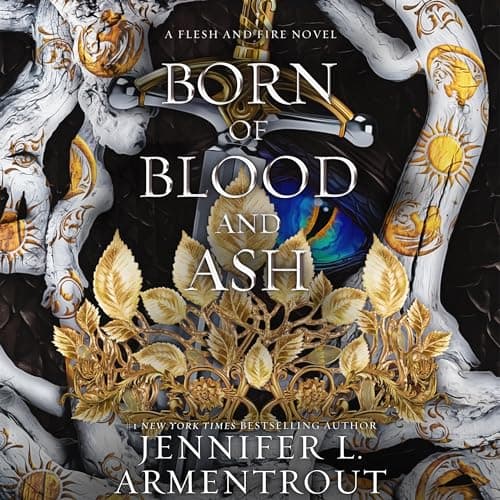
I'll admit I didn't know Stina Nielsen's work before this, and I couldn't find much about her background online. I've since tracked down her narration of From Blood and Ash, which showcases a completely different range—fantasy world-building versus historical realism. But based on nearly fifteen hours of listening? She understands something crucial about this material: it's not melodrama. It's quiet devastation.
Nielsen's voice has this warm, almost maternal quality that works beautifully for the narration—but she doesn't let that warmth bleed into Marta's dialogue. Marta sounds exactly as guarded and practical as she should. The Swiss-German accent is subtle, present enough to remind you of Marta's origins without becoming a distraction. (Nothing pulls me out of a historical novel faster than a narrator doing Accent Theater.)
Where Nielsen really shines is in the emotional restraint. There are moments in this book—particularly the scenes between Marta and Hildemara—where a lesser narrator would've pushed for tears. Nielsen holds back. She trusts the prose. She trusts the listener. That's harder than it sounds.
The pacing is measured, which some listeners found slow. I get it. This isn't a thriller. But at 1.0x, the rhythm felt right to me. Rivers writes sentences that deserve their full weight. Nielsen gives them that.
The Faith Element (Let's Talk About It)
Look, this is Christian fiction. Rivers is upfront about that, and the faith elements run throughout—not preachy, but present. If that's not your thing, you'll feel it. The characters pray. They struggle with God. The resolution involves grace in the theological sense, not just the emotional one.
But here's what I'd tell my more secular friends: Rivers isn't writing propaganda. She's writing about how faith functions in immigrant families, in women who had no other framework for understanding suffering. Whether you share that faith or not, there's something anthropologically honest about how she portrays it. Marta's God is as stern as she is. Hildie's God is gentler. That's character work, not preaching.
Who Should Listen (And Who Should Skip)
This is a book for people who want to sit with difficulty. For listeners who've had complicated mothers, or who are complicated mothers, and want to see that complexity honored rather than resolved in a neat bow. (The bow comes in book two, apparently. I'm not there yet.)
It's also for commuters who want something substantial. At nearly fifteen hours, this is a commitment. But Nielsen's clarity means you won't lose the thread if traffic gets bad or your principal calls an emergency meeting. (Sorry, Dr. Martinez.)
Skip it if you need fast pacing or if family conflict triggers you. Some of Marta's choices are genuinely hard to witness. Rivers doesn't let her off the hook, which is good writing but uncomfortable listening.
Would I Assign This?
Not to my sophomores—they'd riot. But to my book club? To Denise? Absolutely. This is the kind of novel that makes you call your mother afterward, even if you're not sure what you'd say. Maybe especially then.
The prose deserves to be savored. Nielsen makes sure you can.