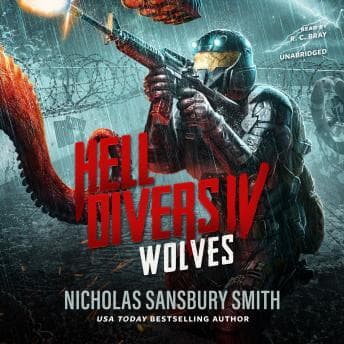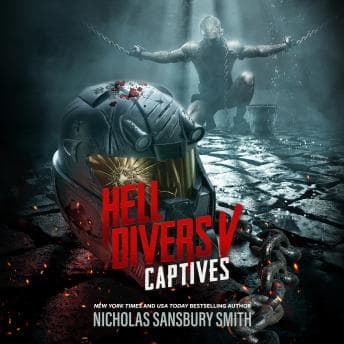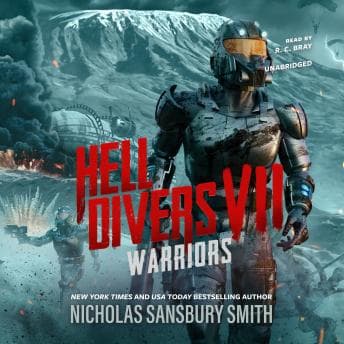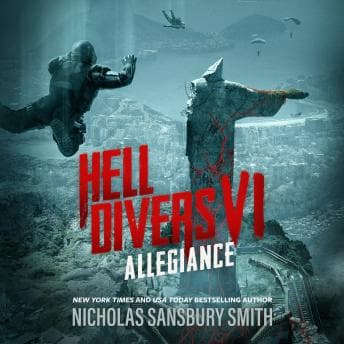

Look, I need to talk about the motto thing. "We dive so humanity survives" — yes, it's corny. Yes, it gets repeated like a broken CI/CD pipeline that keeps deploying the same failed build. By hour six I was mouthing it sarcastically on the Caltrain while some guy next to me was definitely concerned. But you know what? It works. The same way a good team mantra works when you're on hour eighteen of a production incident and someone says "we ship" and everyone just... keeps going. That's this book.
TL;DR: Worth your commute. Book six in Hell Divers delivers the political intrigue and android-hunting action the series needed, even if it takes its sweet time getting the engine warm.
The Slow Boot Sequence That Almost Lost Me
I'm going to be straight with you — the first two hours of Allegiance are rough. Not "bad" rough, more like "your microservices are all initializing and nothing's processing requests yet" rough. X is king now (reluctant king, because of course), and Smith spends a LOT of time on Cazador-sky people politics. Council meetings. Tension between factions. Integration challenges. Honestly it felt like reading Jira tickets for a company merger.
I started this one on a Monday morning, 6:07 AM, barely conscious, and I genuinely lost the thread twice before my coffee kicked in around Millbrae. If you're a series veteran, push through. If you're new — absolutely do not start here. Go back to book one. I mean it.
But once Michael Everhart's rookie dive team launches in Discovery? Different book. Smith does this thing where he toggles between X's political storyline on the Metal Islands and Michael's exploration missions, and the contrast is what keeps the pacing from flatlining entirely. The android defectors hunting human survivors across the globe — that's where the real dread lives. There's a discovery (trying not to spoil) involving what the androids have been doing to humans they find, and it's genuinely disturbing in a way this series hasn't quite hit before. Less "monster of the week" and more systematic extinction. It gave me Terminator-meets-The-Road vibes. That creeping dread of humanity's slow collapse hits similar notes to what Hugh Howey does in Shift — different flavor, same existential weight.
R.C. Bray Is Basically the Ray Porter of Military Sci-Fi
I said what I said. R.C. Bray doesn't do the same things Ray Porter does — Porter's range is more theatrical, more alien — but Bray has this specific gear for military characters that nobody else matches. His X sounds like a man who's been carrying too much for too long, gravelly and tired but with this undercurrent of "I will absolutely wreck you if you test me." And then he shifts to Michael, who's younger, more idealistic, and Bray actually lightens his delivery just enough that you feel the generational difference without him doing a completely different voice.
The Cazador characters get this harder, clipped cadence that sets them apart from the sky people. It's not accent work exactly — more like a different rhythm, a different way of breathing through dialogue. After six books, Bray has internalized this world so completely that the voice shifts feel automatic. You stop noticing the narrator and just hear the characters, which is the whole point.
No sound effects, no music, just Bray and 11+ hours of post-apocalyptic chaos. Clean production. Zero complaints on the audio side.
The Distributed Systems Problem (a.k.a. Too Many Plot Threads)
Here's my engineer brain nitpick: Smith is running a lot of concurrent processes in this book. X's political arc. Michael's dive missions. The android threat. New survivor groups. Cazador loyalist resistance. It's like watching a distributed system where every node is doing something important but the orchestration layer is struggling to keep up. Some threads get starved for resources — there are characters who show up, do something interesting, and then disappear for two hours of runtime.
The character development that IS there, though, hits. X's arc from legendary diver to reluctant politician is the most interesting thing Smith has done with him. And the world-building continues to expand in ways that feel earned after five previous books of setup.
Perfect for: train, driving, gym. Skip for: bedtime (too much action in the back half to wind down).
Who Gets Suited Up
If you've listened to books one through five, you're grabbing this anyway and you should. The ROI on this audiobook is solid — it's a proper continuation, not filler. If you bounced off the series earlier, nothing here will change your mind. If you've never heard of Hell Divers, go start at book one with zero expectations and thank me later.
I finished this in roughly four commutes, running at 1.5x. The slow start almost had me switching to a podcast about database optimization (Kevin's been recommending one), but I'm glad I stuck with it. By hour eight I was genuinely anxious about characters I've known for six books, and that's worth something.
Commit and Push
Six books deep and Smith hasn't run out of gas. The pacing hiccup at the start knocks it down a notch, but R.C. Bray carries even the slower sections, and the android subplot opens up genuinely creepy new territory for the series. Not the strongest entry — I'd still give that to books two and three — but a solid build toward whatever's coming next. And yes, there's a setup for book seven that will absolutely keep you subscribed.