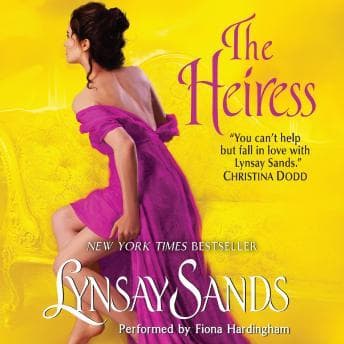

Lynsay Sands wrote a Regency romance about an heiress desperately seeking a poor husband, and honestly, that premise alone is worth the price of admission.
I picked this up during a Saturday afternoon walk along the lakefront with Denise - she had her own podcast going, I had mine, and we were doing that comfortable married-couple thing where you exist in parallel silence for two miles. The opening scenes of The Heiress had me laughing out loud enough that Denise pulled out an earbud and gave me The Look. You know The Look. The one that says "you're being weird in public again."
The Inverted Fortune Hunt Actually Works
Here's what Sands is doing that's cleverer than it first appears: she's flipping the entire Regency marriage-market premise on its head. Instead of a poor girl seeking a wealthy match, you've got an alluring woman actively trying to find a man who doesn't want her money. This reminds me of what Hemingway said about the best way to find out if you can trust somebody - except here it's about whether a man can love you when you're worth more than he'll ever earn. The comedy comes from the absurdity of that search, and the early chapters deliver genuine laugh-out-loud moments as the setup unfolds.
But - and this is the "but" that keeps me from loving this one - the book is the second in a series that started with The Countess, and it borrows its structure so heavily from the first book that listeners who've already been through that ride will feel a strong sense of déjà vu. Same general romantic arc, same blend of humor-to-sensuality-to-suspense. It's like when I teach The Great Gatsby and then Tender Is the Night back to back - yes, Fitzgerald is brilliant in both, but you can feel the same hand pulling the same levers.
The story rushes through certain scenes in ways that don't quite earn their emotional payoff. There's a suspenseful ending that should land harder than it does, but the pacing in the middle section feels uneven - some stretches drag while others sprint past moments that needed room to breathe. I found myself rewinding a couple of times because transitions between plot points weren't always clear. Not a deal-breaker, but noticeable.
Faye Adelle Steps Into Someone Else's Shoes
Here's the tricky thing about narrator changes mid-series: listeners have already bonded with specific character voices. Faye Adelle delivers a genuinely good performance - her comedic timing during the early funny scenes is sharp, and she handles the sensual romantic passages with a warmth that doesn't tip into melodrama. She earns her keep.
But she's working against the ghost of the first book's narrator, and that's a fight you can't entirely win. Some of the character voices she creates just don't match what listeners had already built in their heads. It's not that her choices are wrong - they're just different, and different is hard when you've already fallen for a specific version of these characters. (This is basically the audiobook equivalent of recasting your favorite TV show between seasons. The new actor might be great, but they're not your person yet.)
Her strengths are real, though. The funny scenes land because she commits to the comedy without mugging. The romantic scenes have a genuine sensual tone that feels organic rather than performed. If this were your first encounter with the series, you'd probably think she was excellent. Context just makes it complicated.
Who Should Spend the Nine Hours
If you loved The Countess and want more of that world, this will scratch the itch - just calibrate your expectations. It's comfort food, not a new recipe. If you're new to Sands entirely, honestly, start with book one. You'll get the better narrator match and a fresher version of essentially the same story structure.
This is a good pick for anyone who wants light Regency romance with genuine humor and some heat. My students would hate this. Once and for All got a similar reaction from my ninth graders when I made the mistake of mentioning I'd reviewed a romance novel in class. I enjoyed it. Those two things are not contradictory.
But if you're looking for something that pushes the genre forward or surprises you with its structure? This isn't it. The prose deserves to be savored in spots, but it's working within very familiar territory. At 9 hours and 19 minutes, it's not asking for a massive time commitment, and the laughs in the first act are worth something. Just know that the middle sags and the ending rushes.
The Grade I'd Write in the Margin
A solid B-minus. Entertaining, occasionally very funny, well-performed by a narrator fighting an uphill battle against series loyalty. Worth your time on a lazy weekend but not worth bumping anything off your priority list. If Sands's humor clicks for you - and for a lot of readers it absolutely does - you'll have a good time. Just don't expect it to be the book that converts the skeptics.