
"I wanted to write a lie you could trust."
That line hit me somewhere around hour two, and I had to pull over in the hospital parking lot because I couldn't see the road anymore. Carlos asked why I was crying in the car. I blamed allergies. It wasn't allergies.
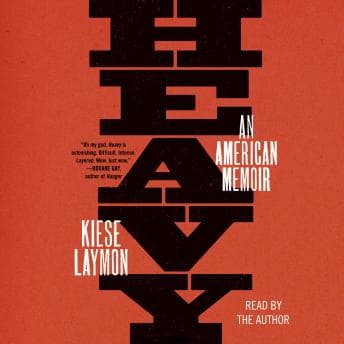
Kiese Laymon reads his own memoir, and listen - he's not a professional narrator. His delivery is what some might call "one-note." But here's the thing: when you've spent your whole life learning to modulate your voice, to code-switch, to make yourself palatable to white institutions, maybe one-note is the point. Maybe the refusal to perform is the performance. I've watched enough patients strip away pretense in their final hours to recognize when someone is done performing.
What Weight Actually Means
This isn't a weight loss memoir. This isn't an inspirational story about overcoming. Laymon writes about his body - the gaining, the losing, the anorexia, the obesity - as inseparable from being Black in Mississippi, from his mother's impossible expectations, from the sexual violence he experienced as a child. The way he moves between these topics without clear transitions mirrors how trauma actually works in the body. As someone who's actually worked a code, I can tell you: the body doesn't compartmentalize. It holds everything at once.
His relationship with his mother is the beating heart of this memoir. Brilliant, complicated, terrifying in her love. She pushed him to be exceptional because exceptional was the minimum for survival. She also hurt him in ways that take the whole seven and a half hours to fully name. Laymon addresses the book directly to her - "you" throughout - and that choice creates an intimacy that's almost uncomfortable. You're eavesdropping on a conversation decades in the making.
That Mississippi Voice Carrying Everything
Laymon's Southern drawl is thick and unapologetic. When he talks about his grandmother, about Jackson, about the particular weight of Black southern poverty, his voice carries generations. He's not trying to entertain you. He's trying to tell you the truth, even when the truth makes him look bad. Especially then.
The "Black Abundance" section - where he writes about friendships, about the people who loved him without conditions - broke something open in me. I work in a trauma center. I see what happens when people don't have that abundance, when they've never had anyone love them without transaction. Laymon names what so many of my patients can't: the difference between being cared for and being loved.
But I'll be honest. This is not a book for multitasking. I tried listening while doing charting at 3 AM and lost entire sections. His pacing isn't designed for background noise. It demands your full attention, which - depending on your listening habits - is either a feature or a bug.
Who This Is For (And Who Should Wait)
If you want a neat narrative arc with redemption at the end, this isn't it. Laymon doesn't give you that satisfaction. He gives you something harder: honesty about how we hurt the people we love and how we learn - slowly, imperfectly - to stop.
This is for the night shift workers who've seen too much to believe in easy answers. For anyone who's ever had a complicated mother. Narrative of the Life of Frederick Douglass carries that same unflinching honesty about what survival costs. For people who understood Roxane Gay's Hunger and wanted to go deeper into how bodies become battlegrounds.
Skip this if you need your memoirs to end with healing complete. Skip this if author-narrated books frustrate you - his pacing is uneven in places, and he's clearly not trained in voice performance. But that rawness? It's also why this works. A polished narrator would've smoothed over the parts that need to stay rough.
Night Shift Approved, But Bring Tissues
I finished this in my driveway at 8:47 AM, engine still running, not ready to go inside yet. My mom would love this - she'd recognize that particular flavor of immigrant-parent pressure, that "I sacrificed everything so you could be exceptional" weight. She still thinks I should've been a doctor. Laymon's mother wanted him to be a writer, but only the right kind. Only the safe kind.
There is no safe kind of truth-telling. This book proves it.
Seven and a half hours. Worth every minute of lost sleep.