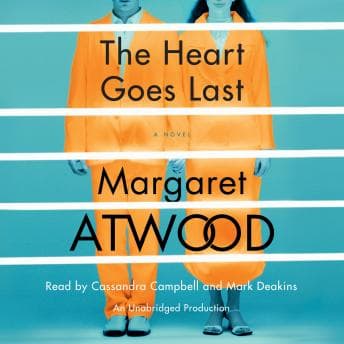

I was supposed to be debugging my procedural dungeon generator at 2 AM. Instead, I'm six hours into Margaret Atwood building a dystopia where the economy has collapsed so hard that people voluntarily sign up for prison rotations just to get a bed and three meals. And honestly? Given my student loan situation, I found myself uncomfortably nodding along with Stan and Charmaine's desperation.
When Your D&D Campaign Gets Too Real
Look, I've run some dark campaigns. I once made my players choose between saving a village or their favorite NPC. But Atwood? She's playing a different game entirely. The Positron Project is the kind of world-building that makes you set down your dice and just think. It's a private prison system crossed with a 1950s suburban fever dream, where you get a cute little house with a white picket fence—but only every other month. The alternating months? You're an inmate. And someone else is living in your house, sleeping in your bed, using your stuff.
The magic system here (because yes, I'm calling dystopian social engineering a magic system) is disturbingly elegant. Everyone's employed because half the population is literally imprisoned at any given time. The economy works because consent is manufactured through desperation. It's Sanderson-level world-building, except instead of Stormlight, we're running on human misery and the illusion of choice. Speaking of Sanderson, Rhythm of War has similarly complex systems at play, though with significantly less existential dread about late-stage capitalism.
Two Narrators, Two Very Different Vibes
Here's where things get interesting. Mark Deakins and Cassandra Campbell split narrator duties, and they're giving completely different performances. Deakins brings this booming, theatrical energy to Stan—broad tones, solid comedic timing, and I swear to Stormfather, his Elvis imitation is spot-on. When the story goes weird (and it goes WEIRD), Deakins leans into the absurdity with almost gleeful energy.
Campbell's Charmaine is... okay, I need to be honest here. She plays Charmaine as chirpy and ditzy, which is absolutely what the character is. Charmaine is a woman who has convinced herself that everything is fine, actually, while participating in some genuinely horrific things. Campbell's voice captures that willful naivety perfectly. But I can see why some listeners found it grating. Twelve hours is a lot of time to spend with someone whose internal monologue sounds like a Pinterest board gained sentience.
Personally? I think it works. Charmaine is supposed to make you uncomfortable. She's supposed to be the kind of person who would thrive in a system that asks you not to think too hard about where the bodies go.
The Part Where Atwood Goes Full Atwood
Content warning time: this book goes places. There's violence, there's some genuinely disturbing sexual content, and there's a subplot involving sex robots that I am still processing. This isn't The Handmaid's Tale—it's darker in some ways, but also weirder? More satirical? Atwood is clearly having fun with the absurdity even as she's dissecting late-stage capitalism with surgical precision.
The pacing is a bit uneven. The first half builds this incredible tension as Stan and Charmaine's carefully compartmentalized lives start bleeding into each other. Charmaine starts an affair with the man who lives in their house during their prison months. Stan discovers something he shouldn't. The walls between their two lives start cracking. Then the second half goes completely off the rails in a way that's either brilliant or frustrating depending on your tolerance for Atwood's particular brand of dark comedy. Into the Drowning Deep pulled similar tonal gymnastics on me—horror that somehow becomes darkly funny when you're sleep-deprived enough. I found myself laughing out loud at 3 AM at moments that were definitely not supposed to be funny. Or maybe they were? With Atwood, it's hard to tell.
The Thesis I Should Be Writing
Dr. Patel would probably appreciate that I'm at least consuming literature adjacent to my research. Procedural generation, consent in closed systems, the gamification of human behavior—there's actually a lot here I could cite if I were the kind of person who wrote their thesis instead of listening to audiobooks about dystopian prison communes.
(I am not that person.)
The dual narration works well for the alternating perspectives, though the transitions between Stan and Charmaine's chapters could be smoother. Sometimes I'd lose track of whose head I was in for a few sentences. Not a dealbreaker, but noticeable. At twelve hours, this is a commitment. It's not quite the forty-hour epic fantasy investment I usually champion, but it's dense. Atwood packs a lot of ideas into every chapter, and some of them will sit with you uncomfortably long after you finish. The ending is... well, it's an Atwood ending. Make of that what you will.
Roll for Initiative (Or Don't)
My D&D group would absolutely love this as campaign inspiration. The Positron Project is basically a setting module waiting to happen. I'm already sketching out how you'd run a heist in a society where half the population swaps places every month.
Who should listen: Fans of dark satire who don't mind their dystopia served with a side of absurdist comedy. If you like your world-building thorough and your social commentary sharp enough to draw blood, queue this up. Who should skip: If you want cozy dystopia, look elsewhere. If chirpy narration grates on you after hour three, you've been warned. And if you don't like info-dumps, this isn't for you (but you're wrong).
But if you want Atwood at her most wickedly satirical, with narrators who commit fully to the bit? This is worth your twelve hours.