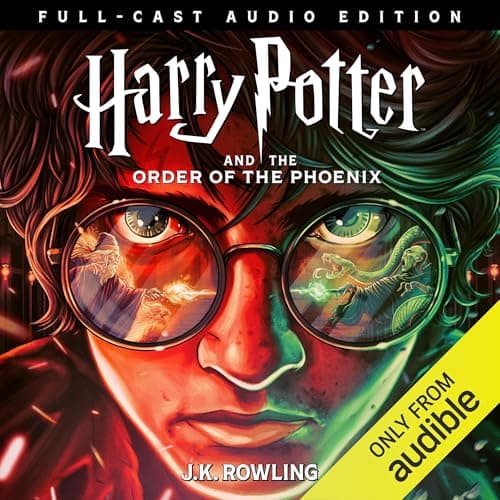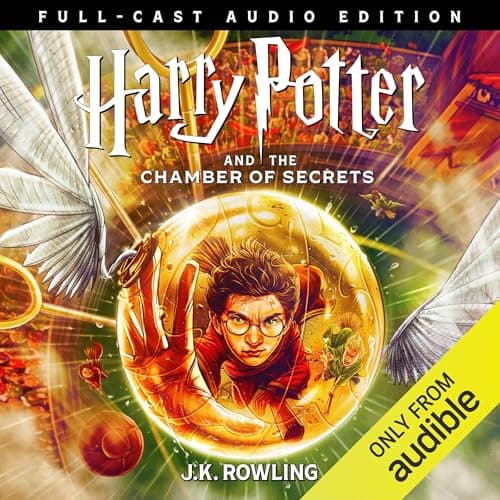

Listeners have handed this production a near-perfect 4.89, and I fully expected to be the sour note in that choir. I believe a book is best read to you by one person, one throat, one breath carrying the whole story the way a grandmother carries a tale across a kitchen table. Fifteen credited names and a Dolby Atmos score? That sounded like a crowd moving into my living room.
So I was sweeping red dogwood leaves off the porch steps (November in Atlanta, the trees half-bare and showing off anyway) with this playing at my usual unhurried 0.85x, ready to be cranky. And I wasn't. Not mostly.
A Book About Blood, Told by Many Voices
People forget what Chamber of Secrets is actually about. They remember the flying car and the house-elf. But underneath, Rowling wrote a story about who counts as truly belonging, and about a hidden thing in the foundations that comes out to punish the children whose parents were the "wrong" kind. I taught Morrison and Baldwin for forty years. I know a story about bloodlines and old founders' grudges when I hear one, and this is it, dressed in robes for eleven-year-olds.
That matters for the casting. A single narrator holds a book like this in one consistent moral voice. A full cast does something different. It scatters the story across a whole community, so the prejudice and the fear sound like they're coming from many mouths at once. For a book whose horror is a school turning on its own students, that's not a bad instinct. It might be the right one.
The Whispers Were Made for This
The production leans hard into sound: footsteps echoing down the Hogwarts corridors, the Whomping Willow, the Golden Snitch darting during Quidditch. Some of that is spectacle, and I'll confess the Quidditch business matters less to me than it does to my great-nephews. But this particular book was practically written for the ear. Harry hears whispers in empty corridors that nobody else hears. Students are found as though turned to stone. And there's that enchanted diary, a book that answers back, which is a deliciously eerie idea when you're experiencing a book as a voice in the first place. (I sat down on the top step for that stretch. The broom could wait.)
The mystery structure holds up, too. This is Rowling's tidiest whodunit - clues planted early, a reveal that rewards you for paying attention. At 9h 37m it's a modest commitment, and the plot moves briskly enough that even at my slow speed it never sagged.
What the Crowd Costs You
Here's my honest reservation, and it's about philosophy, not craft. With Cush Jumbo as narrator and a marquee of actors around her - Hugh Laurie as Dumbledore, Riz Ahmed as Snape, Michelle Gomez as McGonagall, Kit Harington as Lockhart - the book stops being told and starts being performed. You gain energy, color, and a castle that stays put. Audible says the sound team worked from Pottermore's maps and blueprints so a fireplace sits on the same side of a room every time you return to it. For a book about a school hiding a room, that is quietly clever. You lose some of the intimacy of prose read aloud, where the narrator's voice becomes the book's conscience.
My husband and I used to trade chapters across the supper table, one voice at a time. This isn't that. It's closer to radio theater, and I suspect that's exactly what most families want for a long drive.
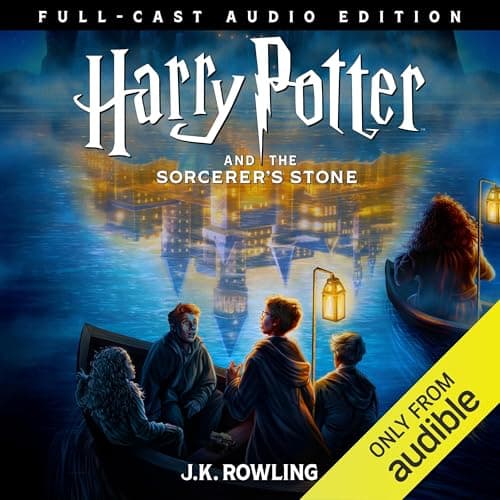
The young leads - Frankie Treadaway, Max Lester, Arabella Stanton - carry the heaviest load as Harry, Ron, and Hermione, and the overwhelming listener praise for distinct character voices tells me the ensemble works for most people. I'd agree. Nobody blurs together. I noticed the same trio doing the same careful work in Harry Potter and the Sorcerer’s Stone (Full-Cast Edition), where Cush Jumbo, Hugh Laurie, and the young leads first set the pattern.
Who Should Clear an Evening
If you're bringing this to children, or you already know these books by heart and want to hear Hogwarts as a living place, this is a generous production, and the second book's whispering-corridor dread suits the format beautifully. It's the last light-footed book before Azkaban starts to darken the series, so it's also a fine place to see whether the full-cast approach suits your household before committing to the rest.
But if you treasure one voice holding a whole book in its hands, the traditional single-narrator edition will still feel like home in a way this can't. And if your ears tire of score and sound effects layered over prose, you'll feel the busyness.
Leaves Swept, Tea Gone Cold
I came out to the porch to grumble about a crowd and ended up grateful for one. A story about a school learning who it truly belongs to, told by a whole chorus. That fits better than I wanted to admit.