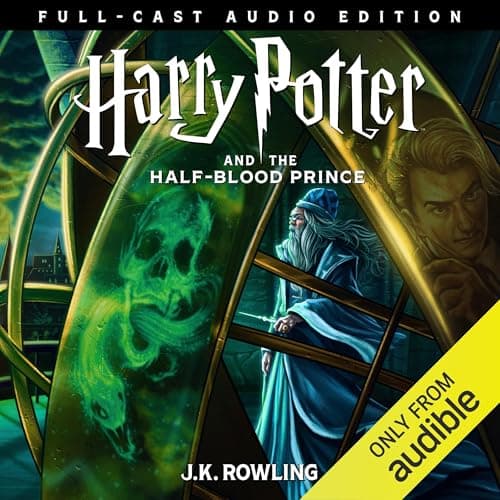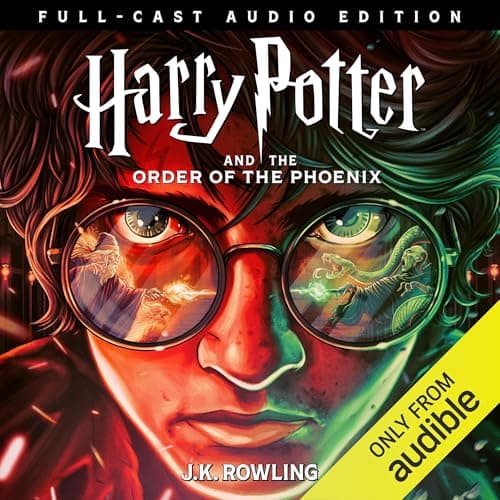

What does a children's book owe the dark when the children reading it have grown up?
I asked myself that at my kitchen table one cold evening, a paper sack of pecans from my neighbor's tree at my elbow and a bowl filling slowly with shells. I had meant to crack only enough for one pie. But the Pensieve chapter came on, Barty Crouch's courtroom, and my hands just stopped. The production lets that trial sit in a hush so heavy I could hear my own refrigerator hum. Darker than I remembered. Darker than the film ever let it be. And I realized this fourth book is where Rowling stops tucking her readers in.
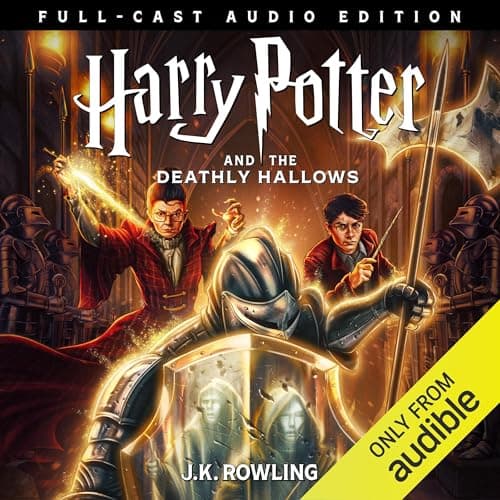
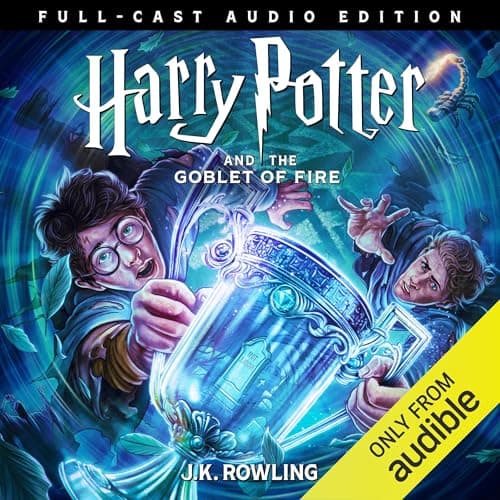
This full-cast edition runs 20h 13m. At my speed it's closer to twenty-four hours, which is about how long it took me to forgive myself for the pecans I never shelled.
The Crowd Roars, Then the Room Goes Cold
The production understands the book's shape better than most adaptations have. Goblet of Fire opens wide and loud and festive. The Quidditch World Cup arrives here as a genuine wall of sound, with layered crowd noise, a stadium's worth of bodies, and then the chaos that follows. I put down the nutcracker and simply sat in it. With good headphones it feels like being in a grandstand.
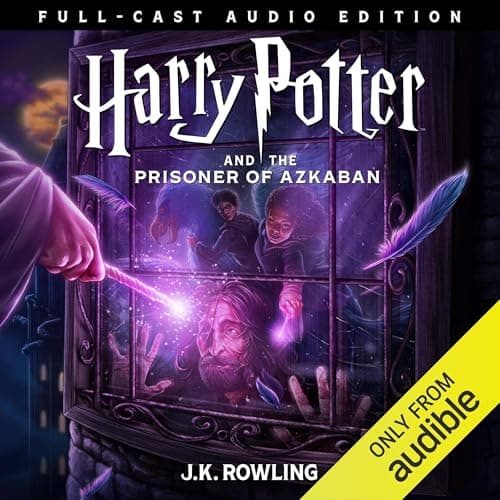
Then, chapter by chapter, the frame narrows. The Yule Ball gets the Weird Sisters, with music actually composed for the scene. I remember the gentler hush of Harry Potter and the Prisoner of Azkaban, where the cast first made the dark feel close without yet making it cruel. After the dance comes the trial, and after the trial comes the graveyard. Matthew Macfadyen's Voldemort, with the new score swelling underneath him, made me go very still in a warm kitchen. That is the book's real architecture: joy first, so that the loss of it costs you something.
McAvoy Saves His Best for the Truth Serum
I will be careful here for anyone coming to this story fresh. But James McAvoy's Moody is built for one chapter, the Veritaserum chapter, and he knows it. All year he growls and barks, and that's fine and good fun. Then the mask comes off, and what McAvoy finds underneath is so raw that I had to replay it. I won't spoil the scene for anyone coming to it fresh. I'll only say that I have watched a great many students attempt madness, and most of them simply shout. He doesn't.
Nina Barker-Francis gives Hermione a bright, clipped intelligence that never tips into shrillness. Cush Jumbo has the hardest job in the tournament chapters, where whole pages go by with no dialogue at all, just a boy, a dragon and a crowd, and she never sounds like she is waiting for the actors to come back.
When Harry and Ron Share a Throat
Here is my one real grievance. Jaxon Knopf and Rhys Mulligan sound too much alike. In rapid back-and-forth, especially those whispered arguments in the common room, I lost track of who was speaking more than once, even at my slow speed. Worse, Harry occasionally comes across as slower than the boy on the page. He reads as dim when Rowling wrote him as wary. This is the book where the production recasts the trio, replacing the younger actors from the first three books with older ones to match the characters' age, and it took me several hours to settle into the new voices. I'm a patient woman.
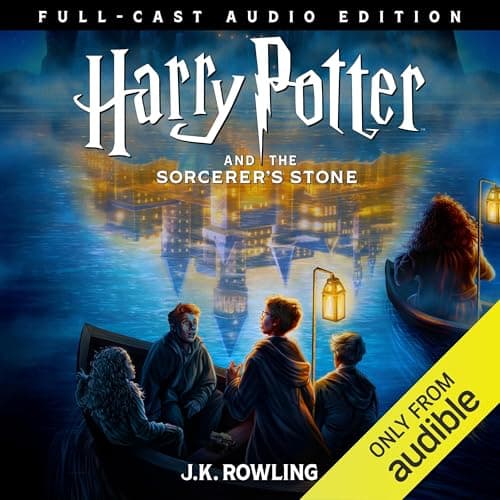
Some listeners who loved Jim Dale or Stephen Fry will also miss those older Siriuses. Jim Dale gave Sirius a ragged warmth I didn't quite find here. If you want to hear where the full-cast approach began, before the recasting, go back to Harry Potter and the Sorcerer’s Stone, where the full-cast approach felt like a delightful experiment rather than a settled habit.
In Defense of "Said Harry"
I've heard grumbling that the production keeps Rowling's dialogue tags, the "said Harry" and "exclaimed Hermione," even with a different actor speaking every part. I understand the complaint. It is redundant. But I spent my career telling sophomores that an author's punctuation is not decoration. Those tags are Rowling's rhythm, her little drumbeats between voices, and this is an unabridged text. I'd rather hear the book than a radio play wearing the book's coat. And frankly, with Harry and Ron so close in pitch, those tags rescued me more than once.
Who This Edition Is For
If you know this story by heart and want it to feel enormous again, with the stadium, the dance, and the graveyard all sounding like real places, this is your edition. It is especially good if you only ever knew the film, because the book gives you three Pensieve trials where the film kept one, and this production lets every one of them breathe. If you need Harry and Ron instantly distinguishable while you're half-listening over dishes, you'll struggle for the first stretch. And if Jim Dale's or Stephen Fry's voice is the one you grew up inside, know that you're trading intimacy for spectacle.
Past the Gate
I finished the graveyard near midnight. The book does what fourth books in great series must do. It takes the children's hands and walks them past the gate. This production walks right beside them, loud where it should be loud and silent where silence is the only decent response. Two boys who sound like one boy can't spoil that.