How do you say goodbye to a story you already know by heart, when the whole point of the new version is that you're supposed to hear it differently?
I chewed on that for most of a forty-minute wait at my audiologist's office on First Hill, there for a hearing aid refit, with the ebook open on my phone and Deathly Hallows running through my old aids one last time before the tech reprogrammed them. It felt right, listening to the end of the series through equipment that was also on its way out.
Leaving Privet Drive with the whole sky moving
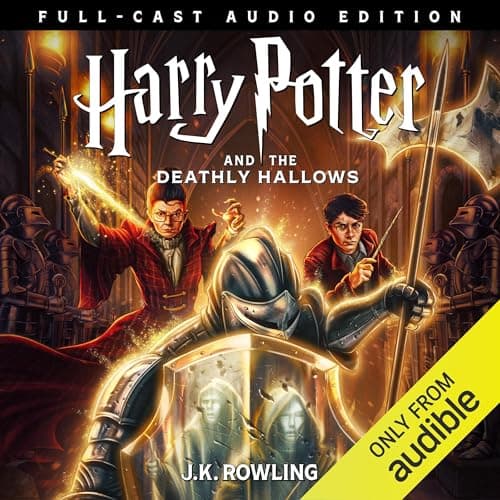
The production does its loudest, most confident work at the two ends of the book: the escape from Privet Drive and the final stand at Hogwarts. Both get the full treatment, and this is where the Dolby Atmos earns its place on the cover. Nitin Sawhney's score was recorded with a 60-piece orchestra at AIR Studios in London, and the theme has been shifting book by book as the story darkens. By the finale it sounds like it grew up with the kids.
But I listen for a living, and spatial audio is a double-edged spell. Back in Order of the Phoenix I warned that directional mixing punishes uneven ears, and that still holds: if one side is much weaker, mono may be the better trade. If both ears are working, though, position becomes a real gift, because it tells you who is speaking before your brain finishes decoding the words. That gift only arrives on proper headphones. One earbud or a phone speaker collapses the space, and you lose much of what the mix is built around. Wearing hearing aids? Try a section first, then decide whether streaming straight to them or wearing over-ear headphones gives you cleaner dialogue. I didn't run into technical problems and haven't seen anyone report them, which is more than I can say for plenty of prestige productions.
Jumbo carries the tent chapters; the kids are the debate
At 20h 30m, the narrator decides whether a full-cast book feels like a story or like a radio play with gaps. Cush Jumbo is the connective tissue. She's what carries you across the long, lonely tent-and-forest stretch where nothing much explodes and three teenagers mostly argue, starve, and doubt each other. She performs. She doesn't just read. And in this book, that matters more than in any other entry, because so much of it happens inside Harry's head.
The Golden Trio is where listeners split. Jaxon Knopf, Rhys Mulligan, and Nina Barker-Francis have been praised as consistently strong, and I mostly agree. But there's a real complaint that Harry's lines come out clenched, as if spoken through gritted teeth, and that Hermione's angry or distressed register tips over the top. I partly get both. Harry spends this whole book bottling grief and fury, so restraint is a defensible choice. Still, a defensible choice and a felt one aren't the same, and a few of his big beats land closer to control than to heartbreak. On Hermione: high-intensity peaks are exactly where my aids start working hardest, so if loud emotional delivery fatigues you, keep that in mind.
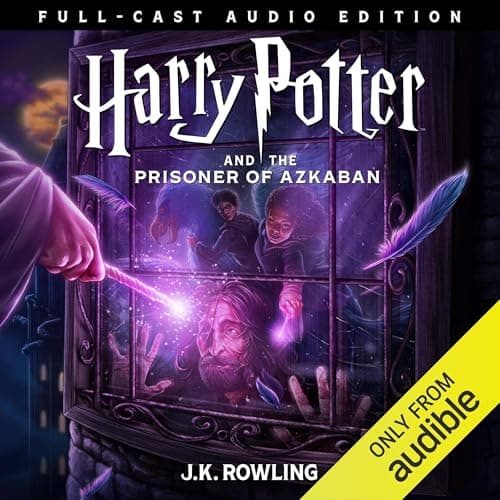
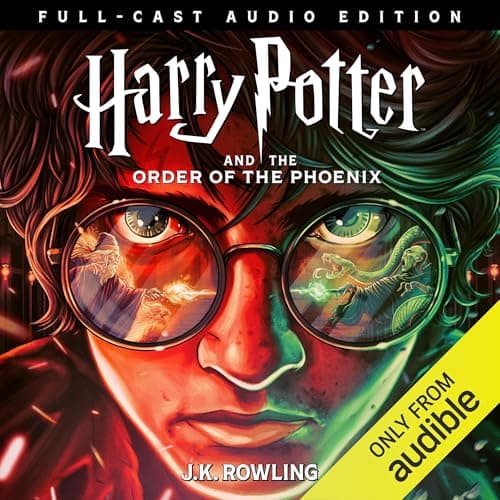
Then there's the adult bench, and this is the book that justifies every name on it. Deathly Hallows is where Snape's whole arc finally pays off in The Prince's Tale, so casting Riz Ahmed stops looking like a luxury and starts looking essential. The restraint I griped about in Prisoner of Azkaban turns out to have been the setup. The groundwork for that payoff was already being laid in Harry Potter and the Order of the Phoenix (Full-Cast Edition), and it reads differently once you know where it lands. Hugh Laurie's Dumbledore gets his long reckoning, while Matthew Macfadyen as Voldemort and Ruth Wilson as Bellatrix get the final book's worst cruelties. When the people in charge of the climax are this strong, the kids' wobbles cost less.
Grief needs room to breathe
The scenes I worried about most weren't the battles. They were the small ones: the grief, the doubt, the moments where loyalty is chosen quietly instead of shouted. Those land with real intimacy. When a production spends this lavishly on orchestra and Atmos, the risk is that everything sounds like a trailer. Here the mix pulls back when the story does, and for a listener who relies on clear dialogue to catch emotional texture, that restraint is the most accessible design choice in the whole package.
(Small aside from the consultant in me: I'd still love a companion text file shipped with these editions. Caption-style sync for a full-cast book with hundreds of voices would be a huge win for deaf and hard-of-hearing families.)
Who should spend the credit
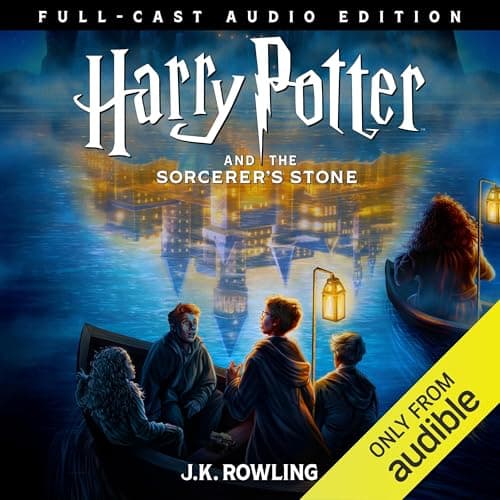
If you've finished books one through six in this format, you're buying this. That's not a recommendation, just a fact. If you haven't started yet, begin where the story does with Harry Potter and the Sorcerer’s Stone (Full-Cast Edition), because this finale only works as the end of a run. If you grew up on Jim Dale or Stephen Fry, this doesn't replace them. Those recordings coexist with this one, and this is a different way back into the story rather than a correction. Pick it if you want the ending staged like an event and you'll listen on headphones with your attention mostly on the story. Hold off if a single voice's intimacy is what you love about audiobooks, or if one shaky lead performance in the most emotional book of the series would sour the whole thing for you.
Unplugging after seven
The tech called my name right as the final stand at Hogwarts was building, and I made her wait ninety seconds. Rude, maybe. Worth it. The production isn't flawless, and the trio's delivery will divide people. But Jumbo's steadiness, a stacked adult cast, and a mix that knows when to go quiet make this a fitting close to the full-cast run.