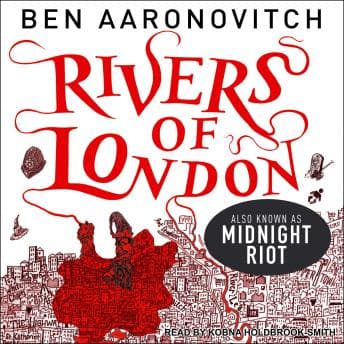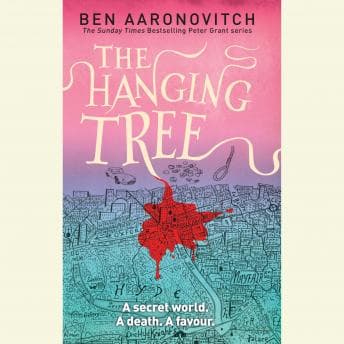

I was supposed to be debugging my procedural dungeon generator at 2 AM. Instead, I'm six hours deep into Peter Grant investigating magical murders among London's obscenely wealthy elite, and my thesis advisor can add another week to his "concerns about my progress." Worth it.
Look, I came to the Rivers of London series late - my D&D group kept recommending it, and they were absolutely right. The Hanging Tree is book six, and Aaronovitch has built something genuinely impressive here. This isn't just "cop who does magic" - it's a fully realized system where the Folly operates like an actual police department, where river goddesses have jurisdictions and politics, where the supernatural underworld has bureaucracy. The magic system is chef's kiss. Peter can't just wave his wand and solve problems. He's got to file reports. He's got to navigate departmental politics. He's got to deal with the fact that Lady Ty - goddess of the Tyburn river - has him doing favors because that's how power works in this world.
When Your Basement Is Bigger Than My Apartment
The class commentary in this one hit different. Peter's investigating a suspicious death at one of those London mega-mansions where the rich literally dig down to add more floors because they've run out of sky. Aaronovitch clearly did his homework on how obscene wealth operates in modern London - the way these people treat law enforcement like staff, the casual assumption that rules are for other people. Peter's working-class London sensibilities bouncing off this world of privilege creates this constant friction that's genuinely funny and occasionally infuriating.
But here's what elevates it: the magical elements thread through the class stuff naturally. The Hanging Tree itself - an actual location with dark historical significance - becomes this symbol of how power and death have always intersected in London. The confrontations with The Faceless Man and the ongoing Leslie May situation add genuine stakes. (No spoilers, but if you've been following the series, you know why Leslie's arc is painful.)
Kobna Holdbrook-Smith Walked So Other Narrators Could Run
Okay, I need to talk about the narration because Kobna Holdbrook-Smith is doing something special here. He's not just reading - he's performing an entire cast. His Peter Grant has this authentic London street accent with just enough educated polish from his Folly training. But then he'll shift to Lady Ty's aristocratic goddess energy, or the various super-rich suspects who all sound subtly different flavors of entitled.
The way he slips between gender, rank, education, era, and accent - it genuinely sounds like multiple actors. There's this moment in Chapter 4 where the cultural knowledge and narration just mesh perfectly, and I actually paused my thesis procrastination to appreciate it. His comedic timing lands the dry humor that Aaronovitch writes so well. Peter's internal commentary about the absurdity of his situation gets these little vocal inflections that made me laugh out loud multiple times. (My roommate asked if I was okay. I was not. I was emotionally invested in magical police procedural.)
One minor thing: occasionally the enunciation gets a bit unclear, especially when he's doing rapid-fire dialogue between multiple characters. And apparently some listeners found his Leslie May voice whiny in earlier books - I didn't have that issue here, but your mileage may vary.
This Is Sanderson-Level World-Building (Fight Me)
I'm gonna say something controversial: Aaronovitch's world-building rivals Sanderson's. Court of Wings and Ruin does similar heavy lifting with its fae politics, though Maas leans harder into the romance angles. Different style, obviously - this is urban fantasy grounded in real London geography and history rather than epic secondary world stuff. But the depth is there. The magic has consistent rules. The supernatural politics make sense. Every river in London has a goddess, and they have territories and feuds and complicated family dynamics. The Folly has institutional history that matters. Peter's relationships with his colleagues, his mentors, his complicated feelings about Leslie - they all develop across books in ways that feel earned.
The Hanging Tree specifically deals with how magic and privilege intersect, which feels like a natural evolution for the series. You could probably start here if you wanted, but honestly? Go back to Rivers of London and work your way up. The payoff is better when you've got the full context.
Who Should Listen (And Who Should Skip)
If you like info-dumps, this is for you (and you're right). If you want your fantasy fast and simple, maybe not - this requires actual attention to catch the nuances. The pacing can feel slow if you're not invested in the procedural elements. Skip this one if you need constant action or hate police procedurals - the bureaucracy is a feature, not a bug.
Perfect for: road trips, dedicated listening sessions, anyone who's ever wanted their D&D campaign to have more paperwork. Not great for: background listening while you're supposed to be working on your thesis. (Trust me.)
Roll for Investigation
Ten hours well spent. The magic system is consistent, the world-building rewards investment, and Kobna Holdbrook-Smith's performance adds a whole extra dimension. Some minor pacing issues and the resolution felt slightly rushed to some listeners, but I was too busy enjoying Peter Grant's chaos to care. My D&D group would love this - I'm making it required listening before our next urban fantasy campaign.
Yes, it's 40 hours if you do the whole series. Yes, it's worth it.