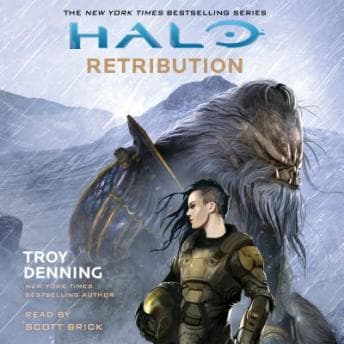

I was supposed to be debugging a procedural terrain generator at 1 AM. That was the plan. Instead I had my headphones on, my IDE open but untouched, and I was twelve hours deep into a Halo novel because apparently my thesis can wait but the Keepers of the One Freedom cannot.
Look, I need to be upfront about something: I'm a Halo kid. Grew up on Combat Evolved, played through Reach with my D&D group in the back of the library when the librarian wasn't looking (she was always looking). So tie-in fiction has a soft spot in my brain right next to Forgotten Realms novels and Star Wars Legends books. Troy Denning has written in both of those sandboxes, and the dude knows how to handle a universe that isn't his.
ONI Runs an Investigation and It's Actually Interesting
Here's where Retribution surprised me compared to a lot of Halo fiction: it's basically a murder mystery wearing power armor. Veta Lopis isn't a Spartan. She's a homicide detective who got folded into ONI, and she's running a team of Spartan-IIIs who are - and this is the part that stuck with me - basically teenagers in augmented bodies. The dynamic between Lopis trying to do actual detective work while commanding soldiers who could bench-press a Warthog creates this tension that feels genuinely different from the usual "Master Chief shoots things" formula.
The assassination of Admiral Tuwa and the abduction of her family sets up what feels like a pretty standard military thriller, but Denning layers in moral dilemmas that actually land. Lopis and her team are working through questions about what ONI is willing to do - and willing to sacrifice - that echo the kind of ethical gray zones I love in good sci-fi. It's not Sanderson-level world-building (what is?), but for a tie-in novel operating inside someone else's universe, the character work is surprisingly meaty. The pieces of the conspiracy click together like a well-designed encounter - you can feel Denning laying groundwork in the first half that pays off when the Argent Moon connection drops. I got a similar satisfaction from the slow-burn plotting in Renegades, where the conspiracy layers stack up in that same deliberate way before everything converges.
If you came in from Last Light or Retribution's predecessor, Lopis feels more fleshed out here. She's got agency. She's not just along for the ride while Blue Team does Blue Team things.
Scott Brick: Commanding But Flat Where It Counts
Okay, so. Scott Brick. I have complicated feelings.
His voice has this deep, authoritative register that fits the Halo universe perfectly. Military briefings, tense standoffs, the general vibe of "humanity barely survived extinction and everyone is stressed" - he nails that tone. When the narrative is rolling and the plot is tight, his delivery carries real weight.
But here's my problem, and it's the same problem I have with narrators who treat every line like a press conference: character differentiation is rough. There were moments - particularly in dialogue-heavy investigation scenes where Lopis is questioning suspects or coordinating with her Spartans - where I genuinely lost track of who was talking. Steven Pacey walked so other narrators could run, and Brick is still kind of... standing in place when it comes to giving characters their own sonic identity. His Lopis doesn't sound distinct enough from his Fred-104, and when you're running a mystery plot where who-said-what matters, that's a real issue.
I wouldn't call him monotone exactly - that's too harsh. But there's a narrow emotional range here. The family tragedy at the core of the plot deserved more vocal variation than it got. It's serviceable. It's professional. It's just not the kind of performance that makes you forget you're listening to one person.
(Compare this to, say, Marc Thompson doing Star Wars novels where you can tell which alien species is talking by inflection alone. Different league.)
Who Gets the Loot Drop, Who Passes
If you're a Halo lore junkie, this is worth your time. The Keepers of the One Freedom stuff expands the post-war political landscape in ways that actually matter for the broader fiction. If you like your sci-fi with investigation mechanics layered over military action - like a procedural episode of a show set in the Haloverse - the progression is satisfying.
But if you need a narrator who gives you clear, distinct character voices to stay engaged with a plot that has a lot of talking heads? You might struggle. And if you're coming in cold with no Halo background, there's a learning curve. If you don't like info-dumps, this isn't for you (but you're wrong).
My D&D group would love the squad dynamics between Lopis and her Spartan-IIIs. That found-family-meets-tactical-unit energy is pure party dynamics.
Rolling a Nat 12 on a D20
I read this instead of writing my thesis, and I don't regret it - but I also didn't immediately queue up the next one. It's a solid Halo novel with better-than-average character work dragged down slightly by a narration that doesn't quite match the story's ambitions. Worth it for fans. Just maybe bump to 1.25x during the slower investigative stretches to keep momentum.