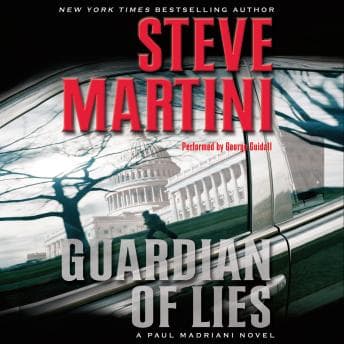

What happens when a legal thriller decides it wants to be a spy novel instead?
I've been listening to Steve Martini's Paul Madriani series for years now—mostly during those late-night grading sessions when I need something to keep me awake through another stack of essays about The Great Gatsby. (Yes, they all think the green light is about money. Every single one.) So when Guardian of Lies showed up, I was expecting the usual courtroom chess match. What I got was... different.
And honestly? I'm still working out how I feel about that.
When the Courtroom Goes Cold War
Look, Martini has always been good at the procedural stuff—the depositions, the cross-examinations, the legal maneuvering that makes you feel smarter just for following along. But this time he's thrown Madriani into something bigger. We're talking CIA connections, rare coin dealers with shadowy pasts, and an assassin who doesn't seem to care about jurisdictional boundaries. It's less John Grisham and more... well, more like if Grisham and Tom Clancy had a very tense lunch meeting.
The Cold War elements actually work better than they should. There's something about secrets that have aged decades, information that was buried before most of my students' parents were born, that gives the whole thing weight. This reminds me of what Hemingway said about icebergs—the dignity of movement comes from what's hidden beneath. Martini gets that here. The conspiracy runs deep, and he parcels out revelations at just the right pace.
But here's the thing—some longtime fans of the series have complained that there's too much action. That the plot veers into "not feasible" territory. And they're not wrong, exactly. There are moments where Madriani is doing things that feel more Jason Bourne than defense attorney. If you loved the earlier books specifically for their courtroom realism, you might find yourself raising an eyebrow.
I didn't mind it. Sometimes you want Shakespeare, sometimes you want a summer blockbuster. This is the blockbuster. Nowhere Safe gave me that same adrenaline-fueled ride—less courtroom, more chase scenes, and I didn't mind one bit.
Guidall's Measured Calm
George Guidall is a narrator I've encountered before, and the man knows what he's doing. His style is calm, measured—almost professorial, which I appreciate. (My students would hate this. I love it.) He doesn't rush through the tension. He lets it build. The prose deserves to be savored, and Guidall seems to understand that pause is punctuation.
Now, I should be honest here—some listeners who've been with this series longer than I have preferred the earlier narrators. The sentiment is clear: there's a "this isn't the voice I'm used to" complaint floating around. And I get it. When you've spent dozens of hours with a character, a new voice can feel like someone else moved into your house and rearranged the furniture.
But taken on its own terms? Guidall is solid. His calm tone actually works beautifully for the espionage elements—there's something unsettling about hearing descriptions of assassination plots delivered in such a measured way. The contrast is effective. And when the emotional moments hit, he doesn't oversell them. He just... lands them. That restraint reminded me of the narration in Other Side of the Pillow, where understatement actually amplified the tension.
The production quality is clean. No weird audio artifacts, no volume jumps. I listened to most of this during my walks along the lakefront with Denise, and I never had to fiddle with the volume or rewind because something got lost in the wind.
Your Listening Assignment
If you're coming to this as a Madriani completist, you already know you're going to listen. The question is whether you'll love it or merely enjoy it. I think that depends on how married you are to the courtroom drama formula.
If you're new to the series—and honestly, I think you could start here without being too lost—this is a pretty good entry point if you like your legal thrillers with a side of political espionage. It's fourteen hours, which is substantial. Worth pausing the faculty meeting for. (Sorry, Principal Martinez.)
Skip this if you want subtle. Skip this if you want strictly realistic legal procedure. But if you're in the mood for a compulsive page-turner—or ear-turner, I suppose—that mixes courtroom credibility with Cold War paranoia? This more than satisfies.
The Washington Times called it "both timely and scary." I'd add: it's also just fun. Sometimes that's enough.