
Look, I need to complain about something first: Alan Gratz has no business making me feel this wrecked by a middle-grade book. I'm a grown man. I have a thesis I'm ignoring. I do not need to be sitting in my apartment at 1 AM with my headphones on, staring at the ceiling, processing the emotional devastation of a book written for twelve-year-olds. And yet. Here we are.
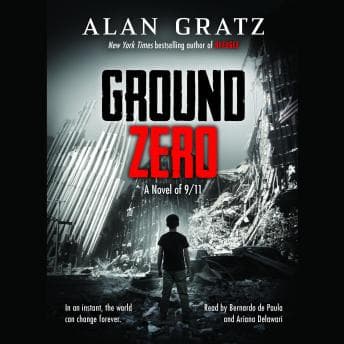
I picked this up because I'd heard Gratz compared to the kind of author who makes history feel like a dungeon crawl — every chapter another room, another encounter, stakes ratcheting up. And honestly? That's not far off. Ground Zero alternates between two timelines — Brandon, a kid trapped on the 107th floor of the World Trade Center on September 11, 2001, and Reshmina, an Afghan girl navigating a Taliban attack on her village on September 11, 2019. Same date, eighteen years apart, and Gratz weaves them together with the kind of structural precision that would make a good DM jealous.
Two Timelines, One Brutal Morning
The alternating chapter structure is where this book earns its keep. Each chapter ends on a cliffhanger — Brandon's floor is collapsing, cut to Reshmina deciding whether to hide an injured American soldier named Taz in her home — and then you're yanked back just when your pulse is spiking. It's manipulative in the best way. Gratz knows exactly what he's doing with pacing, and for a 7.5-hour audiobook, it moves like something half that length. I burned through it during a late-night coding session where I was supposed to be debugging my procedural terrain generator. The terrain generator remains broken. I regret nothing.
What surprised me is how Gratz handles Reshmina's side of the story. This could've easily been a one-sided "America remembers" narrative, but instead he gives equal weight to what life looks like in a village that's been caught between the Taliban and American military operations for nearly two decades. Reshmina's brother is being radicalized. Her grandmother tells stories about the mujahideen fighting the Soviets. The cycle-of-violence theme isn't subtle — Gratz is writing for younger readers, so he's not going to be subtle — but it lands because the characters feel specific, not like mouthpieces. Three Day Road does something similar with dual perspectives across a brutal conflict — different war, same gut-punch of showing how violence echoes through generations of people who never asked to be caught in it.
Delawari and de Paula Split the Weight Perfectly
Having two narrators was the right call here. Bernardo de Paula handles Brandon's chapters with this breathless, panicked energy that works perfectly for a kid who's literally running down 107 flights of smoke-filled stairs. There's a rawness to his delivery during the tower scenes — you can hear the fear without it tipping into melodrama, which is a hard line to walk.
Ariana Delawari takes Reshmina's chapters, and her performance carries this quiet tension that's different from Brandon's outright terror. Reshmina's danger is the slow-burn kind — the kind where you're weighing every decision because one wrong move gets your family killed. Delawari nails that weight. The shift between narrators also gives your brain a clear signal when timelines switch, which keeps the back-and-forth from getting confusing. Smart production choice.
I will say the audio production is pretty bare bones — no sound effects, no music stingers, just clean narration. For this kind of story, that's probably the right move. You don't need explosion sound effects when a narrator is describing a kid watching a plane hit a building. The restraint works.
The Connections Hit Like a Nat 20
Without spoiling the ending, the way Gratz connects these two stories is — okay, it's a bit convenient. My D&D group would call it "DM fiat." But it works emotionally, even if the logical part of your brain raises an eyebrow. The final chapters had me pausing my audiobook and just sitting there. In my desk chair. At 1:47 AM. Like an idiot.
If you don't like info-dumps, this isn't for you (but you're wrong) — Gratz does pause for historical context in places, explaining the political background of both settings. For adult listeners, some of this might feel like review. For the target audience, it's essential. I didn't mind it.
Who's Rolling Initiative on This One
This is a phenomenal listen for parents and kids — if your kid is 10+ and you want to introduce the history of 9/11 and its global aftermath, this is one of the best entry points I've encountered. Content warning: it doesn't shy away from violence and death. People die in these pages. It's handled with care, but it's there.
For adult listeners: manage your expectations on complexity. This is middle-grade fiction. The characters are drawn with broad, clear strokes. The themes aren't ambiguous. But the emotional punch is real, and at under 8 hours, it's a quick listen that'll stick with you longer than it has any right to.
I read this instead of writing my thesis. Dr. Patel, if you're reading this, I promise the chapter on procedural cave generation is coming. Probably.