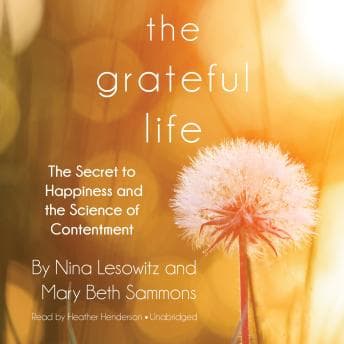

I was making dal makhani at 10 PM on a Tuesday—the kind of elaborate cooking my mother would approve of, the kind that takes three hours and fills my apartment with the smell of butter and spices—when I started this audiobook. Gratitude books. My therapist recommends them. I remain skeptical. The research on gratitude interventions is genuinely solid (Emmons and McCullough's 2003 study is foundational), but the self-help industrial complex has a way of turning good science into greeting card platitudes.
So here I am, stirring lentils and waiting to be annoyed.
The Psychology Actually Checks Out (Mostly)
Here's what surprised me: Lesowitz and Sammons aren't just throwing around feel-good advice. They're working from a framework that aligns with positive psychology research—the connection between gratitude practice and reduced stress, improved relationship satisfaction, decreased social comparison. The research actually shows that grateful people are less likely to attribute others' success to luck, which is a fascinating cognitive pattern. It suggests gratitude rewires how we process fairness and fortune. This kind of cognitive reframing reminds me of the educational psychology in Dumbing Us Down, which examines how institutional structures shape our thinking patterns—though Gatto's focus is on how schools limit rather than expand our cognitive frameworks.
The book structures itself around real stories—people who've used gratitude practices to navigate adversity. Smart choice. Case studies work on the human brain in ways that bullet-pointed advice doesn't. We're narrative creatures. We learn through story. Talking to Strangers uses the same narrative approach to explore how we misread people, though Gladwell's case studies dig deeper into the cognitive biases at play.
But—and this is where my academic skepticism kicks in—the book sometimes conflates correlation with causation. Are grateful people happier because they practice gratitude, or do happier people find it easier to be grateful? The authors don't always distinguish between these, which is a pet peeve of mine. (My dissertation committee would have thoughts.)
Henderson's Voice as Therapeutic Intervention
The narrator choice here is interesting. Henderson has this gentle cadence that feels almost meditative—not performative, not dramatic, just... calm. For a book about gratitude practice, this works. You're not being lectured. You're being guided.
I found myself asking: why does this particular vocal quality feel so appropriate? I think it's because gratitude, as a practice, requires a certain stillness. Henderson's delivery creates space for reflection rather than filling every moment with energy. She's not trying to convince you of anything. She's just presenting.
That said, six hours of gentle is a lot of gentle. By hour four, while I was cleaning up the kitchen (dal turned out excellent, thanks for asking), I noticed my attention drifting. There's no vocal variation to snap you back. No character voices to differentiate—which makes sense, this isn't fiction—but it does mean the listening experience can blur together.
Where the Gratitude Lands (And Where It Misses)
The exercises and resources scattered throughout are genuinely useful. Practical gratitude interventions, journaling prompts, that sort of thing. If you're looking for a structured approach to building a gratitude practice, this delivers.
The motivational quotes, though? Less compelling. They feel like filler—the kind of inspirational content you scroll past on Instagram. The book is strongest when it's grounded in specific stories and weakest when it reaches for universal profundity.
Psychologically, this doesn't track as a complete transformation guide. Gratitude is one tool in the emotional regulation toolkit, not a magic solution. The subtitle promises "the secret to happiness," which is overselling. There is no secret. There's practice, there's intention, there's neuroplasticity over time. The authors know this—you can tell from the nuance in their better sections—but the marketing copy does them a disservice.
Who This Is For (And Who Should Run)
Listen if: you're curious about gratitude practice but want more than a listicle, you respond well to real-life stories rather than abstract advice, you need something calming for background listening while doing repetitive tasks.
Skip if: you want rigorous scientific deep-dives (read the actual Emmons research instead), you're already well-versed in positive psychology, or you need high-energy narration to stay engaged.
The six-hour runtime is manageable but not tight. There's repetition. The core concepts could probably be communicated in four hours, but self-help books rarely trust their readers that much.
The Grade I'd Give It
I finished this audiobook while grading undergraduate papers on attachment theory. (The irony of evaluating student work while listening to a book about gratitude was not lost on me.) It's a competent, well-intentioned guide that does what it promises—provides stories, exercises, and a framework for grateful living.
Is it transformative? That depends on where you're starting. For someone new to gratitude practice, this could be genuinely useful. For someone like me, who's read the research and maintains a healthy skepticism about self-help promises, it's pleasant but not revelatory.
Henderson's narration elevates what could have been a dry recitation into something listenable. The authors clearly believe in their subject. And the underlying psychology is sound, even when the presentation occasionally veers into platitude.
My therapist would probably say I'm being too critical. She might be right. But that's kind of my job.