
I was grading sophomore essays on The Scarlet Letter at 11 PM - the third stack this week - when Tavia Gilbert said something that made me put my red pen down. She was narrating a passage about how Christian parents, with the best of intentions, can turn their homes into little courtrooms where kids learn to perform righteousness rather than understand it. And I thought: that's not just parenting. That's my classroom. That's every institution that confuses compliance with transformation.
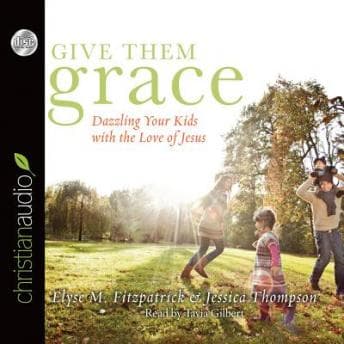
Let me back up. Give Them Grace is not the parenting book I expected. I'm not even the target audience, really - Denise and I never had kids, though we've joked that my 150 students count. But my sister-in-law recommended it after a conversation about her two boys, and I figured six and a half hours was a reasonable investment.
The Pharisee Problem (And Why It Hit Home)
Fitzpatrick and Thompson's central argument is deceptively simple: Christian parents tend to raise either Pharisees or prodigals, and both outcomes stem from the same mistake - centering discipline on rules rather than grace. The prose deserves to be savored here because the authors don't just state this thesis and move on. They build it methodically, walking through concepts like regeneration, adoption, and justification - heavy theological vocabulary - and then grounding each one in the mundane reality of a kid who won't share toys or a teenager who lies about where they were Friday night.
What the authors are really saying - and this is what stopped my grading cold - is that you cannot moralize someone into goodness. You can't create a checklist of behaviors and call the result a transformed heart. It's the same tension Roland Merullo explores from a completely different angle in Breakfast with Buddha - a novel that keeps asking whether inner transformation is something you can schedule or whether it just arrives when you stop performing. This reminds me of what Hemingway said about writing: the dignity of movement of an iceberg is due to only one-eighth of it being above water. Fitzpatrick and Thompson want parents to stop polishing the visible eighth and start caring about what's underneath.
Now, I'll be honest. There are stretches where the theological scaffolding gets dense. The discussions of propitiation and imputed righteousness assume a reader who's already bought into Reformed theology. If you're coming from a different tradition - or no tradition at all - some passages will feel like walking into the middle of someone else's family argument. You'll catch the emotion but miss the references.
Tavia Gilbert Sings Hymns and I Stopped Walking
Let's talk about the narration, because this is where the audiobook earns its format. Tavia Gilbert does something I rarely hear in nonfiction narration: she interprets the material like she's lived it. Her voice carries the weight of someone who's actually sat with a crying child at 2 AM wondering if she's doing it right. The narrator understands that pause is punctuation - she lets the hard truths land before moving forward.
But here's the moment that got me. There's a portion where Gilbert actually sings a hymn. In key. With genuine tenderness. I was walking the lakefront on a Saturday morning and I literally stopped on the path. A jogger had to swerve around me. I hit rewind and listened again. In an audiobook about theology and parenting, this woman just... sang. And it worked. It wasn't performative or cheesy. It was the audio equivalent of a mother humming over a sleeping child, and it captured the book's whole argument about grace better than any paragraph could.
She also handles the parent-child dialogue sections well - shifts her register enough that you know who's speaking without it becoming a cartoon. And her pronunciation of theological terms is precise (she nails "propitiation" like she's been saying it her whole life), which matters when your audience is people who will absolutely notice if you don't.
Who This Is For (And Who Should Keep Walking)
If you're a Christian parent who's ever felt the tension between wanting your kids to behave and wanting them to actually understand why - this book is speaking directly to you. It's not a how-to manual. Don't come looking for five steps to better bedtime routines. Come looking for a framework that challenges you to examine whether your parenting is driven by the gospel or by fear.
If you're not coming from a Christian perspective, this will feel like eavesdropping on a very specific conversation. You might appreciate the psychology underneath, but the theological language will be a barrier. And if you're already deep into grace-centered theology, some of this will feel like review - though the parent-child application keeps it grounded enough to stay fresh.
My students would hate this. I love it. Not because I agree with every theological premise - I'm an English teacher, not a theologian - but because the underlying argument about grace versus legalism maps onto every relationship where one person has authority over another. Including mine. Including the one between me and that stack of ungraded essays.
Worth Pausing the Red Pen For
At six and a half hours, this is a focused listen that rewards attention. It's not background material - the theological concepts build on each other, and you'll lose the thread if you zone out. But if you give it the space it asks for, it'll give you something back. Especially if Gilbert decides to sing.