
"What if you discovered you have been entrusted with an invisible, invincible, and incorruptible weapon?"
That's how Lisa Bevere opens the door. And honestly? It's a heck of a lot more compelling than the usual "breathe in, breathe out" advice I get from my mindfulness apps.
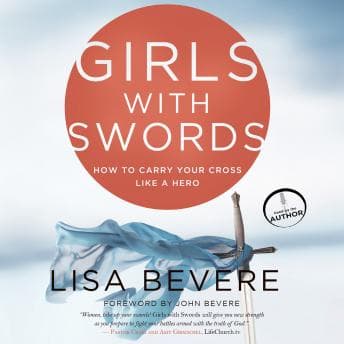
I listened to Girls with Swords during my morning run along the Charles River—mostly because I needed something high-energy to distract me from the fact that running is terrible. I usually stick to true crime or thrillers (because I like my chaos controlled), but the title grabbed me. Swords? Heroism? It sounded like a Jungian archetype field day.
(My therapist would probably say I'm looking for external validation of my own defensive mechanisms, but let's ignore her for a minute.)
The Anti-Victim Narrative
Here's the thing about psychology: we talk a lot about trauma and victimhood. It's important. But what Bevere does here is fascinating from a narrative identity perspective—she flips the script entirely. She's not asking you to cope; she's asking you to fight.
Most self-help books—especially the ones targeted at women—tend to be soft. They're about acceptance, gentleness, finding your inner calm. This isn't that. This is aggressive. It's Xena Warrior Princess meets Sunday School. Bevere frames the challenges women face (trafficking, abuse, prejudice) not just as tragedies, but as evidence of a spiritual threat that requires a militant response.
Psychologically, this is a massive shift in agency. Instead of being the passive recipient of pain, the listener becomes an active combatant. Getting the Love You Want works a quieter version of that same psychological lever, turning old relational scripts into something you can actually challenge instead of just reenact. It reminds me of the dramatic, high-stakes speeches in the Bollywood movies I grew up on—where the mother figure isn't just suffering, she's holding a trident and demanding justice. Bevere taps into that same primal need for power in a powerless situation.
When the Author Takes the Mic
I'm usually skeptical of author-narrated audiobooks. Just because you wrote the words doesn't mean you know how to say them. But Bevere nails this.
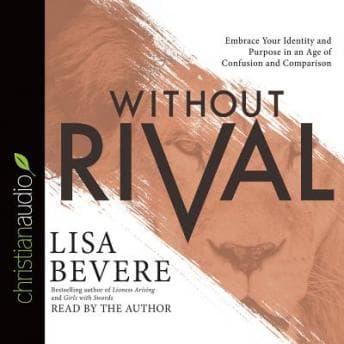
That same certainty is all over Without Rival, where Bevere again sounds less like she's presenting an argument and more like she's staging an intervention for your self-concept.
She doesn't read like a narrator; she speaks like a general rallying troops. Her voice is warm, sure, but there's steel underneath it. You can tell she believes every single syllable. There were moments—specifically when she talks about "intercession"—where I forgot I was analyzing the text for patterns and just felt... emboldened?
(Don't tell my dissertation committee I said that. I have a reputation to maintain.)
Compared to something like Brené Brown, who invites you into a conversation with a cup of tea, Bevere feels like she's handing you armor and pointing you toward the battlefield. Completely different energy. If you're looking for a soothing bedtime listen, this ain't it. You'll be too amped up to sleep.
Who's Going to Love This (And Who Should Run)
Christian women who are tired of being told to just be nice—this is your book. If you want faith-based motivation with actual teeth, Bevere delivers. But if spiritual warfare language makes you uncomfortable, or you're looking for gentle self-care vibes, you're going to bounce off this hard.
My Verdict, Over Burnt Toast
Look, the metaphor gets stretched a little thin in places. As a researcher, I twitch when analogies are pushed past their breaking point, and there are moments where the "sword" imagery feels repetitive.
But as a study in motivation? It works. It's a call to arms. It's fierce. It's loud. And frankly, it made my run go by way faster than usual.