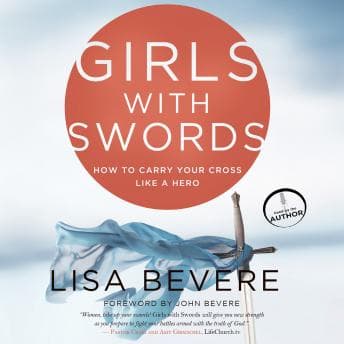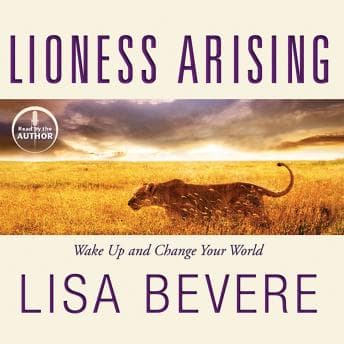

Look, I have a confession. I am not Lisa Bevere's target audience. I'm a psychology researcher who reads self-help books the way a mechanic watches car commercials — half genuine interest, half professional skepticism. So when I tell you this book got under my skin a little? That means something.
Here's my complaint, though, and I need to get it out of the way: the lioness metaphor. It is everywhere. Every chapter, every anecdote, every biblical reference loops back to lionesses. By hour three, I was on a jog through Cambridge, dodging puddles, and I caught myself thinking, "If she says 'roar' one more time, I'm switching to a true crime podcast." She did say it again. I didn't switch. That tells you something about the delivery.
When the Author Is the Narrator and It Actually Works
This is one of those rare cases where the author reading her own book isn't just acceptable — it's the point. Lisa Bevere wrote these words as spoken exhortations, not as quiet prose meant for the page. You can hear it in her cadence. She speeds up when she's passionate about a particular scriptural connection, slows down when she's making a personal confession, and there are moments where her voice catches with genuine emotion that no hired narrator could replicate. One listener nailed it when they said the audiobook "stirred their spirit in ways that the hardcopy simply couldn't." I'm not a particularly spirit-stirred person, but I understand why they said it. Bevere's tone has this urgent warmth — like a mentor grabbing your shoulders and saying, "You need to hear this."
Psychologically, this tracks. The research actually shows that when speakers deliver their own material with authentic emotional investment, listeners process the message with significantly higher engagement. Bevere isn't performing her book. She's preaching it. And preaching, whatever you think of it, is a specific vocal art. She's good at it.
Hearing her own words hit differently made me want to revisit Girls with Swords, where Bevere deploys that same preaching cadence to very different effect.The downside? There's no vocal variety in terms of character or perspective shifts, because this isn't that kind of book. It's one woman's voice for six hours and forty-one minutes. If you need tonal range or multiple voices, this will feel flat. But that's a genre expectation issue, not a quality issue.
The Psychology of the Lioness (And Where It Gets Interesting)
Okay, here's where I put on my researcher hat. Bevere uses the lioness as an identity framework — she's essentially asking women to adopt a narrative identity built around strength, protectiveness, collective action, and unapologetic presence. From a narrative psychology perspective, this is a fascinating case study in metaphor-driven self-concept. She's not just saying "be strong." She's saying "you are this creature — now act like it."
Identity construction through a faith lens is exactly what Search for Significance attempts too, though Bevere's zoological anchor gives her metaphor more traction than most.And honestly? The biological details about lionesses are the most compelling parts of the book. Lionesses as the primary hunters. Lionesses as the strategic collective. Lionesses as the ones who actually run the pride while the lion gets the credit. Bevere weaves these nature facts into her spiritual framework with real enthusiasm, and some of them genuinely surprised me. I found myself asking: why does this animal metaphor land harder than the standard "warrior princess" language that dominates women's empowerment spaces? I think it's because lionesses are specific. They have documented behaviors. There's something grounding about anchoring aspiration in zoology rather than abstraction.
Where it wobbles — and I'm being honest here — is when the biblical references stack up so densely that the psychological insight gets buried. There are stretches in the middle hours where the book reads more like a sermon series than a self-help guide. If you're deeply embedded in Christian faith, this will feel like oxygen. If you're not, you'll feel like you're auditing a theology class you didn't sign up for. I was somewhere in between, which meant I was engaged for about 70% of it and politely zoning out for the other 30.
Who Should Press Play (And Who Should Keep Scrolling)
This book is for women of faith who are tired of being told to be gentle and quiet and are looking for a biblical framework that says strength isn't unfeminine. It's for the woman who needs permission to take up space, couched in language she trusts. If that's you — genuinely, listen to this one on a run. Something about physical movement plus Bevere's urgent delivery creates a momentum that works.
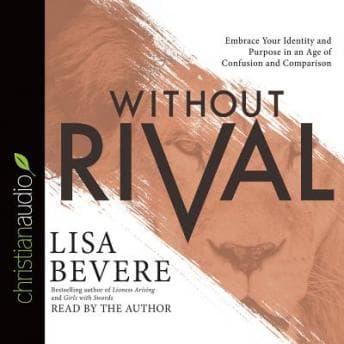
If you're secular, if you're looking for evidence-based self-help, if metaphors repeated past the point of utility make you twitchy — this probably isn't your book. Though I'd argue Without Rival covers similar empowerment territory with slightly less metaphorical saturation if you want Bevere without the extended zoology. And that's fine. Not every roar is for every ear.
My Clinical Note
I listened to this while making my mother's rajma recipe at 9 PM on a Tuesday, alone in my apartment, and I'll admit — there was a moment in the last hour where Bevere talked about women lending their voices to the silenced, and I stopped stirring. Just stood there with a wooden spoon in my hand. The protagonist of this book — because Bevere is both author and protagonist — exhibits classic characteristics of someone who has genuinely processed her own silence and come out the other side angry about it. Not bitter angry. Purposeful angry. My therapist would have thoughts about this character, and most of them would be approving.