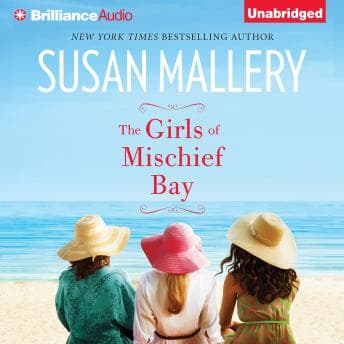

I almost didn't give this one a fair shake. Contemporary women's fiction about Pilates studio owners and stay-at-home moms? Not exactly my wheelhouse. My students would say I'm too busy being pretentious about Faulkner to appreciate anything published after 1960. They're half right.
But Denise had been listening to the Mischief Bay series during her morning walks, and she kept coming home with this look—the one she gets when she's processing something real. So I downloaded it for a particularly brutal stack of junior essays on The Great Gatsby. (Spoiler: Fitzgerald deserved better than what those kids did to him.)
And here's the thing. Susan Mallery isn't trying to be Hemingway. She's doing something different, and she's doing it well.
Three Women, One Narrator, Occasional Confusion
The structure follows Nicole, Shannon, and Pam—three friends navigating that particular brand of existential crisis that hits when you realize your life looks nothing like the brochure. Nicole's husband quit his job to write a screenplay he won't show anyone while she runs a Pilates studio AND handles all the childcare. Shannon sacrificed everything for her career and now wonders if the trade was worth it. Pam's kids are grown and she's staring down the barrel of "now what?"
Tanya Eby narrates all three perspectives, and this is where the audiobook gets tricky. Her emotional delivery is genuinely excellent—she captures the irony, the frustration, the moments of genuine warmth between these women. The pauses land where they should. When Pam's marriage takes an unexpected turn, Eby's voice carries the weight of it.
But—and this is a real "but"—the character differentiation is subtle. Too subtle, sometimes. I found myself rewinding to figure out whose head I was in. The three women share similar speech patterns, similar internal monologue styles, and Eby's tonal shifts aren't always dramatic enough to signal the switch. If you're grading papers while listening (not that I would ever do such a thing during a faculty meeting), you'll lose the thread.
This demands focused listening. Which is ironic for a book that seems designed for casual consumption.
What Mallery Actually Does Well
Here's what surprised me: the prose has more teeth than I expected. Nicole's resentment toward her husband builds with the kind of slow accumulation that feels uncomfortably real. It's not melodrama—it's the quiet erosion of a marriage where one person stopped showing up. The screenplay he won't share becomes a perfect symbol. We never see it. Neither does Nicole. That's the point. That kind of symbolic restraint—showing character through what's withheld—reminded me of the layered deception in I Am Pilgrim: A Thriller, where what characters refuse to reveal becomes the entire engine of tension.
Pam's storyline initially felt like it would be the weakest—the bored housewife trope—but Mallery subverts it. When Pam starts finding "sexy new ways to surprise her husband," it's played for humor, yes, but there's genuine vulnerability underneath. She's trying to matter again. And then the unexpected change hits and the humor drains out fast.
Shannon's arc about whether she can "have it all" treads familiar ground, but the bombshell her new boyfriend drops (I won't spoil it) actually complicates the question in interesting ways. It's not just about work-life balance. It's about what you're willing to accept from someone else's past. It Starts with Us: A Novel wrestles with that same question—how much of someone's history becomes your burden—though Hoover leans harder into the emotional wreckage.
The Pacing Problem Nobody Wants to Mention
At ten and a half hours, this book occasionally feels its length. Some listeners found the pacing uneven, and I'd agree—there are stretches in the middle where the three storylines seem to spin their wheels simultaneously. Mallery is setting up emotional payoffs, but the setup phase drags.
I listened at my usual 1.0x (the author chose those words, etc.) and there were moments I considered bumping it up. I didn't. But I considered it.
Who This Works For (And Who It Won't)
If you love character-driven stories about female friendship and the messy reality of modern relationships, this delivers. Mallery's humor is warm without being saccharine, and the friendship between these three women feels earned rather than manufactured. But if you need clear narrator voices for each character, you might struggle. If you're looking for plot-driven drama with constant momentum, look elsewhere. And if you're a high school English teacher who's supposed to be grading essays—maybe save this for the lakefront walk instead.
My students would hate this. Too much emotional processing, not enough explosions. But they also think audiobooks are for "old people," so their judgment is suspect.
The Final Grade
This isn't a must-listen in the "drop everything" sense. But it's a solid, emotionally intelligent story about women supporting each other through the parts of life nobody prepares you for. Tanya Eby's performance has genuine moments of excellence—her emotional delivery during the major life events is worth the occasional confusion about who's speaking.
Wait for a sale, or grab it through your library app. It's the kind of book that rewards patience and focused attention, which—let's be honest—is harder to give than it used to be.
Denise finished the series before I finished this first book. She says it gets better. I believe her. She has better taste in contemporary fiction than I do.
(She also stays awake during my Faulkner episodes. Allegedly.)