
What do you do when someone hands you a baby and the whole world is watching - not because they want you to save it, but because they want you to decide if it deserves to exist?
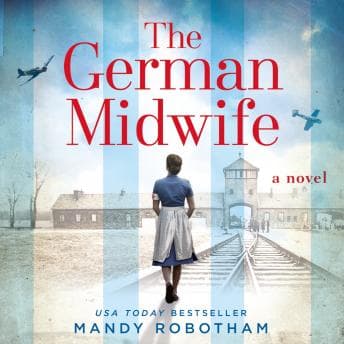
I was three hours into a brand redesign for a local bakery, had my headphones on, Frida asleep on my keyboard (as usual), and I just... stopped working. Stylus down. Hand over my mouth. Because Anke is in a labor camp delivering babies she knows might not survive the week, and Robotham writes these birth scenes with the kind of brutal, unflinching specificity that made me forget I was listening to fiction. The author is a practicing midwife, and you can feel it - the clinical details don't read like research, they read like muscle memory. The way she describes a woman's body working against impossible conditions, the sounds, the visceral reality of bringing life into a place designed for death. I was wrecked.
When the Premise Asks More Than the Plot Can Carry
Here's the thing. The concept is extraordinary - a camp prisoner forced to become Eva Braun's personal midwife, carrying the Führer's secret child. That's a telenovela premise, and I mean that as the highest compliment. Abuela would have been SCREAMING at this setup. The moral weight of it - do you protect an innocent baby even if its father is a monster? - that question haunted me for days.
But the execution doesn't always match the ambition. The middle section sags. There are stretches where Anke's internal conflict feels repetitive rather than deepening, like the book is circling the same emotional airport without landing. And some of the secondary characters feel more like historical set dressing than people. I wanted more texture in the relationships, more mess, more of that impossible intimacy that forms between women in crisis. When Robotham leans into the camp scenes and the birth scenes, she's writing with her whole chest. When she pulls back to handle plot mechanics and historical logistics, it loses heat.
The moments that gutted me, though? They gutted me completely. There's a scene where Anke delivers a baby in the camp knowing full well what's coming, and the tenderness she shows - wrapping the child, whispering to the mother - while understanding the horror just outside the door. That contrast. That quiet defiance dressed up as routine medical care. My heart. MY HEART.
Julia Winwood and the Accent Problem Nobody Can Agree On
Okay, so. Julia Winwood. I have feelings.
She's genuinely good at emotional delivery - the birth scenes land partly because of how she pitches Anke's voice, this controlled calm that cracks at exactly the right moments. When Anke is afraid, Winwood doesn't go big. She goes quiet. That restraint? I respect it deeply.
But - and this is a real but - the accent choices are... confusing. She gives the household servants a Northern English regional accent, and listen, I spent a solid forty minutes trying to figure out if I'd accidentally switched to a different audiobook. We're in Germany. In 1944. And suddenly someone sounds like they're from Yorkshire asking about tea. It pulled me out of the story more than once. I know accent work in historical fiction is always a compromise - you can't narrate everything in German - but the inconsistency is distracting. Some characters sound appropriately continental, others sound like they wandered in from a BBC period drama set in a completely different country.
It's not a dealbreaker, but it kept me from fully sinking into certain scenes. And for a book that depends on emotional immersion, that matters. I'd put Winwood at a solid "good but uneven" - she nails the heart of it and fumbles some of the geography.
Who Needs to Hear This (and Who Should Maybe Read It Instead)
If you're someone who processes WWII fiction through feeling rather than plot - if you want to sit with impossible moral questions and not be given easy answers - this is your book. If you're a birth worker, a nurse, anyone who's held someone's hand through the hardest moment of their life, the specificity of the medical scenes will hit you somewhere deep.
But if accent inconsistencies in narration are a dealbreaker for you, consider the print version. I'm serious. The story deserves your attention, and I don't want Winwood's Yorkshire detour to be the reason you bounce off it.
Also: content warnings are real here. Graphic birth scenes, camp violence, the casual bureaucracy of genocide. This is not a rainy Sunday book. This is a "clear your schedule and have tissues" book. Honestly, Dark Gold gave me a similar warning-label feeling going in - that sense that you need to be emotionally prepared before the first page, not halfway through it.
The Part Where Abuela Would've Clutched Her Rosary
I ugly-cried twice. Once during a camp delivery scene that I won't spoil, and once near the end when the full weight of Anke's choice crystallizes. Robotham earned those tears honestly - not with manipulation, but with the accumulated pressure of watching a woman try to be human inside an inhuman system.
Abuela would have loved this one. She would have called Anke "una mujer de verdad" and then made me chamomile tea because she'd see my face and know.
This book felt like holding a candle in a room where someone keeps trying to blow it out. Imperfect, yes. But the light is real.