
Look, if you're going to narrate a book about the United States Army and you can't pronounce basic military acronyms correctly, we've got a problem. That's where this one lost me early - and I had to fight my way back in.
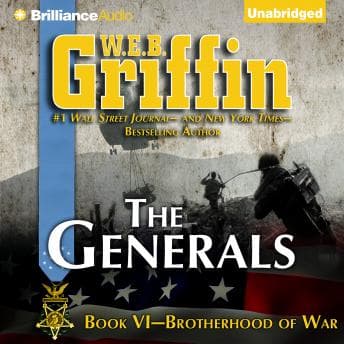
I was up late finishing a security assessment for a client, Ranger sprawled across my feet under the desk, and I figured I'd let Griffin's The Generals carry me through the last hour of paperwork. Book six of Brotherhood of War. I've been with this series since The Lieutenants, so I'm invested. Griffin was the real deal - Army veteran, counter-intelligence background, combat correspondent. The man knew how soldiers talk, how they think, how they screw up and cover for each other. That authenticity is what keeps me coming back. It's the same quality I found in New Iberia Blues — that sense that the writer has actually lived somewhere near the world he's putting on the page, and it shows in every detail.
The Pronunciation Problem That Nearly Killed My Patience
Eric G. Dove is a competent narrator. Multiple Earphones Awards, solid emotional delivery, and he handles Griffin's sprawling cast reasonably well. But here's the thing - when you're reading military fiction to a military audience, getting the terminology right isn't optional. It's table stakes. Dove trips over acronyms that any veteran would catch in a heartbeat, and each one yanked me right out of the story. It's like watching a war movie where the uniforms are wrong. You can't unsee it. I can't unhear it.
Now, is this entirely Dove's fault? Probably not. Somebody in production should've had a military consultant on speed dial. But the result is the same - it creates friction exactly where the book should be building credibility.
Where Griffin's Homework Pays Off
The story itself spans an ambitious arc - Normandy to the South Pacific, Korea to Dien Bien Phu, and finally into the early stages of Vietnam. Griffin understood something most military fiction writers don't: generals aren't just guys who point at maps. They're politicians, bureaucrats, mentors, and occasionally - when the moment demands it - warriors. The ass-chewing scenes between senior officers are genuinely the highlights here. Griffin nails the dynamics of military leadership conversations where careers hang on a single sentence, where a two-star can dress down a colonel with surgical precision while technically staying polite. I've been in those rooms. I've seen that scenario play out in real life. Griffin gets the rhythm of it right.
The character development across six books is paying dividends by now. You've watched these men come up from company-grade officers to flag rank, and there's weight to their decisions because you remember when they were young and dumb. That's the advantage of a series this deep - you've earned the emotional investment.
The Energy Deficit
Here's where I have to be honest. This book drags. Not everywhere, not fatally, but enough that I noticed - and I was listening at 1.25x. There are stretches in the middle where the pacing goes flat, where Griffin's attention to procedural detail crosses the line from authenticity into tedium. Some of that is the nature of Book 6 in any series - you're doing setup work for the Vietnam-era storylines, and setup isn't always exciting.
Dove's delivery doesn't help during these slower sections. He's steady, reliable, but he doesn't inject urgency when the text needs it. When you're describing the political maneuvering behind troop deployments to Southeast Asia, you need a narrator who can make bureaucratic tension feel dangerous. Dove keeps it at a consistent simmer when sometimes you need the heat turned up.
I'll say this - if you've read the first five books, you're going to finish this one regardless of what I tell you. And you should. The Brotherhood of War series is one of the best military fiction series ever written by someone who actually served. But if you're thinking about jumping in at Book 6? Don't. Start at the beginning. The payoff here depends entirely on what you've built up over the previous five entries.
Who Gets the Green Light
Brotherhood of War loyalists - you already know you're listening to this. Military fiction fans who appreciate authentic detail over Hollywood heroics will find plenty to like. If you're bothered by pronunciation issues with military terminology (and you should be), be warned - it's a recurring irritant.
Skip this if you want standalone action or if you haven't read the earlier books. And if someone calling a magazine a clip makes your eye twitch, Dove's acronym struggles will test your patience.
Mission Debrief
Worth your time? Here's the debrief: Griffin's writing holds up. The man could build characters across decades of military history like nobody else. But this particular audiobook production doesn't quite match the quality of the source material. Dove is competent but not exceptional for this genre, and the pacing issues in the text get amplified rather than smoothed over in audio form. Ranger fell asleep during the slow parts. I nearly joined him. But those general-officer scenes where careers get made and broken in a single conversation? Those are worth the price of admission.