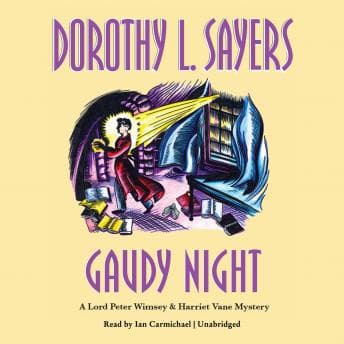

Fifteen and a half hours. That's what this audiobook demands from you. Almost four night shifts of commute time, and Dorothy L. Sayers spends roughly the first third having Harriet Vane wander around Oxford thinking about Latin quotations and whether she should marry Lord Peter Wimsey. As someone who spends her nights triaging actual emergencies, I was yelling at my dashboard: "Someone is sending death threats! There's a girl who tried to drown herself! Can we maybe pick up the pace here?"
But here's the thing. By hour eight, I got it. I finally understood what Sayers was doing, and I stopped being annoyed.
When the Slow Burn Actually Works
This is not a mystery you solve. This is a mystery you marinate in. The poison-pen letters, the burnt effigies, the scrawled obscenities in the Senior Common Room—they're almost secondary to watching Harriet Vane wrestle with her own demons. After five years of turning down Lord Peter's proposals, she's finally asking herself why. And Sayers makes you sit with that discomfort.
Ian Carmichael—who actually played Wimsey on the BBC, so he knows this character in his bones—brings this aristocratic lisp that somehow conveys both privilege and genuine intelligence. When he voices Peter, there's audible sharpness underneath the posh accent. Like he's playing at being a dilettante but you know he could outthink everyone in the room. The dons and alums each get their own flavor of academic stuffiness. You can tell which character is speaking without Carmichael announcing it.
The duet scene between Peter and Harriet? Carlos asked why I was crying in the car. I blamed allergies. It wasn't allergies.
The Medical Professional's Complaint Corner
Okay, the suicidal student subplot. Sayers handles it with surprising sensitivity for the 1930s—the emotional delivery Carmichael gives this young woman, desperate and cornered by vicious letters, actually made me grip my steering wheel. But the aftermath? The way the college responds? This is not how any institution should handle a psychiatric emergency. Trust me. I've called more crisis interventions than I can count. For actual psychological horror that gets the mental health piece right, Six Creepy Stories by Edgar Allan Poe is surprisingly grounded despite the Gothic trappings.
But I'm grading on a curve here. This was written in 1935. The fact that Sayers treats the student's despair as legitimate rather than dramatic weakness puts her ahead of plenty of modern thrillers I've listened to.
Carmichael's Marathon Pacing
I have to be honest—Carmichael sounds almost winded in the early hours. Like he's pacing himself for a marathon and not quite hitting his stride. There are moments where the volume wavers and I had to adjust my car speakers. This is a recording from an older era, and it shows. By the middle chapters, he finds his rhythm, but those first few hours require patience.
If you're coming from his other Wimsey performances, some listeners feel he's less engaged here. I think it's intentional—this book is from Harriet's perspective, more introspective, less action. Carmichael adjusts his energy accordingly. Whether that works for you depends on what you want from a mystery audiobook.
Who Should Queue This Up (And Who Should Skip)
This is night shift approved—but only for the right kind of listener. If you want something to keep you awake during 3 AM charting, this isn't it. The pacing will put you to sleep. But if you're driving home at 7 AM, decompressing from a rough shift, wanting something that asks you to think rather than just react? Perfect.
Skip this if you need plot momentum. Skip this if you want your mysteries wrapped up neatly with action sequences. Skip this if you're listening at 1.5x speed while doing something else—you'll miss the nuance and wonder why people love Sayers.
Listen to this if you want to spend fifteen hours inside the head of a complicated woman making a complicated decision. If you appreciate Oxford academia and Latin quotations and the specific tension of women in intellectual spaces. If you want a romance that earns its ending.
End of Shift Notes
My mom would love this. (She still thinks I should've been a doctor.) It's got that old-world respectability she admires, the kind of mystery where people are clever rather than violent. The ending—when Harriet finally makes her decision about Peter—feels earned in a way that most romance subplots don't.
Is it slow? Yes. Does Carmichael sound winded sometimes? Yes. Is it worth fifteen hours of your life? If you're the right listener, absolutely. I finished it on a Tuesday morning, parked in my driveway for an extra ten minutes because I couldn't walk away from the final scene.
That's the test, isn't it? Whether a book makes you late for your own life.