
"Vier Brüder, durch ein unzertrennbares Band miteinander verbunden" - that line hit me somewhere around hour two, walking Luna through the canyon trails behind my apartment complex at dusk, the Santa Ana winds kicking up dust that made my eyes water. Or maybe that was something else making my eyes water.
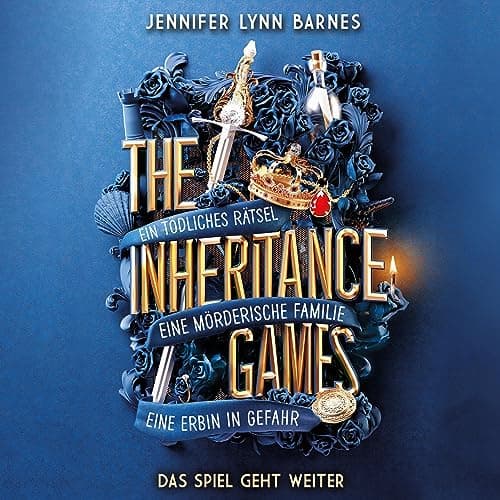
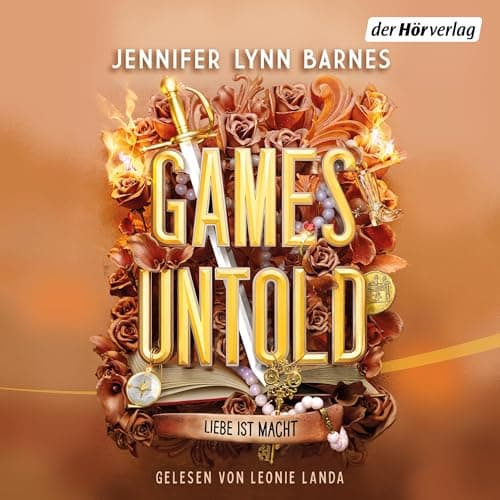
Let me be real upfront: this is the German-language audiobook of Games Untold, the companion collection to Jennifer Lynn Barnes's Inheritance Games series, and I came to it sideways. One of my teens - sixteen, genderqueer, brilliant, working through some heavy abandonment stuff - has been absolutely consumed by the Hawthorne brothers for months. They kept saying "Noa, you HAVE to understand these characters to understand me." So here I am, twelve hours deep in a language I only half-follow (thank god for the English text I read alongside), trying to understand why four ridiculously wealthy brothers and one outsider girl named Avery Grambs have become a lifeline for this kid.
And honestly? I get it now.
The Hawthorne Brothers as a Case Study in Chosen Family
Barnes writes these brothers - Grayson, Jameson, Xander, and Nash - like she actually understands sibling trauma bonds. Not the Hallmark version. The version where loyalty is forged through shared surveillance by a manipulative grandfather, where love languages get twisted into puzzles and competitions because direct emotional expression was never modeled for them. Each story in this collection peels back a different layer of how these four boys became who they are, and I found myself doing what I always do: analyzing their coping mechanisms.
Grayson's perfectionism reads like textbook anxious attachment. Jameson's recklessness? Classic avoidance dressed up as adventure-seeking. The way Xander uses humor as a shield - I see that in my office every single day. And Nash, the oldest, carrying everyone's weight while pretending he doesn't have his own. These aren't just YA archetypes. Each one feels like one of my kids. The layered, morally complex ensemble in The Atlas Six gave me that same sensation of watching fictional people carry wounds I recognize from my caseload.
The stories that focus on the brothers' childhood - before Avery, before the inheritance bombshell - are the strongest. Barnes clearly did her homework on how growing up in a gilded cage with a puppetmaster grandfather shapes a person. The chosen family vibes are earned here, specifically because they grow out of shared pain, not just proximity.
Leonie Landa Carries Twelve Hours Solo - But Does She Differentiate?
Here's where I have to be honest about what I don't know and what I do. Leonie Landa narrates the entire twelve hours alone - no full cast, no second narrator, just her. For a book with four distinct brothers, multiple female characters, and stories spanning different time periods, that's ambitious. My German isn't strong enough to catch every vocal shift, but I could hear tonal changes between the brothers' sections. The Grayson passages felt tighter, more controlled in delivery. Jameson's sections had more breath, more momentum.
But twelve hours of a single narrator handling what is essentially a short story collection? There were stretches - particularly in the middle - where the energy dipped. Not Landa's fault exactly; the structure of companion stories means some pieces are inevitably stronger than others. The romance-heavy Avery sections didn't land as hard for me as the brother backstories, though I suspect that's personal bias talking.
I listened at 1.25x because I need to catch every emotional beat, and that pace felt right. At normal speed, some of the slower romantic passages might drag.
Representation Done Right - With a Caveat
Here's the thing that matters to me professionally and personally: Barnes writes outsiders well. Avery Grambs isn't wealthy, isn't connected, isn't part of the world she's thrust into. That fish-out-of-water dynamic, that feeling of "I don't belong here but these people chose me" - my clients would feel seen by this. Particularly queer and marginalized teens who've had to build families from scratch because their biological ones failed them.
But - and this is important - the queerness in this series is mostly subtext and side characters. It's not a queer story. It's a story about outsiders and found family that queer kids have adopted because those themes are universal survival tools. I respect that, even as I wish Barnes would go further.
The content warnings are real: parental death, grief, manipulation by authority figures, and some injury detail that caught me off guard during one of the childhood flashback stories. If your teen is reading this series, check in with them. Not to police it - to process it together.
Who This Is Actually For (And Who Should Skip It)
If you've read the original four Inheritance Games books, this collection rewards your investment. If you haven't, you'll be lost within the first hour - there's zero hand-holding for newcomers. This is fan service in the best sense: it trusts you to already care about these characters and then gives you the backstory you've been craving.
The 1/5 source rating I've seen floating around feels harsh but not unfounded - as a standalone listening experience, this doesn't have the propulsive plot of the main series. It's a companion piece. Expect vibes and character depth, not a mystery to solve. Skip this if you want a self-contained story or haven't read the main series - it won't work for you.
Luna and I Have Feelings About This One
Luna approved the emotional safety of this one - she didn't alert once during our listening walks, which is her version of a thumbs up. For me, this collection did exactly what my teen needed it to do: it made me understand why four fictional brothers and a girl who inherited a billion-dollar fortune feel like family to a kid who's still figuring out what family means.
Queer joy AND queer pain - both matter. And sometimes the stories that help our kids survive aren't explicitly queer at all. They're just honest about what it means to be an outsider who finally, finally gets chosen.