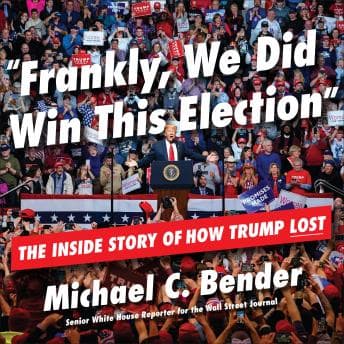

Let me cut to the chase: I expected a partisan hit piece. What I got was something closer to a battlefield after-action report—methodical, detailed, and surprisingly even-handed given the subject matter.
I started this one during a late-night drive back from a client site in Houston. Seventeen hours is a serious commitment, and I'll admit I was skeptical. Political books tend to either worship their subject or bury them, rarely anything in between. Bender, though—the man did his homework. You can tell he's been embedded with this campaign the way a good combat correspondent embeds with a unit. He's not there to judge. He's there to document.
The Intel Is Solid, Even When It's Uncomfortable
What separates this from the dozen other Trump campaign books is the sourcing. Internal memos. Text messages. The kind of primary documentation that would hold up in a debrief. Bender clearly had access that most journalists would trade their credentials for, and he uses it to reconstruct the decision-making process inside the campaign with surgical precision.
The book traces a straight line from a campaign operation that was, by all accounts, running like a well-oiled machine in early 2020 to the absolute chaos of the final months. COVID hits. The economy tanks. George Floyd protests erupt. And you watch in real-time as the strategic discipline evaporates. It's like watching a commander lose control of his staff—fascinating and uncomfortable in equal measure.
Here's where I've seen this scenario play out in real life: when leadership starts believing their own mythology, the operation suffers. Bender documents this dynamic without having to editorialize. He just shows you the memos, the internal debates, the moments where advisers tried to course-correct and got overruled.
Pollins Has a Clear Voice—Maybe Too Clear
Eric Pollins reads with good enunciation, no question. But there's a choice he makes that I need to address. When he reads direct quotes—and there are a lot of them—he adopts this tone that makes the speakers sound... well, like idiots. Whether that's intentional bias or just an unfortunate vocal choice, I can't say. But it got under my skin.
Look, I've sat across the table from people I disagreed with for my entire career. Thank You for My Service captures that same tension—presenting uncomfortable truths without cheap shots. You can present someone's words fairly without editorializing through your delivery. Pollins doesn't quite manage that. If you're coming to this book looking for a neutral presentation, you might find yourself grinding your teeth during certain passages.
The rest of the narration is competent. Clear enunciation, good pacing for a book this dense. But that quote-reading thing—it's like a small rock in your boot during a long march. Not a mission-ender, but you notice it.
The Weeds Get Deep
Fair warning: there are stretches where Bender goes deep into polling data, advertising strategy, and campaign mechanics. I found it interesting—reminds me of studying operational planning—but I can see where some listeners would want to fast-forward. The book doesn't always distinguish between what's historically significant and what's just inside-baseball trivia.
Keeping track of the cast of characters can also be challenging. The Trump orbit has a lot of similar-sounding advisers and operatives, and Pollins doesn't do much to differentiate them vocally. I found myself occasionally rewinding to figure out who said what.
Who Should Gear Up—And Who Should Stand Down
If you're looking for ammunition to confirm your existing opinions—either direction—this probably isn't it. Bender's too careful for that. He presents the dysfunction alongside the genuine strategic thinking, the loyalty alongside the backstabbing.
Political junkies will find this essential. History buffs who want to understand how an incumbent lost will find valuable material here. If you can't stomach 17 hours of Trump-adjacent content regardless of the framing, stand down. I'd recommend 1.25x speed—Pollins reads at a measured pace that can drag during the data-heavy sections.
Mission Debrief
Worth your time? Bender delivered a serious piece of political journalism that will likely hold up as a primary source for historians. The narration has a notable flaw that may or may not bother you depending on your perspective. At 17 hours, it's a commitment, but the access and documentation justify the length.
Ranger slept through most of this one, but that's his opinion on politics in general. I finished it thinking I understood the 2020 campaign machinery better than I did before. That's what good reporting does.
Mission accomplished—with caveats.







![Steve Jobs [unabridged audiobook] audiobook cover](/_next/image?url=https%3A%2F%2Fcovers.audiobooks.com%2Fimages%2Fcovers%2Ffull%2F9788499923406.jpg&w=1920&q=75)