
I was up at 2 AM last Tuesday, doom-scrolling Twitter with Frida purring on my chest and Diego judging me from the bookshelf, when I realized I needed something to occupy my brain besides the algorithmic hellscape. So I started this biography. Sixteen hours later, I'm not sure I feel better about humanity, but I definitely understand something I didn't before.
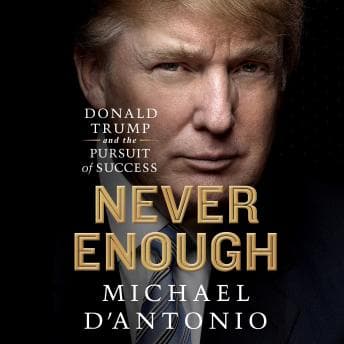
Here's the thing about Never Enough - it's not really a political book. I mean, yes, obviously it's about a man who became president, but D'Antonio wrote this in 2015, before all that, and what you get instead is something stranger and sadder: a psychological portrait of a man who admits he doesn't look inward because he's afraid of what he'll find.
That quote hit me like a truck. My abuela would have crossed herself.
The Architecture of an Ego
D'Antonio is a Pulitzer Prize-winning journalist, and you can tell. This isn't a hit piece or a puff piece - it's methodical, almost clinical in places. He traces the Trump mythology back to Fred Trump's Queens empire, to the young Donald getting shipped off to military school, to the moment he met Roy Cohn and learned that attack is the only defense worth having. The same slow excavation of a titan's psychology - father figures, inherited ambition, the mythology a man builds around himself - runs through Henry Ford's Own Story, though Ford comes across as considerably less self-aware than Trump, which is its own kind of unsettling.
What fascinated me - and I say this as someone who normally gravitates toward romance and memoir, not business biographies - is how D'Antonio structures the narrative around relationships. Trump's marriages. His children. His mentors. The book argues that every relationship in this man's life has been transactional, and it builds that case slowly, interview by interview.
The author actually sat down with Trump. Multiple times. And with Ivanka, Don Jr., Eric. The access is real, which makes the portrait feel less like speculation and more like... confession? Trump says things in these interviews that are genuinely startling in their honesty. "Most people aren't worthy of respect." That's a direct quote from the subject himself.
Eric Pollins and the Long Haul
Okay, sixteen hours is a commitment. I won't pretend otherwise. This is not a weekend listen unless you're doing a full apartment deep-clean and meal prep marathon (which, honestly, is exactly what I ended up doing - Diego was very confused by all the activity).
Pollins has a straightforward, journalistic delivery that matches the material. He's not doing voices or dramatic flourishes - this isn't that kind of book. His reading is steady, clear, professional. It works for what this is: a detailed, research-heavy biography that needs clarity more than theatrics. I didn't ugly-cry (wrong genre, wrong subject), but I also never found my attention wandering during the denser business sections, which is saying something. Pollins has that same steady-handed quality in Frankly, We Did Win This Election, which I listened to a few months back - he's not a narrator who dazzles you, but he earns your trust, and for dense political journalism that matters more than charisma.
The pacing does drag in places - there are sections about real estate deals and casino financing that feel like they could've been trimmed. But D'Antonio keeps circling back to the human element, the psychology, and that's where the book earns its length.
What Stays With You
I kept thinking about my abuela while listening to this. She would have been horrified by this man - the bragging, the wives, the gold everything - but she also would have understood something essential about him. She grew up poor in Mexico. She knew what it meant to want so badly that wanting becomes your whole personality.
The book's thesis is right there in the title: Never Enough. No amount of money, fame, buildings, or attention will ever fill whatever hole exists at the center of this person. D'Antonio doesn't moralize about it. He just shows you, over and over, the pattern repeating.
By the end, I felt something I didn't expect: a kind of hollow sadness. Not sympathy exactly, but recognition. We all know people like this on smaller scales. The friend who can't stop comparing themselves to others. The family member who measures love in transactions. D'Antonio made me see the pathology clearly, and that's uncomfortable but valuable.
Who Needs This in Their Ears (And Who Should Keep Scrolling)
If you want to understand the psychology behind a certain kind of American ambition - the kind that confuses attention for love and winning for happiness - this is genuinely illuminating. It's also useful if you're trying to understand how someone like this gets built, brick by brick, from childhood forward.
Skip it if you want either a takedown or a celebration. D'Antonio is frustratingly fair, which might annoy you regardless of your politics. Also skip if you need plot momentum - this is journalism, not narrative nonfiction.
The Emotional Invoice
I didn't cry. But I did sit in my car for ten minutes after finishing the last chapter, just... processing. Sometimes a book doesn't make you feel big feelings in the moment but leaves you with a low hum of something - melancholy? awareness? - that takes days to fade.
Abuela would have listened to this whole thing just to have opinions at family dinner. Miss you, Abuela. You would have had SO many opinions.