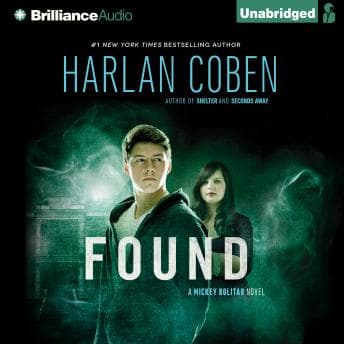

I was making chana masala at 10 PM on a Tuesday — the kind of elaborate, unnecessary cooking my mother would approve of if she weren't 200 miles away — when Mickey Bolitar finally learned the truth about his father. And I nearly burned the onions because I forgot I was supposed to be stirring.
That's the thing about Harlan Coben writing for a younger audience. He doesn't soften the emotional punches. He just throws them faster.
A Teenager Who Actually Acts Like a Teenager (Mostly)
Look, I read a lot of YA that makes me want to scream into my pillow because the fifteen-year-old protagonist talks like a forty-year-old philosophy professor. Mickey Bolitar doesn't have that problem. He's impulsive, loyal to a fault, and absolutely terrible at reading social cues with Rachel — which, honestly? The research actually shows that adolescent males consistently misread romantic ambiguity, so Coben nails that. Mickey's inability to just ask Rachel where they stand isn't lazy writing. It's accurate developmental psychology.
What makes this character compelling is the way grief sits on him. Eight months after his father's death, Mickey isn't in the acute phase anymore. He's in that weird middle space where you're functional enough that people stop checking on you, but broken enough that everything feels like a potential trigger. His teammates hate him, Spoon's in the hospital, and instead of processing any of this, he throws himself into finding Ema's possibly-fictional online boyfriend. Classic displacement behavior. My therapist would have thoughts about this character.
The Troy Taylor subplot surprised me. Coben takes Mickey's antagonist and gives him a genuine problem, forcing Mickey into an alliance that psychologically doesn't track if you think about it from a pure grudge-holding perspective — but actually makes perfect sense for a kid who fundamentally cannot walk away from someone in trouble. That's not heroism. That's a compulsion pattern, and it's more interesting. The same kind of morally complicated compulsion drives the protagonist in Fury — another case where the character's "good guy" instincts read less like virtue and more like someone who simply cannot help himself.
Nick Podehl Gets the Age Right
Here's where I want to be specific, because narrators of YA can go wrong in two directions: they either sound like a bored adult reading to children, or they overcorrect into some cartoonish "teen voice" that makes you cringe. Podehl does neither. He keeps Mickey grounded — a little rough around the edges, never whiny, but you can hear the vulnerability underneath the bravado. It's restrained in exactly the right way.
His character differentiation isn't showy. Ema gets a slightly lower register with more sardonic edges. Spoon — even from a hospital bed — gets that manic, slightly breathless energy that makes the kid feel like a golden retriever who learned to talk. And when the Abeona Shelter stuff kicks in and the adults enter the picture, Podehl shifts into something more measured, more guarded. It signals danger without overselling it.
Fourteen AudioFile Earphones Awards don't lie. The man knows what he's doing.
At six hours and fifty-one minutes, this is a tight listen. No filler. Coben's pacing in this series has always been sharp, but Found — being the third book, the payoff book — moves with real urgency. I found myself asking: why does Coben wait until the final installment to give Mickey the confrontation with his father's truth? And then I realized — because Mickey wasn't ready before. The first two books aren't just mysteries. They're psychological preparation. Mickey had to learn to trust other people's damage before he could face his own.
That's pretty sophisticated structure for a series marketed to thirteen-year-olds.
Where It Doesn't Quite Land
I won't pretend this is without flaws. The Abeona Shelter mythology remains the weakest link — a secret organization protecting children sounds compelling in premise, but the execution sometimes veers into conspiracy-thriller territory that feels borrowed from Coben's adult novels rather than organically built for this world. The stakes escalate in ways that occasionally strain credulity, even for a series that's always played a little loose with realism.
And the romantic subplot with Rachel? Coben writes it like a subplot, but it takes up enough emotional real estate that I wanted more resolution than I got. Mickey's confusion is realistic. The narrative's handling of it is... convenient.
Who Should Actually Listen to This
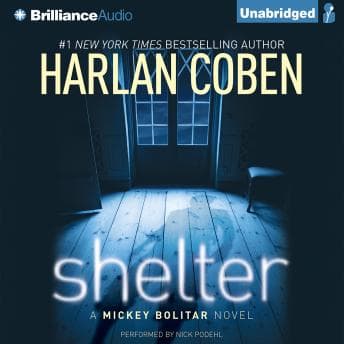
If you've listened to Shelter and Seconds Away, this is non-negotiable — you need the payoff. If you haven't started the series, do NOT begin here. You'll be lost in about twelve minutes.
Parents looking for something to share with their mystery-loving kids in the 11-15 range: this works. There's violence and some language, but nothing gratuitous. The psychology is honest without being heavy.
And if you're an adult who studies how teenagers process grief and identity formation through crisis — hi, that's me — this is a fascinating case study in how popular fiction models adolescent resilience. Not perfectly. But with genuine care.
The Case File, Closed
I finished the chana masala. I finished the book. One of them turned out better than expected. (It was the book. I definitely burned the onions.)