
"Some of the readers beat the professional narrators I've heard on Audible."
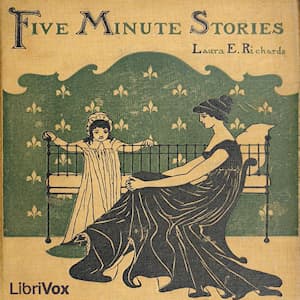
That's an actual listener quote, and honestly? It's both true and misleading at the same time. Let me explain how I ended up listening to a collection of Victorian children's stories written in the 1890s, and why I don't entirely regret it.
It was 11PM on a Tuesday, Kevin was already asleep, and I'd just rage-quit a debugging session on a flaky consensus protocol. My brain was fried but too wired to sleep. I needed something the exact opposite of distributed systems - something with zero complexity, zero stakes, zero chance of a plot twist that would keep me up another hour. So I scrolled past my usual sci-fi queue and landed on this. Five-minute stories. Laura E. Richards. LibriVox volunteers. Free. Why not.
Bedtime Stories as a Service (BaaS)
So here's the thing: this isn't really a book. It's basically a playlist of micro-content from 1890s America - tiny poems, fables, and stories that were meant to be read aloud to kids before bed. And as an audiobook experience, that format actually... kind of works? Each piece is so short that you can drop in and out without losing context. I fell asleep somewhere around story twelve, woke up, picked up at story twenty-something, and it didn't matter at all. Zero state management required.
Richards had this quirky thing where she'd write these absurd little verse poems - talking animals, silly word games, kids getting into minor scrapes that resolve in two paragraphs - and then suddenly drop something genuinely poignant about a child losing a pet or learning about kindness, and you're like, wait, did a children's story from 1893 just make me feel something? Yes. Yes it did. The tonal whiplash between "funny nonsense poem about a cat" and "quiet meditation on loneliness" is the most interesting thing about this collection.
The LibriVox Lottery
Okay, let's talk about the elephant in the room. LibriVox volunteer narration is basically a box of chocolates where some chocolates are Godiva and some are... the waxy ones your grandma kept in a dish for three years. The variance here is REAL. Some readers clearly prepared - good pacing, warm tone, the kind of voice you'd actually want reading to a kid at bedtime. Others sound like they're reading from a teleprompter for the first time, with audible mouth clicks and inconsistent volume levels.
There's no sound effects, no music, no production to speak of. It's just raw voice recordings stitched together. And because each story is so short, you might get three different narrators in fifteen minutes. The audio quality shifts are jarring - one reader sounds like they're in a treated studio, the next sounds like they're in a bathroom. For someone used to Ray Porter's buttery consistency, this is... an adjustment.
But here's what surprised me: a couple of the volunteers genuinely nailed the warmth that these stories demand. There's something about an unpaid volunteer choosing to read Victorian children's stories into a microphone that carries its own kind of sincerity. You can hear them enjoying the silly poems, leaning into the rhymes, and it's weirdly charming. That same unpolished sincerity - someone just genuinely trying to bring old words to life - is what made me push through the rougher patches of Sons and Lovers too, where the narration had a similar quality of earnestness that eventually won me over.
Who Should Actually Listen to This
This is not for your commute. I repeat: NOT for your commute. At 6AM on a packed Caltrain, surrounded by other engineers doom-scrolling Blind, these gentle little fables will evaporate from your brain like morning fog. Zero commute-worthiness.
But as a sleep aid? Genuinely decent. The stories are short enough that you don't stress about losing your place. The content is gentle and low-stakes. And at 5 hours 36 minutes total, you can dip in over many nights without any commitment. This is basically ASMR but from 1893.
Parents with young kids - honestly, this might be your move. Put it on a speaker at bedtime, skip past the weaker narrators, and you've got free story time from a Pulitzer-winning author (Richards won the Pulitzer for biography in 1917, which I did not expect to learn this week).
Skip if: you want plot, character development, or anything resembling a narrative arc. Skip if inconsistent audio quality makes you twitch. Skip if you listen exclusively during activities that require any engagement with the material.
Listen if: you need something impossibly gentle to wind down with, you're curious about what children's entertainment looked like before screens, or you just want to hear some genuinely funny 130-year-old poems about cats doing cat things.
The ROI Calculation
The ROI on this audiobook is... well, it's free, so technically any value is infinite ROI. But let's be real: I wouldn't spend a credit on this. I wouldn't even spend time on this during daylight hours. But as a free, zero-commitment sleep companion during a week when my brain needed to touch grass (or at least touch something that wasn't a stack trace)? It did exactly what I needed. Sometimes the best optimization is choosing not to optimize.