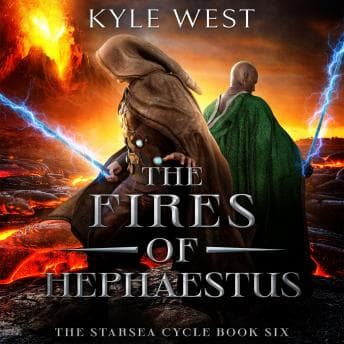

How deep into a space opera series do you have to be before you stop asking yourself "why am I still here" and just accept that you're emotionally invested in a guy collecting magic orbs on lava planets?
Book six. The answer is book six.
The Starsea Cycle Has Become My Background OS
I started this series back during a particularly brutal sprint at work — the kind where you're staring at Kubernetes dashboards at 3AM and need something playing in your ears that isn't the sound of your own existential dread. The Starsea Cycle scratched that itch perfectly: space fantasy with enough forward momentum that my sleep-deprived brain could track it on a packed 6:17AM Caltrain, but enough world-building that I didn't feel like I was eating narrative junk food.
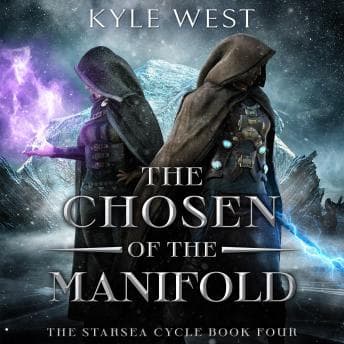
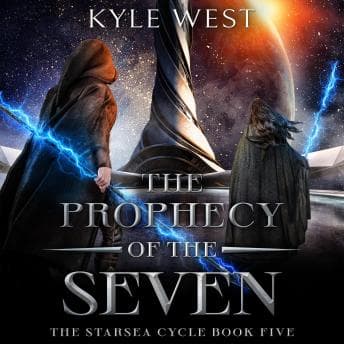
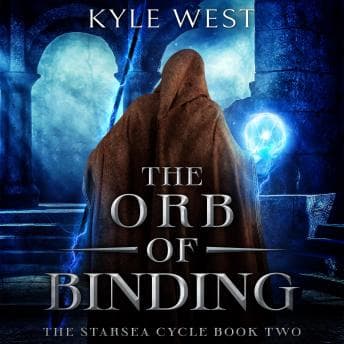
Fires of Hephaestus picks up with everything going sideways at once. The Swarmers are eating star systems like Pac-Man, Zheng Yang's Golden Armada is doing its whole chaotic-neutral fleet thing, and there's a literal theocracy consolidating power in the mid-worlds. Meanwhile, Lucian Abrantes — our resident orb-collecting protagonist — has to land on a planet called Hephaestus that is basically Mustafar's angrier cousin. Lava everywhere. The setup is classic quest-within-a-larger-war, and Kyle West handles the juggling act of multiple factions better here than in some of the earlier entries.
What I actually appreciate about this installment is that the political fragmentation feels earned. The League of Worlds splintering isn't just "oh no, factions!" — West has been layering these tensions across five books, and watching Zheng Yang's pirates position themselves as potential saviors (or conquerors, depending on who you ask) gives the universe a texture that straight good-vs-evil space fantasy often lacks. It's basically a geopolitical thriller wearing a fantasy skin suit. In space. The closest I've come to that same genre-blending feeling outside of sci-fi was actually Illusion: Chronicles of Nick, which does something similar with urban fantasy — wrapping real stakes and faction tension inside what initially reads as lighter genre fare.
Hephaestus Is the Real Character Here
The planet itself is the standout. West commits to making Hephaestus hostile in specific, visceral ways — the lava-ridden surface isn't just set dressing, it actively shapes the tactical decisions Lucian's crew has to make. There's a real sense of environmental pressure that reminded me of the better moments in The Expanse where physics and planetary conditions are as much an antagonist as any villain. I was listening to the Hephaestus landing sequence during a power outage at home (Kevin had gone to bed, I was sitting in the dark with a headlamp and my phone like some kind of post-apocalyptic book club member), and the atmosphere West builds for that hellscape planet genuinely had me tense.
The Orb of Thermalism quest is... look, it's a MacGuffin. The Orbs of Starsea have always been MacGuffins. But they're well-deployed MacGuffins, and by book six, the power system around them has enough internal logic that it doesn't feel arbitrary. The science doesn't hold up — this is space fantasy, not hard sci-fi — but the internal consistency does, which is honestly more important for this genre.
Rob Brinkmann Gets the Job Done
Here's where I have to be honest about my research gaps: I couldn't find much specific commentary on Brinkmann's performance quirks in this particular entry. What I can say from listening is that he's reliable. He keeps the pacing tight across 11 hours, and his narration doesn't get in the way of the story — which sounds like faint praise but genuinely isn't. For a series with this many factions and character names that range from "Lucian Abrantes" to "Sharo Khalin," consistency matters more than flashiness. He's not Ray Porter (nobody is, fight me), but he's solid. I never had a moment where I rewound because I couldn't tell who was talking, and at 1.5x speed on a crowded train, that's the bar.
Who This Is For (and Who Should Bail)
Perfect for: train, gym. Skip for: deep work — too much plot happening to zone out.
If you're already five books into the Starsea Cycle, you're obviously picking this up. If you're NOT five books in — do not start here. This is absolutely not a standalone. The faction dynamics alone would be incomprehensible without context. Start with book one, give it two commutes, and see if the vibe clicks.
If you like your space fantasy with political complexity and quest-driven plots — think Red Rising meets a slightly lighter Dune — the whole series is worth your time. This entry specifically is a strong mid-to-late series installment. Not the peak (that's still book three for me), but it keeps the momentum high and ends in a place that made me immediately queue up the next one.
The ROI on 11 Hours of Lava Planet
TL;DR: Worth your commute if you're already invested. Solid book-six energy — the universe is fracturing, the stakes are real, and Hephaestus as a setting carries its weight. Not where you start the series, but a good reason to keep going. I finished this in about 4 commutes and a power outage, and I'd do it again.