Is there anything worse than realizing the only way forward is to go exactly where you swore you'd never return?
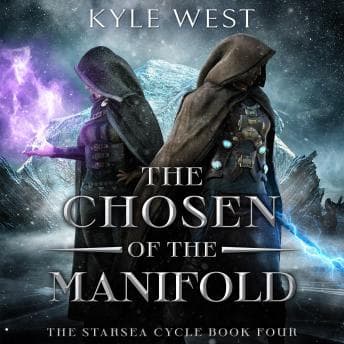
That's the vibe Lucian is dealing with in Chosen of the Manifold. Look, I usually stick to things that go bump in the night—ghosts, demons, the existential dread of being a librarian with a budget cut. But sometimes, you need a break from the horror section. You need space wizards.
(Yes, I know "space wizards" is reductive. Don't @ me.)
I picked this up during a particularly long shift of re-shelving fantasy paperbacks, and honestly? It's a trip. It's Kyle West doing that thing where he smashes high fantasy tropes into a sci-fi setting until they bond at a molecular level. We've got prophecies, we've got Sorceress-Queens, but we're also dealing with the Manifold and Orbs. It's a lot. But in a good way.
The Voice in My Head
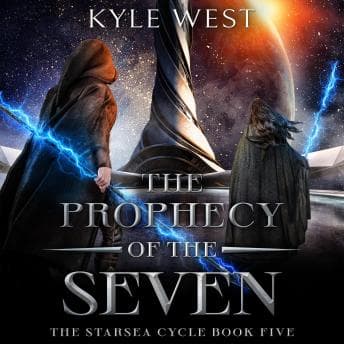
Let's talk about Rob Brinkmann. Because if a narrator doesn't commit to the bit in a book like this, the whole thing falls apart. You're talking about "The Prophecy of the Seven" and "The Golden Palace of Dara"—if you read that with a straight face and zero energy, it sounds ridiculous.
Brinkmann? He goes for it. He brought that same commitment to Prophecy of the Seven, which is why I trust him with anything that requires dramatic weight.
He understands that this is epic. He gives Lucian enough grit that he doesn't sound like a whiny "Chosen One" archetype, which—let's be real—is a trap a lot of narrators fall into. His pacing is solid, keeping things moving even when the exposition gets heavy. I found myself actually caring about the side characters because he gave them distinct voices. He's not just reading; he's acting. That's rare.
(Shirley, my cat, was asleep for most of this, but her ears twitched during the combat scenes. I take that as a glowing endorsement.)
When the Genre Bends
The story itself? It's a sequel, so Lucian is already knee-deep in mess. He has to go back to the Sorceress-Queen's turf. The tension is there. The world-building is massive—deserts, palaces, space stuff. It feels big.
I have to be honest here because we're friends—the plot can get a little... wobbly.
There were moments where I frowned at my speaker. Some inconsistencies pop up that made me pause and go, "Wait, didn't we establish the opposite of that three chapters ago?" If you're the type of listener who keeps a spreadsheet of lore rules, you might get annoyed. I'm more of a "vibes first" listener, so I just rolled with it. The stakes are high enough, and the action is violent enough (yes, there's violence, it's not a cozy tea party) that I stayed hooked.
The Verdict
So, is it worth your credit?
If you're already invested in the Starsea series, absolutely. You need to see where Lucian goes. If you're new? Go back and start at the beginning, obviously. But as a standalone experience of the audio? Brinkmann carries it. He elevates the material.
Who should listen: Fans of the Starsea series, anyone who wants epic fantasy vibes with a sci-fi chassis, and commuters who'd rather imagine wielding magic than sitting in traffic. Who should skip: Lore purists who'll twitch at continuity wobbles, and anyone who hasn't read the earlier books—you'll be lost.
It's not perfect—perfect is boring anyway—but it's a fun, immersive ride that respects the genre blend.
Just maybe don't listen to it while trying to organize a messy bookshelf. You might get distracted and file Dune under "Non-Fiction" like I almost did.