
"The reasons were actually one with which you fundamentally agreed."
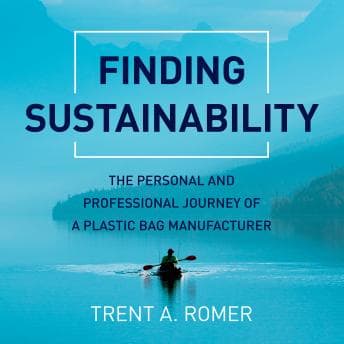
That line hit me somewhere around hour two, stuck in traffic on the Merritt Parkway. Here's a third-generation plastic bag manufacturer who wakes up one morning and realizes the thing threatening to kill his family business—environmental regulation, consumer backlash, the whole anti-plastic movement—is something he actually believes in. That's not a business problem. That's an existential crisis with a payroll attached.
The Inheritance Nobody Talks About
I've consulted for family businesses. The dynamics are brutal in ways Harvard case studies never capture. You're not just inheriting assets and customer relationships—you're inheriting your grandfather's decisions, your father's compromises, and a workforce that remembers when you were running around the factory floor in diapers. Romer gets this. He's carrying 57 years of family history and 70 employees' livelihoods while simultaneously coming to terms with the fact that his product might be... problematic.
My parents ran a dry cleaning business. Different industry, same weight. You don't just shut things down because you've had an environmental awakening. Real people lose real jobs. Their kids don't go to college. That tension—between doing what's right and doing what's responsible to the people who depend on you—is the most honest thing about this book. Mastery explores a different kind of tension—the gap between where you are and where you need to be—but the underlying struggle to reconcile competing truths feels remarkably similar.
8 States, 3 Countries, One Uncomfortable Realization
Romer structures this as a travelogue of sorts. National parks. International trips. The kind of journey a McKinsey deck would call "stakeholder immersion" but which is really just a guy trying to figure out if he can live with himself. At under four hours, it's refreshingly tight. Most business memoirs pad themselves into eight-hour monsters. This one respects your time.
The vulnerability here is genuine. He's not writing from the other side of some triumphant pivot. He's writing from the middle of it—still figuring things out, still making compromises, still running a plastic bag factory while trying to make it sustainable. That messiness is the point. Chimp Paradox tries to give you frameworks for managing internal conflict, but Romer's approach is rawer—no neat models, just the actual wrestling match. The "finding" in the title isn't past tense. It's present progressive.
What Rafe Beckley Does With It
The narration is competent without being memorable. Beckley reads this like what it is—a business memoir with personal stakes—and doesn't try to make it more dramatic than the material warrants. No theatrical flourishes. No attempts to turn factory floor discussions into audio drama. Straightforward, clear, gets out of the way. For a book this length, that's exactly what you need. I didn't speed it up past my usual 2.0x, which is about the highest compliment I give narrators.
The Actual Takeaway (And It's Not What You'd Expect)
Here's what surprised me: this isn't really a sustainability playbook. If you're looking for a step-by-step guide to making your manufacturing business green, you'll be disappointed. What Romer delivers is something harder to find—an honest account of what it feels like to question the foundation of everything you've built. The sustainability stuff is there, but it's more philosophical than practical.
The Gold Award from the Nonfiction Authors Association makes sense. This is well-crafted, personal, and genuinely humble. "One day at a time"—that's how one reviewer described it, and they're right. No revolutionary frameworks. No TED talk epiphanies packaged for mass consumption. Just a guy trying to reconcile his values with his obligations.
Who should listen: Anyone running a family business facing disruption they secretly agree with. Anyone in manufacturing who's tired of pretending the environmental conversation doesn't apply to them. Anyone who's inherited something and wondered if they have the right to change it. Skip it if you want tactical sustainability implementation guides—there are better resources for that.
Jenny would say I'm being soft on this one. She might be right. But I've watched too many family businesses die because the third generation couldn't adapt, and too many others die because they adapted too fast and lost their soul in the process. Romer's trying to thread that needle in real time, on the record, with his family name attached. That takes something.
Net-Net
This is what my parents did instinctively—adapting to survive while staying true to who they were. Now it has a TEDx talk and a book deal. The difference is Romer's willing to admit he doesn't have all the answers. At four hours, it's worth the listen for the honesty alone. Just don't expect a roadmap. Expect a mirror.