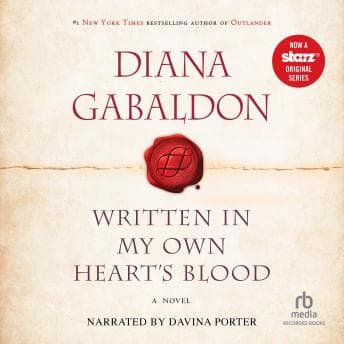

Look, I need to be honest with you—and with myself, mostly. I told Dr. Patel I was running a "high-fidelity procedural terrain generation simulation" that required 55 hours of continuous processing time. That was a lie.
The simulation was me. I was the hardware. And the software was The Fiery Cross by Diana Gabaldon.
Fifty-five hours and twenty-nine minutes.
Do you know how much code I could have written in that time? Do you know how much of my thesis I could have... well, stared at blankly? Instead, I spent two and a half days of my life in 1771 North Carolina. And here's the kicker: I don't regret it. Okay, maybe 20% regret. But mostly awe.
The "Gathering" is Basically a D&D Session That Went Off the Rails
Let's address the elephant in the room—or rather, the mammoth in the Scottish Highlands. The first chunk of this book—I want to say the first, like, 15 hours?—covers a single day. One day. It's called "The Gathering," and if you've ever played a D&D campaign where the DM spent four sessions describing the local harvest festival because he bought a new lore book, you know exactly what this feels like.
Nothing happens quickly. Jamie is changing his kilt. Claire is checking medical supplies. People are talking. There are babies. There are goats. It's the ultimate slice-of-life anime, but with muskets and impending doom.
For a lot of people, this is a bug. For me? It's a feature. The resolution on Gabaldon's world-building is insane—like she cranked the detail sliders on the procedural generation engine all the way to max. I usually complain when fantasy books dump info on me, but this isn't an info-dump—it's an immersion tank. I was listening while refactoring some particularly nasty spaghetti code, and honestly, the slow, methodical pace actually helped my brain stay in the zone. Low-stakes tension simmering in the background while you live these people's lives.
Davina Porter is a Stat-Maxed Bard
Here is the only reason those first 15 hours work: Davina Porter.
I talk a lot about Steven Pacey (praise be his name), but Davina Porter is on that same pantheon level. She proved that back in Outlander, where she first inhabited Claire and Jamie. If Pacey is the God of Grimdark, Porter is the Matriarch of Historical Drama.
Her voice acting is—and I don't use this term lightly—chef's kiss. We're talking distinct, consistent accents for a cast of characters that rivals Game of Thrones. You have the crisp, educated English of Claire, the rugged, rolling Scots burr of Jamie (which, let's be real, is half the reason anyone listens to these), and a dozen variations in between.
There's a specific skill in making a 55-hour book feel dynamic, and Porter has it. She doesn't just read dialogue; she acts it. When Jamie is angry, you feel the bass in your chest. When Claire is worried, her pacing tightens. There were moments where the plot was literally just "domestic dispute over household chores," and Porter performed it with the gravity of a Greek tragedy.
She kept me engaged when the plot was moving slower than my thesis progress. That is a feat of strength.
The "System" Under the Hood
From a mechanics perspective, Gabaldon is doing something interesting here. It's not a hard magic system—the time travel is more of a plot device than a mechanic—but the historical system is rigorous.
You have the impending American Revolution acting as this massive, deterministic event engine in the background. Claire knows the outcome (because she's from the future, obviously), but she can't change the macro-state of the simulation. She can only tweak the local variables—saving a life here, changing a relationship there.
It creates this fascinating tension where the "spoiler" is history itself. We know the war is coming. We know who wins. The suspense isn't "what happens," but "how do our characters survive the algorithm of history?"
(Yes, I am aware I am over-intellectualizing a romance novel. Just let me have this. It makes me feel better about the unfinished chapter on my laptop.)
The Verdict
Is it too long? Objectively, yes. You could probably trim 10 hours of descriptions of changing diapers and cooking corn and still have a coherent plot.
But if you treat it like a long-form RPG where you're just grinding XP and living in the world, it's fantastic. A warm blanket of a book. Comfort food. That same cozy-but-epic vibe is what kept me hooked through all fourteen books of Towers of Midnight—massive page counts stop being scary when the world feels like home. It's the perfect background noise for when you need to zone out and pretend you aren't a grad student living on ramen and anxiety.
Who should listen: If you love slow-burn world-building, domestic historical drama, or need 55 hours of Scottish-accented comfort while you procrastinate on literally anything else. Who should skip: If you need plot momentum or can't handle a 15-hour single-day opening, this will test your patience.
Davina Porter carries this thing on her back. Without her, I might have tapped out during the Gathering. With her? I was ready for hour 56.