
So here's the thing about serial killer novels - most of them want to shock you. They want you to gasp at the body count, cringe at the details, maybe sleep with the lights on. Guest List pulled that same trick on me—isolation plus paranoia equals no sleep. And look, I'm not above that. Shirley (my cat) has watched me turn on every lamp in my apartment at 2 AM more times than I care to admit.
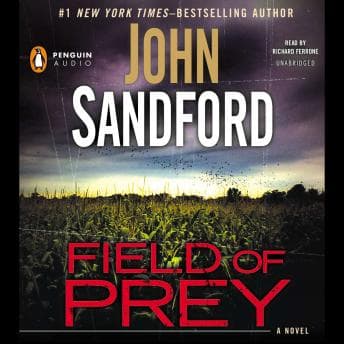
But Field of Prey does something different. It's not trying to shock you. It's trying to unsettle you. And that's way harder to pull off.
Fifteen bodies in a cistern. One every summer. In a place where everybody knows everybody. Sandford understands that horror isn't about gore - it's about dread. The real terror here isn't the body count - it's the realization that someone's been doing this for years, probably waving to their neighbors, probably attending the same church potlucks, probably seeming completely normal. That everyday-monster thing is what made Locked On work for me too—threats hiding in plain sight. That's the stuff that actually keeps you up at night.
Why Ferrone Just Works
Richard Ferrone has been voicing Lucas Davenport for so long that at this point, I genuinely cannot imagine the character sounding any other way. His voice is gravel and smoke - exactly what a Minnesota cop who's seen too much should sound like. There's this weight to his delivery that makes even the procedural stuff feel tense.
And here's what separates good narrators from great ones: Ferrone doesn't just do voices. He does people. When he shifts to Virgil Flowers (who shows up in this one, much to my delight), there's an immediate tonal shift - lighter, more sardonic. The female U.S. marshal Rae comes through clearly without slipping into caricature. That's harder than it sounds. Trust me, I've listened to enough audiobooks where every woman sounds like the narrator doing a bad impression of his wife.
The pacing is relentless. Ferrone knows when to push and when to let a moment breathe. There are scenes in this book that are genuinely shocking - violent in ways that earn their content warnings - and he commits. He doesn't soften the edges or rush through the uncomfortable parts. That's rare. That's what makes this work as horror.
The Slow Burn That Pays Off
Sandford is doing something clever here. He's essentially written a procedural that functions as a horror novel. You've got your cops doing cop things - interviewing witnesses, following leads, building a case. But underneath all of it is this creeping wrongness. Someone in this community has been killing for decades. And the community didn't notice.
Or did they?
That's the question that kept me listening past my bedtime. (I was doing dishes. Then I was sitting in my car in the garage. Then I was lying in bed with my phone propped up, telling myself "just one more chapter." You know how it goes.)
The investigation unfolds methodically, but Sandford keeps dropping these little bombs that reframe everything. Just when you think you've got a handle on the killer's profile, something shifts. It's not quite a twist-heavy thriller - it's more like watching a picture slowly come into focus, and what you're seeing is worse than you expected.
I will say - and I'm being honest here - there are moments where the procedural stuff drags slightly. A few scenes of cops talking to other cops about what other cops found. Ferrone keeps it engaging, but if you're not into the nitty-gritty of investigation, you might find yourself zoning out for a minute or two. Nothing major. Just the occasional "wait, who's this guy again?" moment.
The Darkness Earns Its Place
Look, I need to be upfront: this book goes dark. Really dark. We're talking violence, sexual abuse, emotional abuse - the works. The content warnings exist for a reason. This isn't cozy mystery territory. This is "maybe don't listen to this one with your kids in the car" territory.
But here's why it works: none of it feels gratuitous. Sandford isn't wallowing in the darkness for shock value. He's showing you what this kind of evil actually looks like - how it hides, how it operates, how it damages everyone it touches. It's unflinching, but it's purposeful.
My podcast listeners are going to love this. It's exactly the kind of crime thriller that understands its horror roots - the kind that knows the scariest monsters are the ones who look just like everyone else.
Who's This For (And Who Should Run)
If you're a Prey series fan, this is peak Davenport. If you're new to Sandford, this is actually a solid entry point - you don't need the previous books to follow along. And if you're a horror fan who thinks crime thrillers are too tame? This one might change your mind. But if you need your crime fiction on the lighter side, or graphic violence is a hard no for you, skip this one.
Honestly? I might not revisit it immediately. Not because it's bad - it's genuinely excellent - but because it's heavy. This is the kind of book you need to sit with afterward. I finished it three days ago and I'm still thinking about certain scenes.
Ferrone could make a phone book interesting, as one listener put it. With material this strong, he's practically unstoppable.
Just maybe don't listen in the dark. Or do. I'm not your mom.