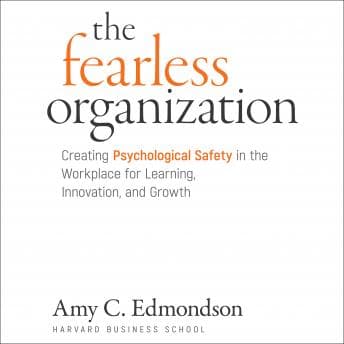

Everyone says this is the definitive book on psychological safety. Audible reviews glow. LinkedIn thought leaders quote it in their sleep. And look - they're not wrong. But I need to be honest about something: about 40% of this book is stuff I watched my parents practice in their Koreatown dry cleaning shop without ever reading a Harvard Business Review article.
I was up at 1 AM finishing a client deck - startup founder convinced his engineering team is "just not innovative enough" - when I decided to finally knock this one off the backlog. Seemed fitting.
Your Parents Already Knew This (But Here's Why You Should Still Listen)
Edmondson's core thesis is clean: people do their best work when they're not terrified of looking stupid. Teams that punish questions get silence. Silence kills innovation. Innovation dies, company dies. Simple chain of causation, backed by her research at Harvard.
The framework she builds around this - the three pillars of psychological safety (inclusion safety, learner safety, contributor safety mapped against fear of being seen as ignorant, incompetent, or disruptive) - is genuinely useful. I've seen this fail at three different companies where the CEO swore they had an "open door policy" while everyone in the org knew that walking through that door was career suicide.
What separates Edmondson from the TED-talk-to-book pipeline is the case studies. The Volkswagen emissions scandal section hit hard - she dissects how a culture of fear led engineers to cheat rather than admit targets were impossible. The contrast with Pixar's approach to creative feedback (where early cuts of films are expected to be rough and the "Braintrust" exists specifically to tear them apart constructively) gave me something concrete to reference with clients. These aren't hypotheticals. They're postmortems and blueprints. Amazon Unbound does similar autopsy work on a culture that weaponized fear in ways Edmondson would recognize immediately — and it's a harder read because there's no Braintrust redemption arc at the end.
My parents ran their shop with a version of this. My mom would ask the new hire - usually someone fresh from Korea, barely speaking English - what they noticed about the pressing workflow. Not as a test. Because she genuinely wanted to know what fresh eyes could see. That's psychological safety without the jargon. This is what my parents did instinctively. Now it has a TED talk.
Where the Padding Lives
At 6 hours and 44 minutes, this is mercifully short by business book standards. But even here, Edmondson repeats her central argument more than necessary. By hour 3, if you haven't grasped that fear inhibits learning, no amount of restating will help you. The diagnostic survey tool she includes is practical, but the setup around it could've been cut in half.
Skip to chapter 5. Thank me later. That's where the "Leader's Toolkit" section lives - specific behaviors, specific questions leaders should ask, specific ways to respond when someone brings you bad news. The first four chapters are important context, but if you're a founder or manager who needs to act Monday morning, chapter 5 is your ROI.
The key takeaway is worth the listen. The other 7 hours? Not so much. (Okay, 6.7 hours. But at 2.0x speed it was about 3.5 for me, which felt right.)
Jennifer Jill Araya Makes Business Books Sound Like Someone Actually Cares
Araya has an opera background and you can hear it - not in some dramatic over-the-top way, but in her control. She knows when to push emphasis and when to let a sentence breathe. Business audiobooks often sound like someone reading a PowerPoint deck aloud. This doesn't. Her pacing is measured but not sleepy, which is exactly what a concept-heavy book needs. She handles the case study transitions well - shifting tone slightly when moving from Nokia's decline to a hospital's safety culture without it feeling jarring.
I bumped her up to 1.5x (my compromise speed for books I actually want to absorb) and she held up fine. Clean audio, no weird mouth sounds or room echo.
Who Gets the Most From This
If you manage people - especially technical or creative people - and you've ever been confused about why your "brilliant team" won't speak up in meetings, this is your book. Founders, VPs, team leads. Also useful if you're the person who ISN'T speaking up and want language for why that's rational, not cowardly.
If you've already read five books on organizational culture, you'll find overlap. If you've never read any, start here.
Jenny would say I'm being harsh. Jenny is right. But I'm also right that this book delivers its promise in a reasonable timeframe, backs its claims with real failures and real wins, and doesn't waste your Saturday pretending to be more original than it is.
Bottom Line: Worth the Credit, Especially If You're the Problem
Edmondson wrote a business book that actually respects your time - mostly. The framework is sound, the case studies earn their space, and the practical toolkit in the back half is something I've already forwarded to two clients. It won't revolutionize your thinking if you've been in the org design space for a decade, but it'll give you cleaner language and better evidence for things you probably already believe. And sometimes that's exactly what you need to convince the person who doesn't.