My parents ran a dry cleaning business in Koreatown where failure wasn't a "stepping stone"—it was an eviction notice. So, honestly? The title Failing Forward triggered my immigrant anxiety before I even hit play. In the Park household, you didn't fail forward. You just didn't fail. Period.
But I listened. Mostly because it's under three hours. (Thank you, John. Seriously.)
THE ROI ON YOUR COMMUTE
Let's talk efficiency. Most business books are 300 pages of fluff wrapped around a pamphlet's worth of ideas. I usually have to crank those to 2.5x speed just to stay awake. Maxwell keeps this tight. At 2h 45m, I finished this during a single gym session and the drive home.
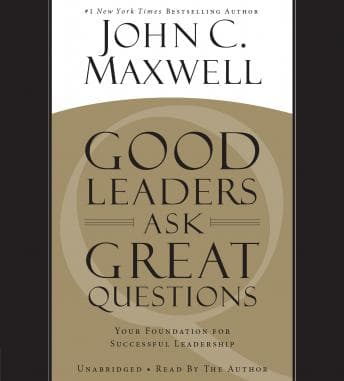
The core concept isn't rocket science—stop treating failure like a funeral and start treating it like tuition. It's the kind of advice I used to bill clients $500 an hour to hear, just packaged way better. Maxwell's other work, Good Leaders Ask Great Questions, digs deeper into that leadership mindset—though it's a bit more meandering. His argument: the difference between average people and achievers is literally just how they handle the face-plant.
Is it revolutionary? No. Is it a necessary slap in the face when you've just blown a quarterly review? Absolutely.
GRANDPA MAXWELL ON THE MIC
Maxwell narrates this himself, and it works. He doesn't sound like a polished voice actor—that's a good thing. He sounds like that one mentor you had in your 20s who actually gave a damn about your career. Warm, steady, a little bit like a preacher who pivoted to corporate strategy. That same grounded energy shows up in I Am: The Power of Discovering Who You Really Are—different topic, same no-BS approach to self-improvement.
He tells stories about his own screw-ups. It grounds the advice. If this were read by some generic narrator with a "radio voice," I would've tuned out in ten minutes. Hearing the guy admit his own faults makes the medicine go down easier.
THE REPETITION TAX
Here's the rub, though. Even at less than three hours, it repeats itself.
(I've noticed this with a lot of leadership gurus—they find a hammer and suddenly everything looks like a nail.)
By the last thirty minutes, I was checking the time. We get it, John. Failure is good. Fear is bad. Move on. If I hadn't been on the treadmill, I might've skipped the last chapter. It felt like he was trying to hit a word count rather than add new value.
WHO GETS VALUE HERE (AND WHO DOESN'T)
If you're paralyzed by perfectionism or still beating yourself up over a project that tanked six months ago—this is your reset button. Skip it if you've already internalized the "failure is feedback" mindset or if you need tactical frameworks, not pep talks.
THE PARK FAMILY BOTTOM LINE
It's a solid mental reset if you're feeling stuck. My wife Jenny would say it's "affirming." I say it's a decent reminder that messing up isn't the end of the world. Just don't expect a complex framework. It's simple advice, delivered quickly. In my world, that's a win.