
Everyone on the marketing internet will tell you Russell Brunson changed their life. My boyfriend Kevin literally built a side project landing page using Brunson's funnel framework and wouldn't shut up about it for two weeks. So when I needed something low-effort for a Monday morning commute after a brutal weekend on-call rotation, I figured - fine, let's see what the hype machine actually sounds like when he's narrating his own stuff.
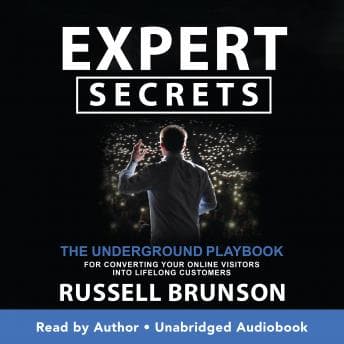
Here's the thing: Expert Secrets is basically a sales psychology textbook disguised as a self-help manifesto. And I mean that as both a compliment and a warning.
The Blog Post Question (It's Complicated This Time)
My default setting for business audiobooks is 1.75x because most of them have about 45 minutes of actual content stretched across 8 hours of anecdotes and padding. Expert Secrets clocks in at 6 hours 27 minutes, which is already more respectful of your time than most in the genre. But could it have been a blog post? Not quite. Could it have been a tight 3-hour book? Absolutely.
Brunson structures everything around frameworks - the Epiphany Bridge, the Hero's Two Journeys, the Big Domino statement - and to his credit, these aren't just buzzwords. The Epiphany Bridge concept (basically: don't sell features, tell the story of the moment you discovered why this matters) is genuinely useful if you've ever had to pitch anything, from a product to an internal design doc. I've been in rooms where engineers try to sell architectural decisions with pure logic and watch everyone's eyes glaze over. Brunson's framework for why stories convert better than arguments is... not wrong. The negotiation researchers behind Getting to Yes make a similar case for interest-based framing over positional logic, and they do it in half the page count.
But then he'll spend 20 minutes on an example that made the same point 10 minutes ago. The ROI on this audiobook drops noticeably in the middle third, where he cycles through variations of "and here's another funnel that worked" with diminishing returns on insight.
Brunson Narrating Brunson Is Exactly What You'd Expect
Author-narrated business books are a coin flip. Sometimes you get the energy of someone who genuinely cares about their material. Sometimes you get a CEO reading a teleprompter. Brunson lands solidly in the first camp - the guy clearly believes every word he's saying, and his delivery has that specific cadence of someone who's given this talk at conferences a hundred times. It's polished but not robotic.
The downside of that conference-speaker energy? It can feel like you're being sold to. Because you are. There's a recurring pattern where Brunson builds up a framework, illustrates it with a story about one of his coaching clients, and then the framework happens to map perfectly onto ClickFunnels. Shocking, I know. If you're allergic to that kind of thing, you'll be grinding your teeth by hour two. I personally just mentally tagged those sections as "sponsored content" and moved on.
At 1.5x, his pacing worked fine. I wouldn't go higher because some of the framework explanations actually require you to hold a mental model while he builds on it, and if you're half-asleep on the 6:12 AM Caltrain, that's already a stretch.
Dotcom Secrets vs. Expert Secrets: The Prequel Problem
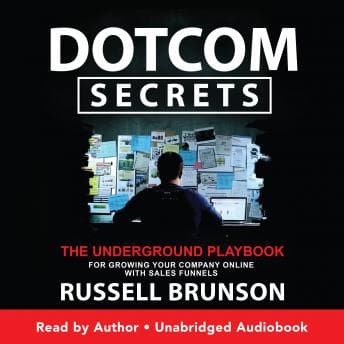
I listened to Dotcom Secrets first (Kevin's fault, again), and Expert Secrets is positioned as the companion piece - Dotcom Secrets is the plumbing (how to build funnels), Expert Secrets is the messaging (what to say in them). In practice, there's meaningful overlap. If you've read Dotcom Secrets, maybe 30% of Expert Secrets will feel like review. The new material - particularly the stuff about building a "mass movement" around your expertise and the Three Secrets framework for structuring presentations - is where the actual value lives.
If you haven't read either, honestly? Start here. The messaging and positioning concepts are more universally applicable than the funnel architecture stuff. You don't need to be building sales funnels to benefit from understanding how to frame your expertise as a narrative. Crossing the Chasm covers adjacent territory for anyone specifically navigating a tech product to market - and it's considerably less evangelical about it.
Who Should Queue This Up (And Who Should Hard Pass)
Perfect for: train, gym. Skip for: deep work (you'll want the PDF companion for that, and yes there is one).
If you're a developer or engineer who's ever thought about building a side project, course, or consulting practice - there's genuine signal here about positioning and messaging that CS programs never teach. If you're already deep in the internet marketing world and have consumed Brunson's content across YouTube, podcasts, and his other books, this is going to feel like a greatest hits compilation.
If the phrase "you've been called to serve" makes you physically recoil - and look, I get it, I debug distributed systems for a living, I'm not naturally wired for evangelical marketing language - you might want to skip this. Brunson leans hard into the "your business is a movement" framing, and while there's strategic logic behind it, the delivery can feel a bit cult-leader-adjacent if you're not already bought in.
The Commit Message
TL;DR: Worth your commute if you're building anything customer-facing and want a framework for why people actually buy things. Not worth it if you've already internalized basic sales psychology or if you can't tolerate being marketed to inside a book about marketing. I finished this in 3 commutes at 1.5x and sent Kevin two of the frameworks, so apparently it worked on me too. The irony is not lost.