
Look, I have a strict rule for business books. If the first three chapters are just testimonials about how great the rest of the book is gonna be, I usually hit archive and go back to my sci-fi comfort food. And honestly? Russell Brunson tests my patience here. There's a lot of "this changed my life" energy before we actually get to the blueprints. (Kevin calls this "hype-building," I call it "latency.") But—and this is a big but—once you get past the cheerleading, the system design underneath is actually solid.
Debugging Your Revenue Architecture
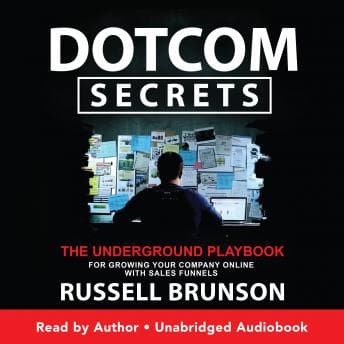
Here's the thing. Most marketing books are fluff. They tell you why you need customers but not how to actually route the traffic. Think and Grow Rich falls into that first category—lots of mindset, zero implementation details. Dotcom Secrets is different. It's basically a technical manual for sales, disguised as a business book.
As a dev, I appreciate the logic here. Brunson treats a sales funnel like a state machine. User enters state A, triggers event B, moves to state C. If they fail, exception handling moves them to a nurture sequence. It makes sense. The "Value Ladder" concept? That's just progressive feature flagging for customers.
I listened to this on the Caltrain heading into the city, and I actually found myself pausing to take notes on my phone. (Which is rare—usually I'm just trying to block out the guy talking loudly about crypto in the quiet car.) The strategies for "The Secret Formula" and the "Value Ladder" aren't new, but the way he packages them is super actionable. SuperFreakonomics does something similar—takes familiar economic concepts and reframes them in ways that actually click. It's not about "getting traffic"—it's about optimizing the conversion rate once they hit your load balancer.
Founder-Narrated: No Actor, No Drama
Since Brunson narrates it himself, you get the authentic founder energy. He's clear, he's competent, and he definitely believes his own hype. But let's be real—Ray Porter isn't here to save you. There's no dramatic flair. It's a lecture.
Some reviews I read said he's "forgettable," and yeah, I get that. He's not an actor. But for this kind of content? I prefer it. I don't need someone emoting over a landing page strategy. I need the info delivered quickly so I can process it.
That said, you need to download the PDF. Seriously. Trying to visualize these funnel diagrams while staring out the window at the Bay Area fog is a recipe for a headache. It's like trying to debug code over the phone. You need the visuals.
The Upsell You Can Hear Coming
Is this whole book a giant lead magnet for ClickFunnels? Obviously. It's meta-marketing. He's using the funnel strategies in the book to sell you the software to build the funnels.
Does that make the advice wrong? No.
The principles hold up whether you use his software or hand-roll your own stack. Just be aware that you're being sold to while you're learning how to sell. It's kinda brilliant, actually.
Who's This Actually For?
If you're running a startup or side hustle and your conversion pipeline feels like a leaky bucket, this is worth your time. Devs and systems thinkers will appreciate the state-machine logic. Skip it if you hate being marketed to while you learn, or if you need polished narration to stay engaged—Brunson's founder-lecture style won't do it for you.
Closing the Loop
The ROI on this audiobook is high if you're building something. It's dense, practical, and actually diagrams the problem instead of just describing it. Crank it to 1.75x speed to get through the hype sections, keep the PDF handy. I finished it in three commutes and immediately started drawing diagrams on a napkin. Worth the credit.