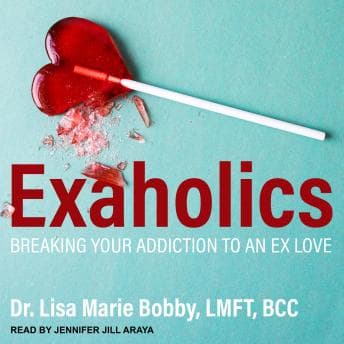

Nine and a half hours on getting over your ex. That's longer than most of the relationships my startup founders torpedo while building their companies.
I listened to this at 2 AM on a Tuesday, sitting in my home office after Jenny had gone to bed, waiting for a client's Series A term sheet to come through. Not my usual genre. But here's the thing - I've watched more companies implode from founder breakups and messy divorces than from bad unit economics. Emotional wreckage doesn't stay contained. It bleeds into decision-making, hiring, fundraising, everything. So when a therapist friend recommended this, I figured it was professional development. That's my story and I'm sticking with it.
The Framework That Actually Earned Its Hours
Dr. Lisa Bobby's central argument is that attachment to an ex operates on the same neurological pathways as chemical addiction. Dopamine, withdrawal, compulsive behavior patterns - the whole thing. This is what my parents did instinctively when they told heartbroken relatives to "just stay busy, work harder" at the dry cleaners. They didn't have the neuroscience, but they understood that idle hands go back to the phone. Bobby gives you the science behind why your brain literally treats a breakup like detox.
The addiction framework is the strongest part of the book. She walks through the stages - the obsessive checking of social media, the bargaining, the relapse into contact - and maps them against actual addiction recovery models. Steven Bartlett makes a similar move in Diary of a CEO, borrowing from behavioral psychology to reframe decisions you thought were rational - though his editor was considerably more ruthless about runtime. The case studies are where this gets real. There's a woman who kept driving past her ex's apartment "just to see if his car was there" and a guy who created fake dating profiles to monitor his ex's activity. These aren't hypotheticals. Bobby pulls from her therapy practice, and you can feel the specificity. These are real people doing embarrassing things, and the lack of judgment in how she presents them is genuinely useful.
But here's my problem: at 9 hours 26 minutes, this book commits the cardinal sin of self-help publishing. There are maybe 4 hours of genuine insight here. The neurological addiction parallel, the shame-reduction framework, the specific recovery exercises - that's the gold. The rest is repetitive case studies that make the same point three different ways and sections that feel like they were written for the person who needs to hear "it's not your fault" seventeen times before they believe it.
I get it. Therapeutically, repetition serves a purpose. But in audiobook format at even 2.0x, my patience was tested by hour 6.
When a Therapist Writes Like a Therapist
The writing style is warm and clinical in that specific way therapists have - validating but structured. Bobby has this habit of introducing a concept, illustrating it with a case study, then restating the concept as if you might have forgotten it during the story. In a therapy session, this makes sense. In a book I'm listening to while refreshing my inbox, it made me reach for the skip-forward button more than once.
Jennifer Jill Araya's narration is clean and professional. Clear enunciation, good pacing, no weird pronunciations that pulled me out. But it's also... flat? Not in a bad way exactly - more in a "this is a self-help audiobook and I am reading it to you clearly" way. There's no dramatic range because the material doesn't call for it. She does the job. She doesn't elevate it. For a book that's fundamentally about intense emotional pain, a narrator who brought a little more emotional texture to the case studies might have made those middle hours more bearable.
Who This Is Really For (Honest Assessment)
If you're in the acute phase of a breakup and you feel like you're losing your mind - the obsessive thoughts, the inability to focus, the shame spiral - this book is genuinely valuable. Bobby normalizes the experience in a way that friends saying "just move on" never will. The addiction framework gives you a mental model that's more useful than "time heals all wounds."
If you're a professional who deals with people in emotional crisis - founders, executives, anyone whose personal life is cratering their professional output - the conceptual framework here is worth understanding.
If you're past the acute phase and functioning? Skip to the recovery exercises in the back half. The early chapters will feel like over-explaining something you already understand.
The Consulting Engagement Is Over
Bottom line: There's a legitimately useful 4-hour book buried inside a 9.5-hour listen. The addiction-attachment parallel is the key takeaway and it's worth the listen. The other 5 hours? Not so much. Bobby knows her stuff - she's a real therapist doing real work, not a LinkedIn guru recycling platitudes. But the book needed a ruthless editor, not a longer word count. My parents would've said "Why does she need a whole book? You work hard, you pray, you move on." They're not entirely wrong, but Bobby's neurological explanation for why that's so damn hard? That part I respect. Jenny would say I'm being harsh. Jenny is right. But I'm also right that this could've been tighter.