
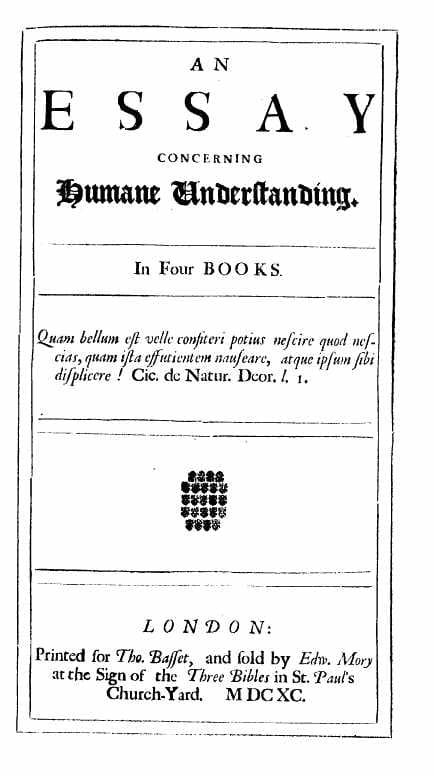
Look, I'm gonna be straight with you - seventeen hours of 17th-century philosophy read by volunteer narrators is not exactly what I'd call a tactical advantage during a long drive. But here's the thing: Locke's essay is one of those foundational texts that shaped Western thought, and if you're serious about understanding where our ideas about liberty and individual rights actually came from, you need to engage with this material. Period.
So I loaded this onto my phone before a consulting trip to Houston. Four hours each way. Ranger in the backseat. Let's do this.
The Mission Brief on Locke's Big Idea
Locke's core argument is pretty straightforward once you cut through the 17th-century prose: there are no innate ideas. We're not born with pre-loaded software. Everything we know comes from experience - sensation and reflection. That's it. Sounds obvious now, but this was revolutionary stuff back when kings claimed divine right and the church told everyone what to think. Winston Churchill wrestled with similar questions about power and legitimacy during his own era - different century, same fundamental tensions.
What I appreciate about Locke is his methodical approach. He's not writing flowery philosophy - he's building a case. Point by point. Like a good intelligence brief. First he demolishes the opposition's position on innate ideas. Then he constructs his own framework for how knowledge actually works. Simple ideas become complex ideas. Space, time, identity - he breaks it all down.
The sections on identity and diversity hit different when you've spent decades thinking about who you are versus who you were. Story of Joan of Arc explores that same transformation - how a farm girl became a military commander and what that cost her sense of self. Combat changes you. Locke's wrestling with these questions three centuries ago, and honestly? Some of his observations still hold up.
The Volunteer Situation
Here's where I have to level with you. LibriVox is a free service - volunteers recording public domain texts. God bless 'em for doing it. But this is not a professional production.
The narration is clear. I could understand every word, which matters when the sentences run longer than some of my deployment orders. Pacing is consistent. But - and this is a big but - it's monotone. Really monotone. We're talking about complex philosophical arguments delivered with all the emotional variation of a GPS navigation system.
Some chapters have background noise. Little hisses and buzzes. Not unbearable, but noticeable. Different volunteers have slightly different audio quality. It's like listening to a podcast recorded in someone's closet. Which, honestly, it probably was.
I found myself drifting during the longer stretches. Had to rewind more than I'd like to admit. This isn't the narrator's fault - they're doing their best with dense material. But if you're used to professional audiobook productions, adjust your expectations accordingly.
Where It Lost Me (And Where It Didn't)
Book Two, where Locke gets into the weeds on how simple ideas combine into complex ones - that's where the slog really begins. He's thorough. Too thorough sometimes. I started wondering if 17th-century editors just didn't exist.
But then he'll hit you with something sharp. His analysis of cause and effect. His breakdown of how we perceive time. These sections reward patience. The problem is the delivery doesn't help you stay patient.
I'll say this: at 1.25x speed, it became more manageable. The monotone delivery actually benefits from a slight speedup - gives it some energy without losing comprehension. Ranger seemed to approve. (He's heard worse.)
The Debrief
If you're a philosophy student or someone genuinely interested in Enlightenment thinking, this is essential material. Getting it free through LibriVox? Solid deal. You can't beat the price for a foundational text that influenced everything from the American Constitution to modern psychology.
But if you're looking for an engaging listen? Something to make a commute fly by? This ain't it. The combination of dense 17th-century prose and flat volunteer narration makes this a challenging experience even for motivated listeners.
Who should listen: Philosophy students, Enlightenment history buffs, anyone building a foundation in Western political thought. Who should skip: Casual listeners, anyone who needs dynamic narration to stay focused, or folks who haven't tackled dense philosophical texts before.
My recommendation: sample first. Listen to twenty minutes. If you can handle the delivery style, the content is genuinely valuable. If you find yourself checking your phone every three minutes, maybe grab a print copy instead. Some books just work better on paper.
For me? I'm glad I pushed through. Locke's ideas are worth the effort. But I won't pretend the experience was enjoyable. It was educational. Sometimes that's enough.




![Steve Jobs [unabridged audiobook] audiobook cover](/_next/image?url=https%3A%2F%2Fcovers.audiobooks.com%2Fimages%2Fcovers%2Ffull%2F9788499923406.jpg&w=1920&q=75)