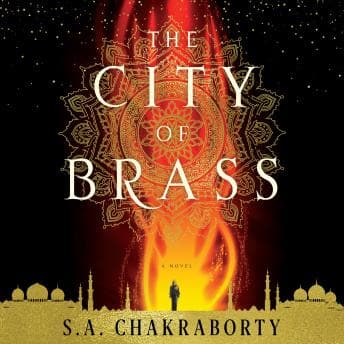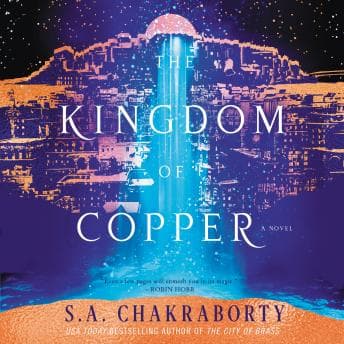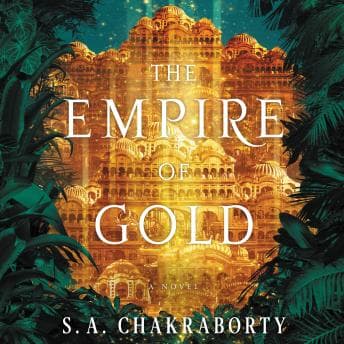

What does it mean to be a hero when your heroism built the very oppression you now fight against?
That's the question that kept me awake last Tuesday - not grading sophomore essays on The Great Gatsby, but lying in the dark next to Denise, earbuds in, completely wrecked by Dara's arc in this final volume. She asked me the next morning why I looked like I'd been crying. I told her it was allergies. It was not allergies.
The Weight of Nearly Twenty-Nine Hours
Let's talk about commitment. This is a 28-hour-and-38-minute audiobook. That's longer than my entire unit on Hemingway. And Chakraborty earns every single minute of it. The Daevabad Trilogy has always been compared to Martin's work - the Paste Magazine quote on the cover makes that explicit - but here's what that comparison misses: Chakraborty's moral complexity feels less like chess pieces moving across a board and more like watching people you love make terrible choices for understandable reasons. That same brutal intimacy drives Storm of Swords, though Martin spreads his devastation across more POVs.
Dara's atonement arc is the centerpiece here, and it's devastating in ways I wasn't prepared for. This is a character who committed atrocities. Real, unforgivable ones. Chakraborty doesn't let him off the hook - she makes him (and us) sit with what he's done while also showing us the system that shaped him. My students would recognize this structure from our discussions of Beloved. The past isn't past. It lives in the present, demanding to be reckoned with.
Nankani Understands That Pause Is Punctuation
Soneela Nankani has been with this trilogy from the beginning, and her work here represents the kind of narrator evolution I wish I could show my students when they ask why audiobooks "count" as reading. She's not just reading words - she's interpreting them. There's a moment during one of the devastating sequences (I genuinely had to pause and take a walk around the block) where her delivery shifts from Nahri's desperate hope to Ali's fractured faith within the same scene. You feel the whiplash in your chest.
The AudioFile Earphones Award is deserved. What impresses me most is how she handles the secondary cast - and there are many of them. Each voice carries its own weight, its own history. When characters from the first two books return, you recognize them immediately. Not from accent tricks or vocal gymnastics, but from the emotional register she's established across three books and probably 80 hours of audio.
I listened at 1.0x. Obviously. The prose deserves to be savored.
When Cairo Means Safety (And Also Grief)
This reminds me of what Morrison said about the function of home in literature - it's never just a place, it's a negotiation between who you were and who you've become. Nahri's return to Cairo hit me harder than I expected. She finds peace in "old rhythms and familiar comforts," but the text makes clear that peace is also a kind of haunting. She left people behind. People who believed in her.
Ali's storyline takes a different approach - his connection to the marid threatens his faith in ways that feel genuinely theological rather than just plot-convenient. Chakraborty clearly did her research on Islamic mysticism, and it shows. The questions Ali wrestles with aren't fantasy window dressing. They're real questions about identity, belonging, and what we owe to powers greater than ourselves.
Who Should Clear Their Schedule (And Who Shouldn't)
If you haven't read the first two books, start there. This is absolutely not a standalone. But if you've been with this series - if you've invested in Nahri's journey from Cairo con artist to reluctant Nahid leader, if you've watched Ali's idealism crash against political reality, if you've struggled with whether to root for Dara or condemn him - this is the payoff you've been waiting for.
This requires focus. Not commute listening. Not grading-papers-at-11PM listening (I tried, had to restart three chapters). This is dedicated, immersive listening. The kind where you tell your spouse you need an hour alone and mean it. Skip this if you want something light or if unresolved moral ambiguity frustrates you - Chakraborty doesn't offer easy answers.
Content warnings for violence, death, and emotional trauma are warranted. There are scenes here that will hurt. Chakraborty doesn't shy away from the consequences of war on the vulnerable - that Paste Magazine comparison to Martin is apt in this regard. Power struggles have body counts, and she makes you count them.
Worth Skipping the Budget Meeting For
I finished this during Principal Martinez's quarterly budget review. (Sorry, Principal Martinez. I was definitely not listening to your projections about textbook funding.) When it ended, I sat there for a full minute, staring at nothing, trying to process what I'd just experienced.
This is why we still read the classics - and why some contemporary fantasy deserves to join them. Chakraborty has written a trilogy about empire, identity, and the impossible work of reconciliation that feels both timeless and urgently now. Nankani's narration elevates it into genuine performance art.
My students would probably hate the pacing. I loved it. Worth every one of those twenty-eight hours and thirty-eight minutes.