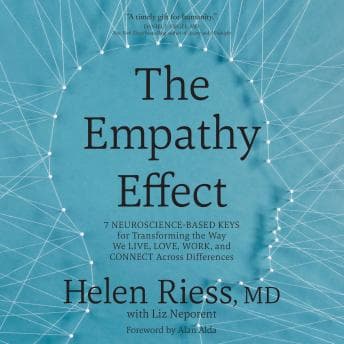

"We are all connected on a neurobiological level far more than we have previously realized."
That's the thesis. I heard it somewhere around minute 15, sitting in my kitchen at 11PM after a brutal on-call shift where I'd spent six hours debugging a cascading failure across three microservices. Kevin had already gone to bed. I was eating cold pad thai and wondering if my capacity for empathy toward my coworkers had been permanently damaged by Slack notifications. So yeah, the timing felt almost too on the nose.
The E.M.P.A.T.H.Y. Acronym Is Doing A Lot of Heavy Lifting
TL;DR: Worth your commute, but bump it to 1.5x minimum.
Dr. Helen Riess built a structured framework — Eye contact, Muscles of facial expression, Posture, Affect, Tone of voice, Hearing the whole person, Your response — and honestly? As someone who spends her life building systems and frameworks, I respect the engineering of it. The acronym is cheesy. I won't pretend otherwise. But the neuroscience underneath is solid. She pulls from mirror neuron research, developmental psych, and some genuinely interesting studies on physician-patient interactions where training doctors in empathy measurably improved patient outcomes. The science actually holds up, which is more than I can say for most self-help books that wave "neuroscience" around like a buzzword.
But here's the thing — this could've been a blog post. Or at least a much tighter book. At 8 hours, there's a lot of padding. The chapters on digital empathy (texts, emojis, online communication) feel surface-level, like they were written by someone who knows the research but hasn't actually had a friendship play out entirely in a group chat. And the sections on empathy in parenting, while fine, read more like a literature review than practical guidance. You get the sense Riess is brilliant at the clinical application — her medical training program sounds genuinely groundbreaking — but stretching it into a general-audience book required filling space that didn't always need filling.
The last chapter on self-empathy, though? That one hit different. I was on the Caltrain by then, Thursday morning, foggy brain, and she makes this case that your ability to extend compassion to yourself is basically the root node of the entire empathy tree. It's not a new idea, but the way she grounds it in the neuroscience of self-regulation clicked for me in a way that other self-help framings haven't. Maybe because she doesn't get sentimental about it — she treats it like a skill deficit you can actually fix.
Alan Alda Wrote the Foreword, Not the Whole Book
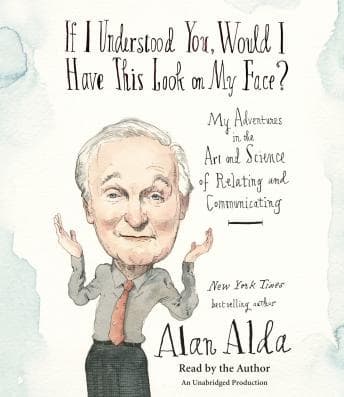
So here's where expectations might trip you up. Alan Alda is listed as a narrator, and if you're expecting Hawkeye Pierce reading you a bedtime story about emotional intelligence for 8 hours — nope. He narrates the foreword. That's it. Emily Durante handles the rest, and she's... fine? Her delivery is clear and professional, good pacing, easy to follow at speed. But a few listeners (and I'd agree) noted that the tone could've benefited from being a little warmer, a little softer. The subject matter is literally about human connection, and the narration sometimes feels like a well-structured lecture rather than a conversation. Not a dealbreaker, but it's the difference between a 3/5 and a 4/5 narrator rating for me.
No sound effects, no music, no production gimmicks. Straight narration. Which is fine for this genre — I don't need cinematic audio design in my self-help books.
Who Gets the ROI Here
Perfect for: train, gym. Skip for: bedtime (you'll lose the thread on the research sections).
The ROI on this audiobook is highest if you're in healthcare, management, or education — basically anyone whose job literally requires reading people. If you're a software engineer like me, the practical application is narrower, but the neuroscience chapters are genuinely interesting, and the self-empathy framework is universally useful. I came away with maybe 3-4 concrete things I'm actually implementing (more deliberate eye contact in 1:1s, paying attention to my own affect before giving feedback, being less of a garbage person to myself after production incidents).
If you've already read Brené Brown's work and Daniel Goleman's emotional intelligence stuff, you'll find overlap. This is basically Emotional Intelligence but for clinical practitioners who want the research receipts. Less storytelling, more methodology. That same appetite for methodology over narrative is what made Making Sense of God a surprisingly good commute pairing for me — Keller runs a similarly rigorous, citation-heavy argument aimed at skeptics who want the reasoning spelled out, not just the conclusion.
At 1.5x, I finished this in about 3 commutes plus that late-night kitchen session. Bump to 1.75x for chapters 4-6 where she's reviewing developmental stages — unless you're a parent actively dealing with that stuff, it drags.
Debug Your Emotional Stack
Solid framework, padded execution. The science is real, the acronym is memorable even if it's a little corporate-training-PowerPoint energy, and the self-empathy chapter alone is worth the listen. But I won't lie — I kept thinking about how much stronger this would be as a focused 4-hour audiobook instead of an 8-hour one. Still, for a self-help book that actually cites its sources? I'll take it.