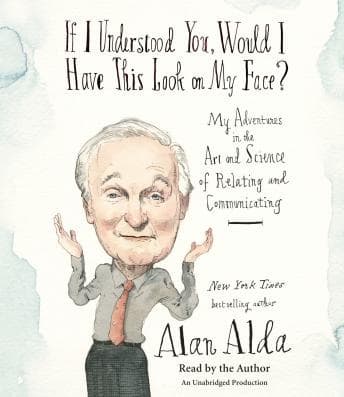

"The single biggest problem in communication is the illusion that it has taken place." That's George Bernard Shaw, not Alan Alda - but it's basically the thesis Alda spends six hours unpacking, and he does it with the kind of gentle, self-deprecating intelligence that makes you feel like you're having the world's most productive dinner conversation with someone who genuinely wants you to understand him.
I was halfway through making dal makhani on a Saturday evening - the kind of elaborate, three-hour process that exists solely so I can avoid opening my laptop and looking at my unfinished manuscript - when Alda started describing how improv exercises could fundamentally change the way scientists explain their research. And I stopped stirring. Just stood there with a wooden spoon in my hand like some kind of kitchen statue, because he was describing something I've been circling around in my own work for years: that empathy isn't a feeling. It's a skill. A trainable one.
When Hawkeye Pierce Becomes Your Research Collaborator
Here's what makes this book interesting as a case study in self-help. Alda doesn't start from theory and work down. He starts from failure - his own failures to communicate, his observations as host of PBS's Scientific American Frontiers watching brilliant people become completely incomprehensible the moment a camera turned on. The research actually shows that expertise can be a barrier to communication (it's called the curse of knowledge, and it's real), and Alda arrives at this not through citing papers but through watching a physicist's eyes go dead while explaining string theory to a general audience.
What I found myself asking: why does Alda - an actor, someone whose literal profession is reading other people - care so much about this? And the answer that emerges is surprisingly personal. He's not writing a communication manual. He's writing about the loneliness of being misunderstood. That loneliness thread turns up in the most unexpected places - I clocked it running underneath Flowers on Main too, different genre entirely, but the same core ache of two people failing to reach each other. The protagonist exhibits classic helper-identity patterns: someone who experienced disconnection and decided to build a career around bridging gaps for others.
Compare this to, say, Brené Brown's work on vulnerability or Daniel Goleman's emotional intelligence books - those give you frameworks with names and boxes. Alda gives you stories and exercises borrowed from improv theater. "Mirror" games where you track another person's movements. Exercises where you speak gibberish and try to communicate purely through tone and facial expression. It's less structured, more experiential. Whether that works for you depends entirely on whether you learn better from taxonomies or from doing.
The Science Is Real (If a Little Light)
Alda references mirror neurons, theory of mind, and the neuroscience of empathy - all of which I've spent time with professionally. And look, he's not wrong about any of it. But if you've read anything in social cognition in the last decade, you'll find the scientific portions feel like a well-done survey course rather than a deep dive. He touches on the work being done at his own Alan Alda Center for Communicating Science at Stony Brook, and those sections have genuine specificity. The stuff about training doctors to be better listeners, helping them notice when a patient's face is saying something their words aren't - that's where the book earns its keep.
Psychologically, the most interesting thread is Alda's argument that reading faces isn't about decoding expressions from a chart (sorry, Paul Ekman fans). It's about being present enough to notice when someone's reaction doesn't match what you expected. That's actually a pretty sophisticated claim, and it aligns with more recent research on emotional granularity that Alda probably doesn't even know he's referencing.
But - and this is my complaint - the book sometimes drifts. Anecdotes about his acting career are charming but occasionally feel like detours rather than evidence. By hour five, I wanted him to push harder on the "how" instead of offering another lovely story about a moment of connection on set.
Alda Reading Alda Is the Point
This is one of those audiobooks where the author-narration isn't just a bonus, it IS the argument. Alda's whole thesis is that communication lives in tone, in the micro-adjustments you make when you sense your listener is drifting. And then he demonstrates it, in real time, with his own voice. His delivery is warm without being saccharine, funny without trying too hard. You can hear him thinking. You can hear him deciding how to phrase something. It's like watching someone practice what they preach - which, for a book about empathy and communication, is exactly right.
Some listeners expected MAS*H-level comedy and were disappointed. I get it. This isn't a comedy book. It's a curious, sometimes meandering, genuinely earnest exploration of how hard it is to make another person understand what's in your head. If you come in expecting stand-up, you'll be let down. If you come in expecting a smart person sharing what they've learned about human connection - you'll be fine.
Who This Is For (and Who Should Keep Scrolling)
If you're in any field where you explain complex things to non-experts - science, medicine, law, academia (hello, me) - there's real utility here. If you already have a strong background in psychology or communication theory, you'll find the science sections a bit thin but the improv-based exercises genuinely novel. If you want a rigid, step-by-step communication system, this isn't it. Alda is too much of a storyteller for that.
My therapist would have thoughts about why I found the sections on doctor-patient communication so affecting. (Something about wanting to be truly heard. Whatever. Moving on.)
The Prescription Pad
At just over six hours, this is a short listen that doesn't overstay its welcome. It won't revolutionize your understanding of empathy if you've done any reading in the field - but it might change how you practice it. And honestly? That distinction matters. Alda understands something a lot of psychology researchers don't: knowing about empathy and being empathetic are two completely different skills. My dal burned, by the way. Worth it.