
Can you debug your own emotions the way you debug code?
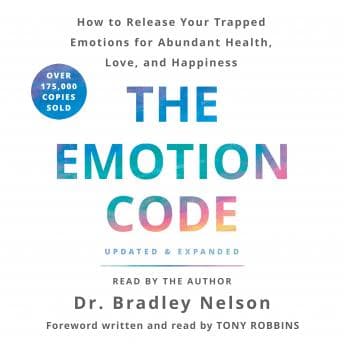
Look, I know how that sounds. I'm a software engineer. I deal in logic, systems, reproducible results. So when my boyfriend Kevin suggested I listen to The Emotion Code during my commute, I gave him the look. You know the one. The "are you seriously recommending woo-woo self-help to someone who literally fixes distributed systems for a living" look.
But here's the thing—I was three weeks into a brutal on-call rotation, my neck had been killing me for months, and I'd tried everything from standing desks to those weird massage guns. So I figured, what's 10 hours of audiobook against 50+ hours of train time per week? Worst case, I'd have something to mock.
The Framework Behind the Feelings
Dr. Bradley Nelson presents a model where emotions get "trapped" in your body like... okay, like memory leaks in a long-running process. (Yes, I'm going there.) The idea is that unprocessed emotional events from your past don't just disappear—they stick around, causing physical symptoms and behavioral patterns you can't explain. Healing the Shame That Binds You explores similar territory about how past emotional experiences create present-day patterns, though it comes at it from a different therapeutic angle.
Now, is this scientifically rigorous in the peer-reviewed-journal sense? No. But I've worked in tech long enough to know that sometimes the thing that works isn't the thing you can fully explain. Half my production fixes involve strategies that shouldn't work but do.
Nelson walks through his muscle testing technique—essentially a diagnostic tool for identifying these trapped emotions. He's got a chart, a process, a methodology. As someone who loves a good framework, I appreciated that he wasn't just saying "feel your feelings." He's giving you actual steps. It's basically debugging for your subconscious.
The Audio Experience (Mixed Results)
Okay, so here's where I have to be honest. Dr. Nelson narrates this himself, and he's not Ray Porter. (Then again, who is?) His voice is soothing—almost too soothing for my 6AM train. I definitely caught myself zoning out during some of the longer anecdotal sections.
And there are a LOT of anecdotes. Client stories, case studies, examples of people releasing trapped emotions and suddenly their chronic pain disappears or their relationship heals. After the fifteenth one, I was like, "Okay, I get it, this works for people, can we get back to the how-to?"
The pacing is... leisurely. I bumped it up to 1.5x pretty quickly, and honestly, 1.75x would've been fine for large chunks. Tony Robbins does the foreword, which is kind of jarring—you get his high-energy intro and then Nelson's calm, almost meditative delivery. Tonal whiplash.
Where It Actually Gets Useful
The practical content is genuinely interesting when you get to it. The Emotion Code chart, the muscle testing process, the specific steps for releasing emotions—that's the good stuff. Problem is, in audio format, you can't exactly reference a chart while you're standing on a packed Caltrain trying not to fall into someone's laptop.
This is one of those books where I'd say: get the audiobook for the concepts and the motivation, then grab the physical book or PDF for the actual exercises. The audio alone left me wanting more hands-on guidance. Several listeners apparently felt the same—there's real frustration out there from people who finished the whole thing and still weren't sure how to actually DO the technique.
That said, if you're just trying to understand the philosophy and decide if this approach clicks for you, the audiobook works fine for that.
The ROI Calculation
Here's my honest assessment: The Emotion Code is a holistic debugging manual for emotional baggage. If you're the type who's tried everything conventional and you're open to alternative approaches, this could be worth your time. If you need peer-reviewed studies and clinical trials before you'll try anything, skip it.
I finished it in about 5 commutes at 1.5x speed. Did I try the techniques? Yeah, actually. Did my neck pain magically disappear? No. But I did have a weird emotional release thing happen while doing the exercises, and the pain has been... less? Maybe? I had a similar "wait, is this actually working?" moment with Codependent No More, where the concepts felt uncomfortably accurate even when I wanted to dismiss them. It's not exactly a controlled experiment.
Perfect for: long commutes, gym sessions, anyone curious about energy psychology who doesn't need everything triple-blind tested.
Skip if: you need professional narration, you want a quick how-to guide, or you're a skeptic who isn't willing to suspend disbelief even temporarily.
Kevin's going to be insufferable when he finds out I didn't hate this.