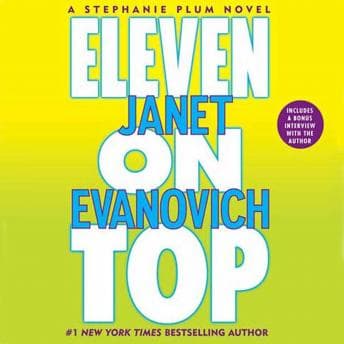

Everyone keeps telling me these books are "guilty pleasures." I've never understood that phrase. Pleasure is pleasure. Guilt is for when you've done something wrong. Reading a book where a woman fails spectacularly at multiple jobs while being stalked by a maybe-dead maniac? That's just Tuesday entertainment.
I was chopping onions for a dal that would take three hours to cook properly when I started this one. By the time the lentils were simmering, I'd laughed out loud four times and nearly cut myself twice. Worth it.
The Psychology of Spectacular Failure
Here's what Janet Evanovich understands about human nature that a lot of thriller writers don't: competence is boring. Stephanie Plum is not good at her job. She was not good at being a bounty hunter, and she's even worse at being a button factory employee, a dry cleaner, or—my personal favorite disaster—a Cluck-in-a-Bucket worker. The research actually shows that we're drawn to characters who fail in ways we recognize, and Stephanie's particular brand of chaos feels psychologically authentic.
She quits bounty hunting because she wants her mother to be able to describe her job without making the sign of the cross. That's such a specific, culturally sharp motivation. My own mother still introduces me as "studying psychology" because explaining "narrative psychology researcher" would require a PowerPoint presentation she doesn't have time for.
What makes this character compelling is her self-awareness about her own incompetence paired with her complete inability to change course. She knows trouble follows her. She takes the safe job anyway. The stalker shows up anyway. This is a fascinating case study in how we convince ourselves that changing our circumstances will change our fundamental patterns. (My therapist would have thoughts about this character.)
Lorelei King Earns Her Earphones Award
I found myself asking: why does this series work so much better in audio than it probably does on the page? The answer is Lorelei King.
Her Ranger voice—that low, mysterious rumble she uses for him—creates instant contrast with the chaos of Stephanie's internal monologue. When Ranger speaks, the temperature in the room drops. When Stephanie's grandmother opens her mouth, King shifts into this slightly unhinged elderly Jersey energy that made me snort-laugh while stirring my dal. The character differentiation isn't just "different voices for different people." It's personality architecture. Each character arrives with their own rhythm, their own music.
King won an AudioFile Earphones Award for this one, and honestly? Deserved. Her comedic timing turns what could be slapstick into something almost sophisticated. She somehow makes Stephanie's increasingly absurd job failures feel like natural consequences rather than authorial contrivance. That's not easy.
The Love Triangle That Psychology Explains
Okay, the Morelli-versus-Ranger situation. The protagonist exhibits classic approach-avoidance conflict—she's drawn to both men for completely different reasons, and the book doesn't pretend this is simple. Morelli is safety, routine, the life her mother wants for her. Ranger is danger, competence, the life Stephanie might actually want for herself.
Psychologically, this tracks. We often oscillate between what we think we should want and what we actually want. Evanovich doesn't resolve this in book eleven (we're eleven books in, people), and I respect that. Real ambivalence doesn't resolve in a single narrative arc.
Who Should Listen (And Who Should Skip)
If you need your mysteries to be serious investigations with realistic police procedure, skip this one. If unrealistic character motivations bother you—and normally they bother me—you might struggle. But here's the thing: Stephanie's motivations aren't unrealistic. They're just chaotic. There's a difference.
This is for listeners who want to laugh during their commute. It's for people who find comfort in recurring characters and familiar chaos. It's for anyone who's ever quit a job thinking "this will fix everything" and then discovered that you are, in fact, the common denominator in all your problems.
The stalker plot provides enough tension to keep things moving, but let's be honest—you're here for Stephanie's grandmother and her inappropriate comments, for Lula's fashion choices, for the ongoing romantic disaster. The mystery is almost incidental.
The Prescription
Seven hours and forty-five minutes of Stephanie Plum is exactly what I needed between reading three dissertation chapters on trauma narratives. Sometimes your brain needs a break from heavy material, and this is high-quality brain candy. Beach Read occupies a similar space—smart enough to respect you, light enough to let you breathe.
Is it literature? No. Is it a brilliantly constructed psychological portrait? Also no. But King's narration elevates the material, Evanovich understands her characters deeply, and I laughed more than I have in weeks.
My dal turned out perfectly, by the way. And I have a new audiobook series to work through. Eleven books in and I'm not bored yet. That's its own kind of achievement.