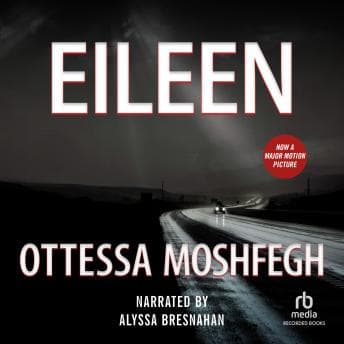

Look, I need to get something off my chest: Ottessa Moshfegh wrote a protagonist who is genuinely, deeply unpleasant to spend time with, and I mean that as the highest compliment I can give a debut novelist.
I started Eileen on a Saturday morning walk along the lakefront with Denise, and within twenty minutes she asked me why I kept making faces. Because Eileen Dunlop was describing her bowel movements and her hatred of her own body with the clinical detachment of someone narrating a nature documentary about a particularly unfortunate species of beetle. And I couldn't stop listening.
The Most Uncomfortable Character Study You'll Love Hating
Moshfegh does something I spend entire class periods trying to explain to my juniors about unreliable narration - she gives you a narrator who is simultaneously confessing everything and hiding the most important thing. Old Eileen is telling you about young Eileen, and the distance between those two women is where all the real horror lives. Not in the crime - which, when it comes, is almost secondary - but in the suffocating daily reality of this woman's existence. The squalor of her father's house. The way she describes shoplifting gin for him with the resigned efficiency of someone picking up dry cleaning. The obsessive surveillance of Randy, the prison guard she fixates on, which she recounts with zero self-awareness about how deeply creepy her own behavior is.
This is what Moshfegh is really saying: Eileen isn't a victim who becomes complicit in something terrible. She's someone whose inner life was already terrible, already violent and perverse and hungry, long before Rebecca Saint John walked through the door at Moorehead. Rebecca just gave her permission.
And that distinction - between being corrupted and being activated - is what separates this from a hundred other "quiet girl snaps" stories. This reminds me of what Hemingway said about writing: the dignity of an iceberg is that only one-eighth of it is above water. Moshfegh keeps most of Eileen's damage submerged. You feel the weight of it pulling on every sentence.
Bresnahan Becomes the Voice in Eileen's Head
Alyssa Bresnahan's performance here is the kind of narration I'd play for anyone who still thinks audiobooks are just someone reading words off a page. She doesn't just voice Eileen - she inhabits that particular register of dry, self-lacerating confession that the novel demands. There's a flatness to her delivery that's absolutely intentional, this monotone quality when Eileen describes her fantasies or her body or her father's drinking, as if she's been rehearsing these admissions for fifty years and all the emotion has been worn smooth.
The narrator understands that pause is punctuation. Bresnahan lets Moshfegh's dark humor land by not overselling it. When Eileen says something genuinely shocking - and she does, regularly, about her body, about violence, about what she imagines doing to people - Bresnahan reads it with the same even tone as the mundane details. That's the joke. That's the horror. They're the same thing to Eileen.
One reviewer said the narration was what kept them listening after the story lost them, and I get that. Bresnahan is doing heavy lifting here because the plot, honestly, is thin for eight and a half hours. The crime doesn't arrive until late. Most of this book is Eileen's interior life, her routines, her fantasies, her self-disgust. Without a narrator who makes that internal weather feel urgent, you'd bail. Bresnahan doesn't let you.
Why Some People Will Want Those Eight Hours Back
I have to be honest about something. If you loved, say, Shirley Jackson's claustrophobic character work or the cold precision of early Nabokov (the publisher's comparisons, and they're not wrong), this book will scratch an itch you didn't know you had. But if you need plot momentum, if you need to like or at least root for your protagonist, if spending eight hours marinating in someone's self-hatred sounds like a punishment rather than a literary experience - skip this.
My students would hate this. I love it. For the record, I tried recommending Simple Truth to the same crowd last semester and got equally blank stares, which tells me something about either the book or my students.
The prose deserves to be savored. Moshfegh writes sentences about disgust with the same care other writers reserve for beauty. There's a craft to that ugliness that rewards close listening at 1.0x. You catch the rhythm of Eileen's obsessive loops, the way she circles back to the same fixations - her body, her father, Rebecca - like a dog returning to something dead.
It's not fun. It's not meant to be. But it is - and I know this sounds contradictory - weirdly funny. Mordant in the truest sense. The PEN/Hemingway Award was well-earned.
Who Gets an A, Who Gets Excused
Listen if: You love character-driven fiction where the character in question would probably frighten you at a dinner party. If Patricia Highsmith's Ripley novels or Shirley Jackson's We Have Always Lived in the Castle are your thing, Eileen is their spiritual successor filtered through 1960s New England despair.
Skip if: You need momentum, warmth, or a single character you'd want to get coffee with. This is not that book. Some listeners genuinely wished for those hours back, and I respect that reaction even if I don't share it.
Worth pausing the faculty meeting for - but maybe not the one where they discuss your contract renewal. Save it for the budget presentation.