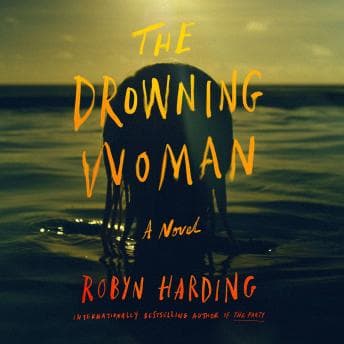

Let me cut to the chase - everyone's calling this a domestic thriller with twists you won't see coming. They're half right. The twists land, but I saw a couple of them setting up from about three clicks out. That doesn't mean the ride isn't worth taking.
I finished this one on a late Tuesday night, couldn't sleep, Ranger sprawled across my feet while I stared at the ceiling with my earbuds in. Insomnia and psychological thrillers - turns out that's a combination that works better than it should.
Two Women, Two Narrators, One Problem
The dual narration setup here is smart. Brittany Wilkerson handles Lee - the woman living out of her Toyota Corolla after her restaurant goes under - and Henriette Zoutomou takes Hazel, the wealthy wife trapped in an abusive marriage. For most of the book, the split works. You get Lee's scrappy, survival-mode energy versus Hazel's controlled desperation, and the contrast between their worlds comes through in how differently the two narrators pace their delivery. Wilkerson's Lee sounds like someone who's been running calculations in her head nonstop - where to park, how to stay invisible, whether that last twenty bucks goes to gas or food. Zoutomou gives Hazel this polished surface with cracks underneath.
But here's the thing - and I noticed it around the midpoint - there are moments where Hazel's voice slips and starts sounding like Lee. It's not constant, but when you're in a book where the whole point is these two women occupying completely different worlds, that blurring pulls you out. It happened maybe three or four times, and each time I had to rewind a few seconds to figure out whose chapter I was in. Minor issue in the big picture, but worth flagging.
The Corolla as a Foxhole
What actually hooked me was Lee's situation. I've seen people in bad spots - real bad spots - and Harding gets the details right about what it's like to lose everything incrementally. Lee didn't wake up homeless one day. It was the restaurant failing, then the debt compounding, then the shame spiral, then suddenly you're sleeping in a parking lot by the beach trying to figure out how you got here. That rang true. The author clearly did their homework on the logistics of living in a car - the paranoia about being noticed, the daily humiliation of basic hygiene becoming a strategic operation.
So when Lee pulls Hazel out of the water and gets fury instead of gratitude, it sets up a dynamic that's more interesting than your standard thriller premise. You've got a woman with nothing saving a woman who has everything, and neither one of them is what she appears to be.
This is where it lost me a little, though. The back half shifts POV and direction, and the pacing that was tight as a drum in part one starts to loosen. There's a cliffhanger at the end of Lee's section of the book that genuinely caught me off guard - won't spoil it, but it reframes everything you thought you understood. Good stuff. But then the story has to rebuild momentum after that reveal, and it takes a while to get its legs back. Some of the characters' decisions in the second half had me muttering "nobody would do that" into my pillow. (Ranger looked at me like I'd lost it.)
When the Op Goes Sideways
Harding is good at misdirection. She plants enough breadcrumbs that you think you're tracking the real story, and then she pulls the rug. The friendship between Lee and Hazel - the way it builds from awkward obligation to genuine connection to something much darker - that's the engine of the book. And when Hazel asks Lee to help her disappear, you can feel the trap closing even if you can't see exactly what shape it takes.
At 9 hours and change, it's a clean operation. No bloat. I listened at my usual 1.25x and the pacing held fine - actually, the narrators' natural tempo was solid enough that normal speed would've worked too. No sound effects, no music, just the two voices trading chapters. Production quality is clean.
But I keep coming back to those character decisions in the second half. In my line of work, when someone's story has gaps, you don't just fill them in with what you want to believe. Lee's a smart woman - the book establishes that repeatedly - and yet she makes choices that feel driven by plot necessity rather than by the character Harding built. It's the thriller writer's dilemma: you need the protagonist to walk into the dark room, but you've written someone who should know better.
Who's This Mission For?
If you're into domestic suspense with class dynamics and you can forgive some second-half wobble, this is a solid pickup. Fans of Harding's other work will find what they're looking for. If you need your protagonists to make tactically sound decisions under pressure, you're going to grind your teeth a few times. Mind Prey is the benchmark I keep returning to when I want a thriller where the protagonist actually thinks like someone trained to stay alive under pressure. And if inconsistent voice work between narrators is a dealbreaker for you, be aware it happens - not often, but it happens.
Worth your time? Here's the debrief: strong setup, strong narration with minor slips, genuinely surprising midpoint twist, but the second half doesn't quite match the promise of the first. Ranger fell asleep before the ending, which tells you something - or maybe it just tells you he's an old dog who likes routine. Either way, it's a decent listen that doesn't waste your evening. Not the best thriller I've heard this year, but far from the worst.









