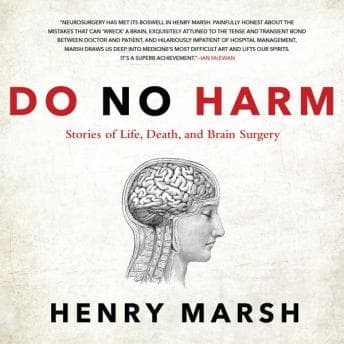

What does it feel like to hold someone's brain in your hands and know that one wrong move means they'll never speak again?
I started this at 5:47 AM on a Tuesday, crammed into a window seat on the southbound Caltrain, and by the time we hit Palo Alto I'd forgotten I was surrounded by other bleary-eyed engineers. Henry Marsh doesn't sugarcoat anything. He tells you about the time he operated on a colleague's wife and it went wrong. He tells you about drilling into skulls and the smell of bone dust. He tells you about the patients he couldn't save and the ones he probably shouldn't have tried to save.
The Arrogance Problem (And Why It's Actually the Point)
Here's the thing—some reviewers complain that J.P. Barclay's narration sounds "haughty" or "exasperated." And yeah, I get it. There's this clipped British authority that occasionally tips into impatience, especially when Marsh is describing hospital bureaucracy or NHS management decisions. But I'd argue that's... kind of the point? Marsh himself writes with this fascinating mix of humility and arrogance. He'll describe a surgery where he saved someone's life and then immediately pivot to one where his overconfidence killed someone. Barclay's tone mirrors that tension. The haughtiness isn't a bug—it's a feature that shows you exactly who this surgeon is.
That said, if you're the type who gets annoyed by confident British men explaining things, maybe bump this down to 1.25x. Helps smooth out the moments where Barclay lingers a bit too long on Marsh's frustrations.
Debugging the Human Operating System
As someone who spends her days tracing through distributed systems looking for failure points, I found Marsh's approach weirdly relatable. He thinks about the brain the same way I think about code—as an incredibly complex system where tiny errors cascade into catastrophic failures. The difference is that when my production environment crashes, I lose some data. When his "production environment" crashes, someone loses the ability to recognize their own children.
The book is structured as a series of case studies, each chapter named after a different condition—pineal tumors, aneurysms, chronic subdural hematomas. It's basically a collection of post-mortems (sometimes literally), and Marsh doesn't shy away from the ones where he was the root cause of the failure. There's this brutal honesty that feels almost confessional. He talks about the times he pushed ahead with surgery when he should have stopped. The times he let his ego override his judgment.
The 6 AM Test
Can you follow this while half-asleep? Mostly yes. The medical terminology is dense in places, but Marsh (and Barclay) do a good job of explaining the anatomy as they go. I did have to rewind a couple times during particularly complex surgical descriptions—there's only so much I can process about the Circle of Willis before my first coffee. But the emotional beats? Crystal clear. The chapter about operating in Ukraine hit different when I was stuck in the tunnel between stations, just me and my headphones and this surgeon describing what it's like to work in a hospital without proper equipment.
No sound effects, no music, just Barclay's voice and the weight of what Marsh is describing. The production is clean and professional, which is exactly what you want for this kind of material. Any bells and whistles would've felt cheap.
Who Should Queue This Up (And Who Should Skip)
Perfect for: Anyone in tech who's ever dealt with high-stakes systems and the weight of decisions that can't be undone. If you've ever been on-call and felt that 2 AM dread when your pager goes off, you'll recognize something in Marsh's descriptions of being called in for emergency surgeries. Also great for anyone who liked Atul Gawande's work but wants something more raw and less polished. If you're looking for something that examines systemic issues with that same unflinching honesty, Souls of Black Folk applies similar scrutiny to American society.
Skip if: You need bedtime listening (trust me, you don't want to fall asleep to descriptions of brain tumors). Also skip if you need your medical narratives to end happily. This book doesn't tie things up with a bow. Sometimes people die. Sometimes they die because the surgeon made a mistake. Marsh doesn't pretend otherwise.
The Commit Message
Bottom Line: Worth your commute. The ROI on this audiobook is high—you get genuine insight into one of the most high-stakes professions on earth, delivered by a narrator who captures both the brilliance and the brittleness of the man who wrote it. I finished this in about 6 commutes, and I'm still thinking about the chapter on aneurysms a week later. Not a comfortable listen, but a valuable one. The narration's occasional haughtiness might grate on some, but honestly? I'd be a little arrogant too if I spent 30 years cutting into people's brains.





![Steve Jobs [unabridged audiobook] audiobook cover](/_next/image?url=https%3A%2F%2Fcovers.audiobooks.com%2Fimages%2Fcovers%2Ffull%2F9788499923406.jpg&w=1920&q=75)