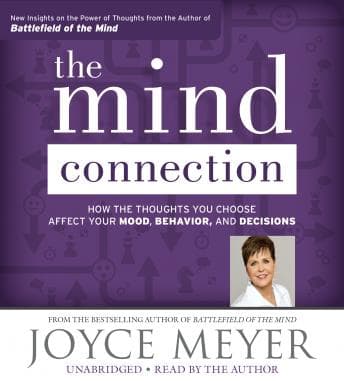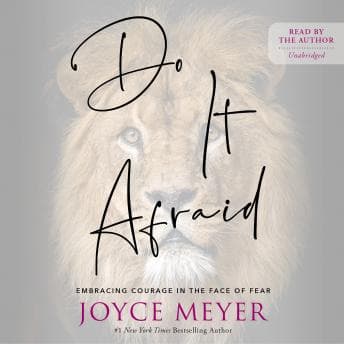

Bottom line: This isn't a business book. But my client—a startup founder who was literally paralyzed by fear of launching—asked me to listen to it. So here we are.
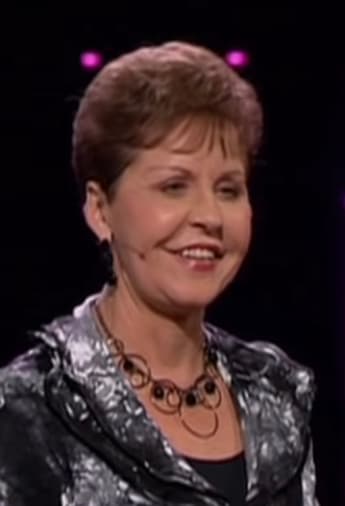
Look, I'm not Joyce Meyer's target audience. I grew up Presbyterian, my parents' faith was more about showing up and working hard than emotional breakthroughs. But I've also watched fear tank more startups than bad unit economics. So I gave this one a fair shot during a week of airport layovers and hotel gyms.
The Framework Behind the Faith
Here's what surprised me: Meyer actually has a framework. It's not dressed up in consultant-speak, but strip away the Scripture references and you've got a decent mental model for decision-making under uncertainty. "Do it afraid" is basically what every founder I've ever worked with needs to hear. You're never going to feel ready. The fear doesn't go away. You just... act anyway.
My parents never read self-help books. They just did this instinctively—opened a business in a country where they barely spoke the language, worked through every fear because the alternative was worse. Meyer puts words to what they lived. That's not nothing.
The problem? She takes about 6.5 hours to deliver what could've been a tight 2-hour listen. There's repetition. A lot of it. The same core message gets repackaged across chapters with different Bible verses attached. My 2.0x speed helped, but even then, I found myself zoning out during stretches that felt more like a sermon series than a structured argument.
When Meyer Narrates Meyer
Author-narrated books are hit or miss. Meyer lands somewhere in the middle. She's warm—genuinely warm—and you can tell she believes every word she's saying. That authenticity counts for something. When she shares personal stories about her own fears, her voice carries the weight of lived experience.
But. (And Jenny would say I'm being harsh. Jenny is right.) Her delivery gets dramatic in places that don't need it. The emphasis lands heavy on certain words in a way that feels more stage-preacher than audiobook narrator. Some listeners will love this—it'll feel like sitting in a church service. Others will find it exhausting.
Her Southern accent is noticeable but not distracting to me. Your mileage may vary. The pacing is uneven—she speeds up when she's excited about a point, slows down for the inspirational moments. It's not polished in the way a professional narrator would be, but it's real.
The ROI Question
So here's where I land: if you're someone who connects with faith-based motivation, this delivers. Meyer's core insight—that courage isn't the absence of fear but action in spite of it—is genuinely useful. I've seen executives freeze because they're waiting to "feel confident." They never will. This book gives you permission to move anyway.
But if you want the same message without the religious framework? Brené Brown's "Daring Greatly" covers similar territory with more research backing. I'd also throw How to Live on 24 Hours a Day into that mix—different era, same underlying push to stop waiting and just act. Susan Jeffers' "Feel the Fear and Do It Anyway" is the secular classic. Both are tighter listens.
The key insight is worth the listen. The other 5 hours? Not so much. Skip to the chapters on specific fears (fear of failure, fear of what people think) if you're short on time. That's where the practical application lives.
Who Gets Value Here
Listen if: You connect with faith-based motivation and need someone to look you in the ear and say "just do the thing." Meyer delivers that with conviction.
Skip if: You want a tight, research-backed framework without Scripture. Grab Jeffers or Brown instead—same core message, half the runtime.
My Two Cents
My client, by the way? She launched. Said the book helped her reframe fear as a signal to act rather than a signal to stop. Can't argue with results. Even if I would've prescribed her a different book, this one did the job.
For my typical startup founder crowd? Probably not their vibe. But for the right person—someone who needs permission wrapped in faith to finally move—the ROI is there. Whether you need 6.5 hours of it is a different question.