
So I'm standing in my kitchen at 8 AM, dead on my feet after a twelve-hour shift that included two GSWs and a guy who somehow got a fishing lure embedded in his eyelid (don't ask), and I'm making pancakes for my kids while the last chapter of this plays through my phone speaker. Carlos walks in, takes one look at my face, and goes, "You're making that expression again. The one where you're judging a fictional person." He's not wrong.
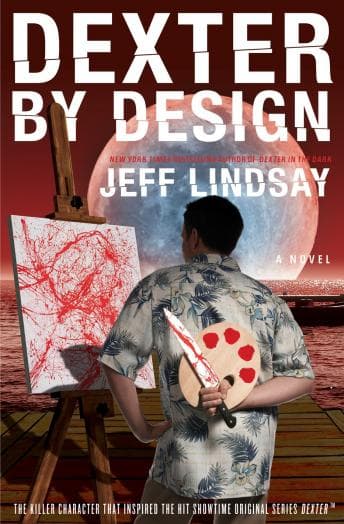
Here's the thing about Dexter by Design - this is the fourth book in Lindsay's series, and by now you either buy into Dexter Morgan's whole "I'm a lovable serial killer with a moral code" schtick or you don't. I bought in three books ago. What surprised me about this one is how the "art murder" angle - someone staging corpses as artistic installations around Miami - actually made me think about some of the more theatrical crime scenes I've processed paperwork for. Not the violence. The arrangement. The intentionality. That beach chair corpse scene hit differently when you've seen how real people actually pose the dead.
The Author Reading His Own Monster
Jeff Lindsay narrating his own character is a choice. And I mean that in the way nurses mean it when we say "that's a choice" about a doctor's treatment plan - somewhere between genuine admiration and mild alarm. Lindsay basically crawls inside Dexter's skull and sets up camp there, and his delivery of that sardonic inner monologue is genuinely unnerving. There's this quality to his voice where you can hear him enjoying the dark humor, and it works because Dexter is supposed to enjoy it. The wit lands harder when the author himself is selling it.
But - and this is a big but - the volume thing is real. Every time Debra opened her mouth, I had to scramble to turn it down before my kids heard language that would make my night shift coworkers blush. And Astor's voice runs hot too. I was constantly fiddling with the volume on my drive home, which is not ideal when you're navigating the I-10 at sunrise with the cognitive function of a wet paper towel. If you listen in a car, you'll be riding that volume dial like it's a cardiac monitor you don't trust.
When Fiction Gets the Forensics Almost Right
As someone who's actually worked a code and then had to help clean up for investigators, I appreciate that Lindsay knows his way around blood spatter analysis. Dexter's day job stuff reads authentic - the terminology, the crime scene protocols, the way cops actually talk to forensic techs (hint: not with the reverence the TV show suggests). The medical examiner interactions feel lived-in. He gets the bureaucratic tedium right, the paperwork, the waiting. This is not how hospitals work in most thrillers. Trust me. But Lindsay seems to have actually talked to people who do this work.
Where I got twitchy is the pacing. The Paris honeymoon opening is charming enough but it takes a while before the actual murder plot kicks in, and there are stretches in the middle where Dexter's domestic life with Rita and the kids feels like filler between the set pieces. The "art killer" concept is genuinely creative - more inventive than the previous books' antagonists - but the buildup meanders. At 10 hours, there are probably 8 hours of story here.
The Dark Passenger stuff still works for me as a metaphor, though I know it lands differently for everyone. There's something about the way Lindsay writes Dexter's compulsions - the clinical distance mixed with something almost like hunger - that feels more honest than most fictional depictions of violent impulses. That same split-self quality - the monster watching itself in the mirror - is what makes Strange Case of Jekyll and Hyde still rattle around in my head weeks after listening, and it's much older source material doing a lot of the same psychological heavy lifting. I've cared for patients in altered states who describe their urges with that same detached fascination. It's uncomfortable because it rings true.
Who Needs This in Their Ears
If you've been listening to the Dexter series, this is a solid continuation. The author-as-narrator thing works better here than it has any right to, despite the volume issues. If you're coming from the Showtime series expecting Michael C. Hall's voice, recalibrate. Lindsay's Dexter is nervier, more academic, less smooth. Different creature entirely.
Skip this if: you need consistent audio production quality (the volume jumps will drive you nuts), you're squeamish about staged body horror described in loving detail, or you want a tight, propulsive thriller with zero fat. This wanders.
Listen to this if: you want 10 hours inside the head of fiction's most self-aware monster, narrated by the person who invented him. There's an intimacy to that arrangement you can't replicate with any other narrator.
Night Shift Prescription
I yelled at my dashboard during this one - not about medical inaccuracies for once, but because I figured out the killer's angle about two hours before Dexter did and he's supposed to be the genius. But Lindsay earned my respect with those crime scene details, and his narration genuinely unsettled me in a few spots, which is hard to do to someone who spent last Tuesday irrigating a wound that smelled like a decomp case. Carlos asked why I was making pancakes with a weird expression. I told him I was thinking about art. He didn't ask follow-up questions. Smart man.