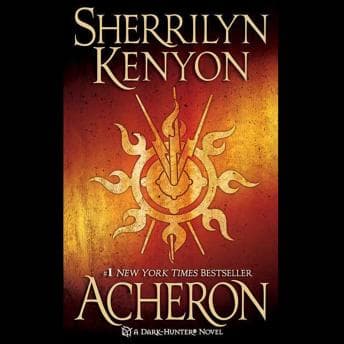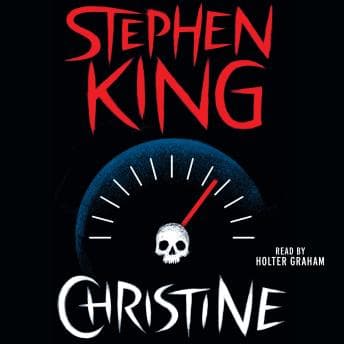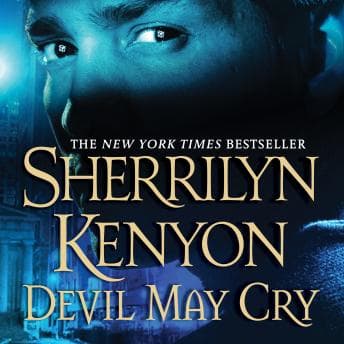
Look, I went into this expecting campy paranormal romance with some mythology sprinkled on top. What I got was... exactly that, but with a narrator who actually commits to the chaos. And honestly? That's more than I expected.
Holter Graham takes Sin—an ancient Sumerian god stripped of his powers by Artemis and left to stew in millennia of justified rage—and gives him this restrained intensity that works surprisingly well. The performance is underplayed in a way that grounds all the supernatural drama. When you're dealing with gallu demons trying to end humanity and ex-gods nursing grudges older than most civilizations, you need someone who doesn't chew the scenery. Graham gets that.
When Gods Hold Grudges and Demons Get Hungry
Sherrilyn Kenyon's Dark-Hunter universe is dense. Like, really dense. This is book... honestly, I've lost count, and the mythology layers on itself like archaeological strata. Sin's backstory—powerful god, betrayed by Artemis, demoted to demon-hunter status—could easily become melodramatic. But there's something genuinely compelling about a protagonist who's been nursing a revenge fantasy for thousands of years only to discover the actual apocalypse is more pressing than his personal vendetta.
The gallu demons work as antagonists because they're not subtle. They want human flesh. They want destruction. They're not negotiating. In a genre that sometimes gets lost in moral ambiguity, there's something refreshing about enemies who are just... hungry and evil. Simple.
Kenyon writes action sequences that translate well to audio—quick, brutal, no lingering descriptions that slow momentum. At eleven hours, the pacing doesn't drag as much as I expected. Though I'll admit, around hour seven, I was doing dishes and lost the thread of which ancient deity had betrayed which other ancient deity. The mythology runs deep, and if you're new to the series, you might feel like you walked into a family reunion where everyone's screaming about something that happened in 1987. Pretties threw me into a similar deep-end scenario with its dystopian world-building—you either catch up fast or drown in references.
The Name Pronunciation Thing (Yes, I Noticed)
Here's where I have to be honest. Graham changed some character name pronunciations from earlier books in the series. If you've been listening to Dark-Hunter audiobooks for years, this will bug you. It bugged me, and I'm not even a longtime fan. There's a specific kind of immersion break that happens when a name you've internalized one way suddenly sounds different.
Is it a dealbreaker? Probably not. But if you're the type who builds a whole mental world around how "Acheron" sounds (and Dark-Hunter fans definitely are that type), brace yourself.
What Graham does well is differentiate the sprawling cast through tone shifts rather than dramatic accent work. The female characters don't sound like a man doing a bad falsetto—they sound like different people. That's harder than it sounds, and plenty of narrators fail at it.
Romance in the Shadow of Apocalypse
The central romance operates on that enemies-to-lovers trajectory where mutual distrust gradually becomes mutual... something else. Sin has to work with someone he absolutely should not trust, and the tension between "we might die" and "I'm starting to care about you" drives the emotional arc.
Kenyon doesn't shy away from the spicier elements—this is paranormal romance, after all—but the audiobook handles those scenes without making them awkward. Graham's restraint actually helps here. Nothing kills a romantic scene faster than a narrator who sounds like they're reading stage directions.
(Shirley was completely unbothered by the whole thing. She slept through the apocalypse and the romance. Cat priorities.)
Who's Going to Love This, Who Should Run
If you're already invested in the Dark-Hunter universe, this delivers exactly what you want. Sin is a satisfying protagonist, the stakes feel appropriately massive, and the mythology expands without contradicting itself (as far as I could tell).
If you've never touched this series? You can start here, but you'll be playing catch-up. Kenyon doesn't hold your hand with exposition, and the interconnected world assumes you know who Artemis is and why we're all mad at her.
If you need your horror pure and uncut with romance? This isn't that. It's paranormal romance with horror elements—demons and violence and genuine threat, but filtered through a genre that prioritizes relationship development alongside the body count.
Shelving This One in the "Guilty Pleasures That Aren't Actually Guilty" Section
Here's the thing about Dark-Hunter books: they understand that horror isn't always about dread. Sometimes it's about power—who has it, who lost it, who's trying to take it back. Sin's arc is fundamentally about reclaiming agency after cosmic-level betrayal. The gallu demons are scary not because they're mysterious, but because they're relentless. That straightforward menace reminded me of Ruthless King, where the threats don't need elaborate backstories to feel dangerous.
Graham's narration serves the material. He doesn't elevate it to something it's not trying to be, but he doesn't phone it in either. For a series this long-running, consistency matters, and despite the name pronunciation issues, he maintains the tone that fans expect.
I listened to this during a late shift at the library, headphones in while shelving returns. Appropriate? Maybe not. But there's something fitting about processing ancient Sumerian mythology while surrounded by dusty books. Shirley Jackson would probably have something to say about liminal spaces and horror, but I'm just saying the vibes aligned.