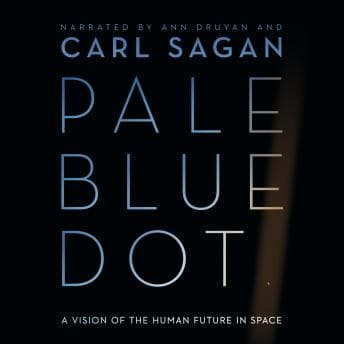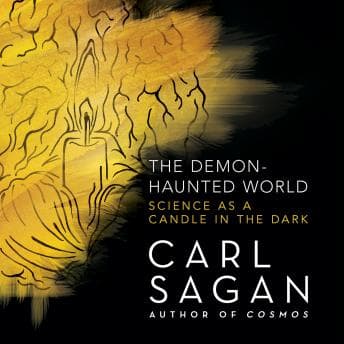

"The cure for a fallacious argument is a better argument, not the suppression of ideas."
I was chopping onions for aloo gobi—my mother's recipe, the one she insists I still make wrong—when that line hit me around hour three. I actually stopped, knife mid-air, tears streaming (the onions, obviously), because Sagan had just articulated something I've been trying to say in academic papers for years. The research actually shows that when we dismiss irrational beliefs without understanding *why* people hold them, we've already lost the battle.
This is a fascinating case study in intellectual humility dressed as scientific advocacy.
Why Your Therapist Would Assign This Book
What makes Sagan compelling isn't his debunking of UFO abductions or faith healing—though he does that with surgical precision. It's that he approaches believers with genuine curiosity rather than contempt. The protagonist (and yes, I'm treating Sagan as a character here, fight me) exhibits classic secure attachment to truth-seeking. He's not threatened by people who disagree. He's fascinated by them. That same intellectual generosity shows up in David and Goliath: Underdogs, Misfits, and the Art of Battling Giants, where Gladwell approaches conventional wisdom with similar curiosity rather than dismissal.
Cary Elwes carries the bulk of this seventeen-hour commitment, and his delivery is... interesting. There's a credibility to his reading that feels almost professorial—measured, clear, never rushing the complex arguments about the difference between correlation and causation. But here's the thing: it's almost *too* measured at points. Sagan on the page crackles with barely contained frustration about scientific illiteracy. Elwes smooths those edges. Whether that's a feature or a bug depends on what you're looking for.
Ann Druyan's contributions add something the other narrators can't manufacture: genuine grief. When Sagan's wife reads passages about the importance of wonder, about teaching children to question everything, you hear the weight of knowing this was one of his final books. Psychologically, this doesn't track as performance—it tracks as testimony.
Seth MacFarlane handles the preface, and honestly? It works. His earnestness surprised me. No irony, no winking. Just a famous person who clearly loved this book paying tribute.
The Uncomfortable Mirror
I found myself asking: why does this book feel more urgent now than when Sagan wrote it in 1995?
The answer is depressing and obvious. Sagan predicted—with almost eerie accuracy—that a scientifically illiterate population would be vulnerable to manipulation. He talks about how democracies require citizens who can evaluate evidence, who understand the difference between anecdote and data. (My therapist would have thoughts about this chapter. Several thoughts. All of them about my tendency to catastrophize about social media.)
But here's where Sagan's psychology gets interesting. He doesn't just diagnose the problem. He examines *why* pseudoscience is seductive. The chapter on alien abduction experiences reads like a clinical case study—he connects the phenomenon to sleep paralysis, to cultural anxiety, to the very human need to feel special and chosen. He understands human nature in a way that most science communicators don't. He knows that facts alone don't change minds. Stories do. It's the same narrative psychology that makes Just After Sunset: Stories work—King understands that emotional truth often lands harder than factual argument.
At seventeen hours, this is a commitment. I won't lie—there are stretches in the middle where the historical examples (witch trials, medieval superstitions) start to blur together. I found myself speeding up to 1.25x during my morning jogs through Cambridge, then slowing back down when Sagan pivoted to something contemporary.
Who Should Listen (And Who Should Run)
This is for you if: you've ever gotten into an argument about vaccines at Thanksgiving and wished you had better rhetorical tools. If you're a teacher, a parent, anyone trying to help young people develop critical thinking skills. If you want to understand *why* smart people believe demonstrably false things—not to mock them, but to reach them.
Skip this if: you want entertainment, not education. If you're already a committed skeptic who doesn't need convincing. If seventeen hours of measured, academic-adjacent discussion sounds like homework rather than pleasure.
The production is clean—three narrators, no sound effects, no musical interludes. Just ideas, delivered with care. Brilliance Audio didn't try to jazz it up, which feels appropriate. Sagan's arguments don't need decoration.
The Prescription I Didn't Know I Needed
I finished the last chapter while waiting for my dal to simmer, standing alone in my kitchen at 10 PM, feeling something I can only describe as... fortified? Sagan gave me language for things I'd intuited but couldn't articulate. He gave me permission to be both skeptical and compassionate—to question claims without dismissing the people who make them.
Is the narration perfect? No. Elwes occasionally sounds like he's reading a textbook rather than channeling a passionate advocate. But the ideas are so good, so necessary, that it almost doesn't matter.
Sagan managed to inform the public about how irrational beliefs function without sounding arrogant. That's rare. That's valuable. That's worth seventeen hours of your life.