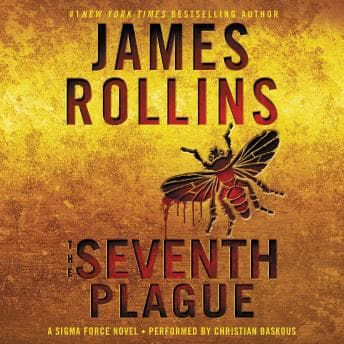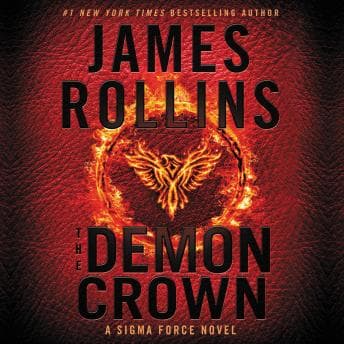

"The menace is spreading, changing, growing, adapting, outwitting every attempt to stop it."
Somewhere around hour six, I paused the audiobook to Google whether Japanese giant hornets can actually do what Rollins describes. Shirley (my cat) stared at me from across the room while I scrolled through entomology papers at 1 AM, increasingly horrified. The answer, by the way, is yes. Mostly yes. Close enough to yes that I now have a new phobia.
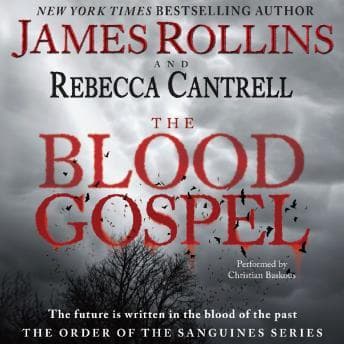
This is what James Rollins does best - he takes real science, real history, and twists them just enough to make you question everything you thought you knew about the natural world. The Demon Crown isn't supernatural horror. It's worse. It's biological horror with receipts.
Alexander Graham Bell's Nightmare Side Project
The premise alone had me hooked. A secret cache beneath the National Mall, buried by a cabal of Smithsonian founders including Bell himself, containing something that shouldn't exist? That's the kind of historical conspiracy that makes my librarian brain light up. Rollins threads real figures into his fiction with the confidence of someone who's done the research - and he has. The man's a former veterinarian, and you can feel that scientific grounding in every gruesome description of wasp larvae doing what wasp larvae do to their hosts.
But here's where I have to be honest with you: this book is dense. Technical. There are stretches where it reads more like a biology textbook got drunk and wandered into a thriller. The jumps from Mount Fuji's crystalline research facility to Hawaiian islands teeming with what Rollins calls "the dark matter of life" - it's ambitious worldbuilding, but it occasionally loses the human stakes in favor of explaining the science.
For some readers, that's the draw. For others, it's going to feel like homework.
Christian Baskous: A Narrator Who Divides the Room
I need to address the elephant in the audiobook. Christian Baskous has a particular... articulation. It's hard to describe without you hearing it yourself, but there's a precision to his delivery that some listeners find thrilling and others find almost mechanical. I've seen reviews calling him "the perfect narrator" and others saying he made the book "very difficult to listen to."
Here's my take: Baskous commits. He brings genuine intensity to the action sequences, and when Sigma Force is racing against biological apocalypse, his pacing absolutely delivers the urgency. But during those technical exposition dumps? That same precision starts to feel clinical. There's no warmth to soften the science lessons.
I adjusted after about two hours. My brain stopped fighting his rhythm and started accepting it as the book's voice. But I can absolutely see why some listeners bounce off this one. If you've listened to other Baskous-narrated Rollins books and loved them, you're fine. If this is your first? Maybe sample before you commit.
The Guild Returns (And So Does My Frustration)
Sigma Force teaming up with their greatest enemy, the Guild? On paper, this should be the most compelling storyline in the book. Enemies forced into alliance, trust issues, moral compromises. Instead, it felt... disjointed. Like Rollins had so many cool ideas - ancient wasps, Smithsonian conspiracies, Japanese research facilities, Hawaiian ecosystems - that the character dynamics got squeezed into the margins.
The threat is genuinely terrifying. These aren't your garden-variety horror monsters. They're real creatures, amplified, weaponized by evolution itself. When Rollins describes what these things do to human bodies, he doesn't flinch. Neither did I, but I did turn on every light in my apartment. Shirley was unimpressed. I was terrified.
But terror without emotional stakes starts to feel like watching a nature documentary about predators. Impressive, educational, but not quite personal.
Who Should Queue This Up (And Who Should Skip)
If you're a Sigma Force completionist, you're listening anyway. This is book thirteen - you know what you're getting into.
If you love science-forward thrillers where the horror comes from what's actually possible? This is your jam. Rollins respects the genre enough to do his homework, and the biological nightmare fuel is genuinely unsettling.
If you need strong character work and emotional through-lines to carry you through fourteen hours? This one might test your patience. The science occasionally drowns out the soul.
And if you're sensitive to body horror, particularly parasitic horror? Skip. Seriously. The descriptions of wasp larvae and their... activities... are not for the squeamish.
My Podcast Listeners Are Going to Have Opinions
I'm already planning the episode. "When Science Fiction Becomes Science Fact: The Horror of The Demon Crown." Because that's what sticks with me - not the narrator quirks, not the occasionally dry exposition, but the creeping realization that Rollins isn't making this up. He's extrapolating.
The best horror doesn't invent monsters. It reveals the ones that already exist. That same philosophy drives Bend in the Road, though it trades biological nightmares for psychological ones.
This understands that horror isn't about gore - it's about dread. The dread of knowing that somewhere, right now, something like this is burrowing into something else. Nature doesn't need our permission to be terrifying.
Worth the credit? For the right listener, absolutely. For everyone else, maybe stream it first and see if Baskous's voice works for you. I listened in the dark. Mistake? Maybe. Worth it? Absolutely.